5 Types of Flexibility Training: The Ultimate Guide
Stop wasting time on the wrong stretches. Learn the 5 types of flexibility training and finally unlock your mobility.
TABLE OF CONTENTS
1. Dynamic Stretching: Priming the Engine for Work
We all want to increase our Range of Motion, and we want to do it fast. The question of which stretching method yields the greatest gains is legitimate, but the answer isn't simple. While nearly any stretching routine can improve your Flexibility, different types of stretches are designed for different moments and different outcomes. Understanding this distinction is the first step from amateur practice to professional execution.
1.1. What are Dynamic Stretches?
Dynamic stretching is the language of preparation. It utilizes momentum, primarily generated by gravity, to gently guide a muscle in and out of its Range of Motion. The key is control. You are never static; each movement is a fluid pulse that gently probes, but never forces, the current limits of your Mobility. This isn't about achieving a new personal best in flexibility; it's about waking up the muscle fibers, increasing blood flow, and preparing the body for the deeper, more intense work to come. Think of it as a conversation with your muscles, not a command. Proper form and synchronized breathing are non-negotiable. This is your foundation for the session.
1.2. Who Should Use Dynamic Stretching?
Everyone. For the beginner with little to no experience, the low-intensity, controlled nature of dynamic stretching is the perfect entry point. It keeps the discomfort minimal and the engagement high, which is critical when you're building the habit and discipline of a consistent Flexibility practice. You can address multiple muscle groups in a short period, building Consistency without overwhelming the system. For the advanced athlete, dynamic stretching is the essential rite of passage before every session. It's the professional's way to warm up, lubricate the joints, and signal to the body that it's time to perform. Drills like Leg Swings, Arm Circles, and alternating Cossack Squats are staples for a reason.
2. Static Stretching: The Classic Path to Range of Motion
2.1. What is Static Stretching?
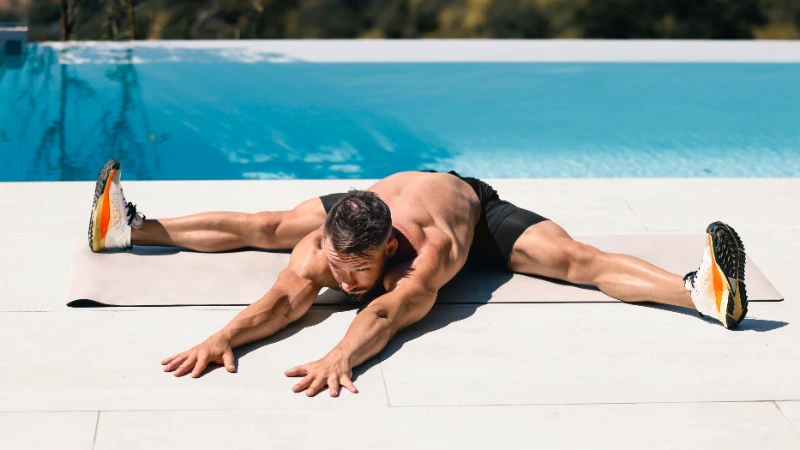
This is the most recognizable form of stretching, a classic method seen in gyms worldwide. A static stretch, or Passive Flexibility drill, involves holding a position at your end range of motion for a prolonged period. The force that holds you in this position is external—gravity, a partner's assistance, a wall, or a strap. The body is still, but the mind is active. Your focus must be relentlessly on Alignment, breathing, and establishing a profound Mind-Muscle Connection. You are teaching your muscles to release tension under load.
2.2. Examples of Static Stretching
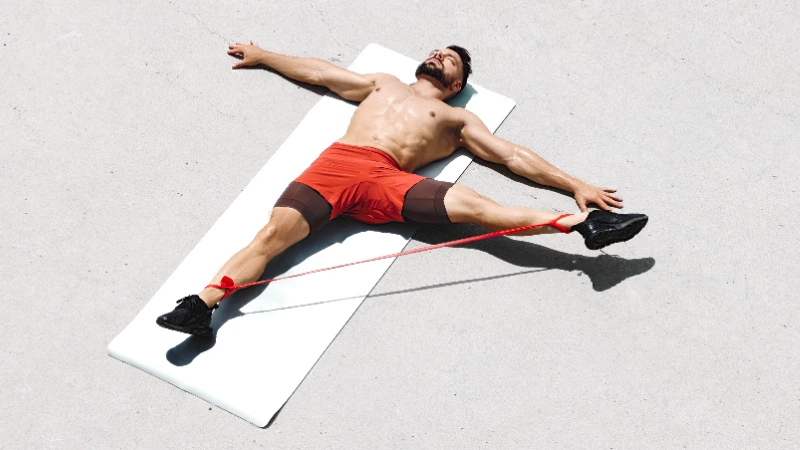
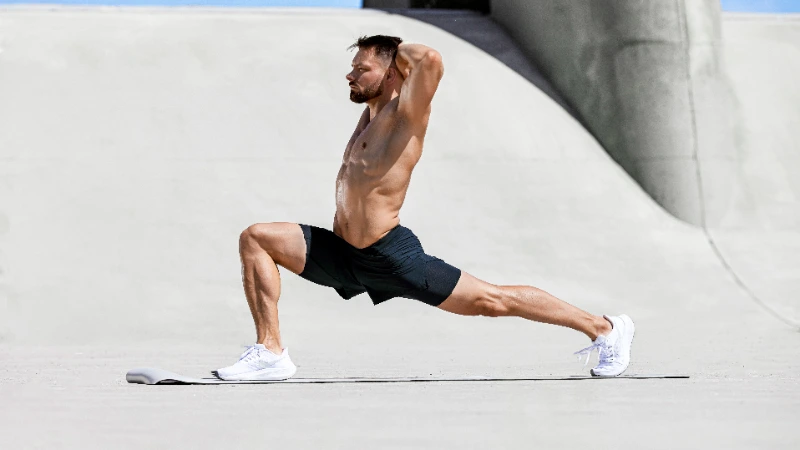
The library of static stretches is vast. Foundational movements like the Downward Dog, a deep Runner's Lunge, or a classic standing Pike Stretch are prime examples. For the Hamstrings, a supine single-leg hamstring stretch with a strap is brutally effective. For the lats and shoulders, a simple Wall Lat Stretch can work wonders. The goal is to find a position with minimal, manageable discomfort and then use your breath as a tool to relax deeper into the stretch with every exhale. This is where you learn to differentiate between productive tension and the sharp signal of pain.
3. PNF Stretching: Hacking the Nervous System
3.1. What are PNF Stretches?
Proprioceptive Neuromuscular Facilitation, or PNF Stretching, is where we move from simply lengthening tissue to actively manipulating the body's neural responses. These drills are a form of post-isometric relaxation, most effective on long Kinetic Chains like the hamstrings. The protocol is precise: get into a passive stretch, then isometrically contract the stretched muscle group against an immovable resistance for 3-5 seconds. This could be a partner, a strap, or the floor itself. After the contraction, you relax for approximately 10 seconds, and you will find your body allows a deeper range. This technique essentially tricks the stretch reflex, creating a window for greater Range of Motion through Neural Adaptation.
3.2. For Whom Are PNF Stretches?
Initially developed in physical therapy to treat stroke victims, PNF has been adopted by elite athletes for its potent effects. It is a powerful tool for increasing Range of Motion, improving Mind-Muscle Connection, and enhancing overall muscle function. However, timing is critical. PNF stretching should be performed after a workout. Studies have shown that performing PNF before training can decrease muscular performance in maximum effort exercises. Use it to cool down and expand your limits, not to warm up.
4. Ballistic Stretching: The High-Risk, High-Reward Method
4.1. What is Ballistic Stretching?
Ballistic stretching is often mistaken for its gentler cousin, dynamic stretching, but they are worlds apart in intent and intensity. Where dynamic stretching probes, ballistic stretching forces. It uses momentum, often generated by a powerful contraction of the opposing muscle group, in an attempt to push the target muscle beyond its current end range. A controlled Leg Swing is dynamic; a violent, bouncing kick towards your face is ballistic. This method is intense and carries a significantly higher risk of injury.
4.2. Is Ballistic Stretching for You?
For beginners, the answer is an unequivocal no. Ballistic stretching demands an elite level of Coordination, Strength, and deep Body Awareness. You must keep the entire body braced and stable while the working limb is thrown into the stretch, requiring the target muscle to be completely relaxed. This is a high-level skill used by professional dancers, gymnasts, and martial artists who understand the risks and have built the requisite physical foundation over years of training. If you choose to explore this method, proceed with extreme caution and only after mastering all other forms of stretching.
5. Active Flexibility: Forging Usable Range
5.1. What is Active Flexibility?
This is the pinnacle of Flexibility training. Active Flexibility, or Mobility, is your ability to achieve a Range of Motion using only the Strength of the agonist (opposing) muscles. There is no external force. You are pulling yourself into the stretch. For example, in a standing Leg Lift, your hip flexors and quads contract powerfully to lift the leg, actively stretching the Hamstrings. This is by far the most challenging form of flexibility work and should be treated as strength conditioning. It builds control at your end range, which is the definition of a Usable Range of Motion.
5.2. Are Active Stretches Right for Me?
If you are an athlete looking to apply your flexibility to complex skills like the Press to Handstand or a V-Sit, then active stretches are not just right for you—they are essential. While passive stretching increases your potential range, active stretching makes that range useful. If your only goal is to increase passive range, these can be skipped, but you will be leaving a huge amount of performance on the table. Drills like standing Leg Lifts or Sitting Pike Lifts are incredibly taxing but are the true bridge between being flexible and being mobile. Remember, your Passive Flexibility will always be greater than your active range. The goal is to close that gap.
6. The Synthesis: Building Your Ultimate Flexibility Protocol
There is no single "best" way to stretch. The truth, as always, is that it depends. Your goals, your experience, and your body's daily state will dictate the correct approach. What works for you today may not be what you need a year from now. The goal of training is to evolve, and your routine must evolve with you. The real secret is not in choosing one method, but in understanding how to synthesize them into a coherent plan. A proper session begins with Tissue Preparation via dynamic stretching, moves into building new range with static and PNF techniques, and solidifies that range with active conditioning.
Ultimately, no technique will work if your execution is flawed. Never stretch cold. Maintain perfect Alignment. Cultivate an intense Mind-Muscle Connection and use your breath as an active tool. Build your routine slowly and listen to your body's feedback. Master these principles, combine these methods, and you will unlock a level of Mobility and control you never thought possible.
Get to work.