Stop Stretching Hamstrings Wrong: A Guide to Real Mobility
Tired of tight hamstrings holding back your progress? You're probably stretching them all wrong. Here's how to fix it.

TABLE OF CONTENTS
1. The Real Reason Your Hamstrings Are Holding You Back
1.1. Unlocking True Freedom of Movement
Let's cut straight to the point. You think you’re stretching your Hamstrings, but you’re likely just going through the motions. Real hamstring Mobility isn’t just about touching your toes; it’s about unlocking a fundamental freedom of movement that will supercharge your progress in any discipline. Personally, I’ve always hated stretching my pikes and pancakes. I have a high pain tolerance, but for some reason, the Hamstrings were always the worst for me. Let me tell you from experience: it gets better. Whether the stretches become less uncomfortable or I just built a tolerance, I now embrace it, because the benefits are too massive to ignore. No matter if you're chasing the Press to Handstand or simply want to tie your shoes without groaning, developing this Flexibility will give you an undeniable advantage.
1.2. More Than a Stretch: A Quality of Life Upgrade
This isn't just for athletes. Not all Flexibility training will drastically improve your life the way that opening your hips and Hamstrings will. Chronically tight Hamstrings wreak havoc on your posture by pulling your hips into a constant Posterior Pelvic Tilt. Your hips might not complain, but this forces your lower back into a state of perpetual tension and stretch, which is a common and insidious cause of chronic pain and discomfort. Beyond just fixing back pain, flexible Hamstrings make life easier. It sounds trivial, but simple tasks like putting on your shoes or picking things up from the floor transform from chores into effortless, even satisfying movements. Take it from someone who grew up as the stiffest person in the gym: unlocking your Hamstrings feels good, and your body will thank you for it every single day.
2. The Athletic Edge: Why Hamstring Mobility is Non-Negotiable
2.1. The Gateway to Elite Skills
Now, let's talk business. For the dedicated athlete, supple Hamstrings are not a luxury—they are a prerequisite for high-level performance. They are the gatekeepers to a vast library of movements that are simply inaccessible with a tight posterior chain.
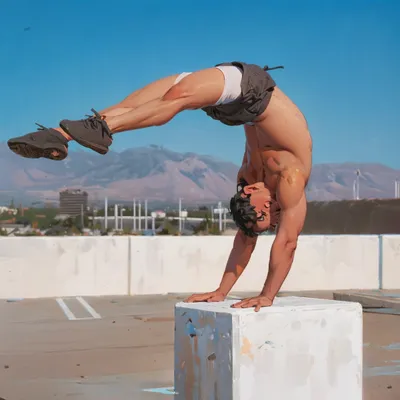
- Handstands: Getting into a Handstand becomes dramatically more efficient. Whether you prefer a Tuck Mount or a Press to Handstand, flexible Hamstrings allow your hips to start higher over your hands and shoulders. This means less distance to jump, float, or press. It's the difference between fighting gravity and working with it.
- Ring & Bar Work: Movements like the Skin the Cat or any form of Leg Lifts become significantly less taxing. You might not be interested in those specific skills, but they are foundational patterns. Inverting your body is a common requirement for countless drills, including work on the Front Lever. If you can make that inversion more efficient, you conserve precious energy for the actual skill you’re targeting.
2.2. The Ripple Effect of Efficiency
The benefits compound. Better hamstring Mobility leads to better hip Mobility, which leads to a more efficient Kinetic Chain. This means less wasted energy, a lower risk of compensation-related injuries, and faster overall progress. I could list examples forever—from the Pancake Stretch to the V-Sit—but the principle remains the same. If you want to reach your full athletic potential, you must first conquer your Hamstrings.
3. The Method: How to Stretch Hamstrings the Right Way
3.1. The Critical Mistake You're Making
I grew up doing gymnastics in East Germany, where my coaches, though well-intentioned, were cold as ice. They made me stretch until I felt physically sick. I worked harder on my Hamstrings than anything else in my life, yet I saw minimal progress. Why? Because I was doing it wrong. The ugly truth is that you can stretch with extreme intensity for years and see zero results if your form is poor. In fact, you're more likely to get injured than flexible. The most common and destructive mistake is performing hamstring stretches with a rounded lower back—a clear sign of a Posterior Pelvic Tilt. When your back is rounded, your hamstring is biomechanically slackened. You aren't stretching the muscle effectively; you are simply stressing your lumbar spine. You are wasting your time.
3.2. The Pre-Stretch Protocol
Before you even think about deep stretching, you must prepare the tissue. Never stretch a cold muscle. Always start with a good general warm-up. Get your heart rate up and break a light sweat. A jog, some rope skipping, or a few minutes on a bike will do. From there, move into a specific pre-warm-up. This should consist of light, Dynamic Stretching that eases the muscles into a greater Range of Motion. Think of it as a bridge between your warm-up and your main stretching work. Exercises like Walking Pike drills or gentle Good Mornings are perfect choices here.
3.3. Mastering the Anterior Pelvic Tilt
This is the secret. This is what separates wasted effort from real progress. Before you bend forward in any hamstring stretch, you must master the Anterior Pelvic Tilt.
1. Setup: Sit tall and make sure your back is perfectly straight.
2. The Tilt: Actively tip your pelvis forward. Imagine you are trying to pour water out of a bowl that is your pelvis. In an ideal world, this will create a slight, visible arch in your lower back.
3. The Stretch: From this tilted position, and only from here, begin to bend forward. Go only as far as you can while maintaining that arch. As soon as you feel your lower back start to round, you have gone too far. Stop. Use yoga blocks or a chair to support your hands and maintain the position.
This is where Mind-Muscle Connection becomes critical. You must feel the stretch originating from the hamstring insertion point high up by your glutes, not from your lower back.
3.4. Don't Forget the Calves
Remember that muscles are part of a connected system. Your Hamstrings have two attachment points: the upper part by the hips, and the lower part which attaches to the calves and continues down to the feet. To achieve a complete stretch, you must also incorporate stretches with a flexed foot, placing the calf muscles under tension. This addresses the entire posterior chain and prevents one tight area from limiting another. Adding calf-focused stretches after your main hamstring work is a non-negotiable part of a complete routine.
4. Your Blueprint for Lasting Flexibility
4.1. Consistency Over Intensity
We've established that brutal, misinformed stretching is a dead end. The real path to lasting Flexibility is paved with intelligence and Consistency. Follow these principles with unwavering dedication. Don’t chase a major breakthrough in days or even weeks. Real, structural change in your connective tissue takes time. The process will be uncomfortable, but it's a productive discomfort—the feeling of adaptation and growth. It's a dialogue with your body, not a war against it. Integrate different methods like Static Stretching, PNF Stretching, and developing Active Flexibility by strengthening the opposing muscles, like the quadriceps in an L-Sit.
4.2. From Potential to Power
True Mobility is not just about passive range; it's about having strength and Control through that range. That is the end goal. This journey will transform more than just your ability to perform skills; it will change how you move through the world. The pain of tight muscles will be replaced by a feeling of potent freedom. The frustration of limitation will be replaced by the Confidence of capability. I promise you: it will be worth it. Now, you have the blueprint.
Get to work.