Planche vs Stalder Press: The Secret Carryover for Max Strength
Planche is about max effort, Stalder is about pure efficiency. Here's why training one unlocks the other.
TABLE OF CONTENTS
1. The Common Ground: More Than Just Straight Arms
1.1. Foundational Pillars of Power
On the surface, the Planche and the Stalder Press to Handstand seem like they exist in different universes. One is a display of raw, grinding strength; the other, a demonstration of fluid, technical efficiency. But look closer. Peel back the layers of these elite skills, and you'll find they are built on the exact same bedrock of athletic principles. Both are pinnacle Straight Arm Strength drills that demand an unwavering commitment to form. They are also intrinsically linked to the handstand, requiring a sophisticated understanding of balance and body tension. At their core, they are both expressions of power, just channeled in different ways. This shared DNA is the secret to unlocking incredible carryover between them.
1.2. The Engine Room: Shoulders and Core
Let's cut to the chase: both the Planche and the Stalder Press are brutal on the shoulders. Specifically, your anterior deltoids are the prime movers, working overtime to generate the immense Shoulder Flexion strength required to maneuver your bodyweight in these extended positions. But strong shoulders are useless without a command center. That's where your core comes in. A rock-solid midsection, capable of maintaining a perfect Hollow Body position, provides the stable platform for your shoulders to do their work. Without granite-like Core Stability, your form will crumble, leaking power and putting you on a fast track to injury. This potent combination of shoulder power and core control is the non-negotiable entry fee for both skills.
2. The Divergent Paths: Maximum Effort vs. Ultimate Efficiency
2.1. The Planche: A War Against Leverage
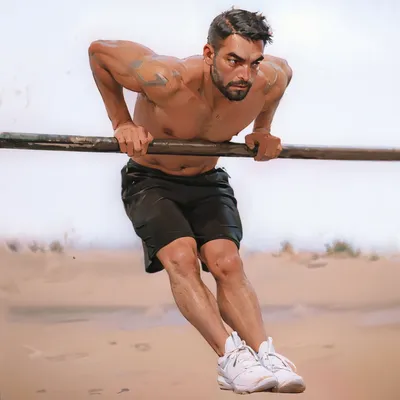
The entire philosophy of the Planche is to make the movement as difficult as humanly possible. It is a raw, unadulterated test of strength. Here, we manipulate leverage to our disadvantage, extending the body into a longer line to place maximum load on the shoulders. This is why the Planche and its progressions, from the Tuck Planche to the Straddle Planche and finally the full, are cornerstones of bodyweight bodybuilding. It's about building monstrously strong and massive shoulders through sheer Time Under Tension and Progressive Overload. While technique is undeniably a factor, the Planche is ultimately a battle won with brute force. Your goal is not to find the easy way; it's to conquer the hard way.
2.2. The Stalder Press: A Dance with Gravity
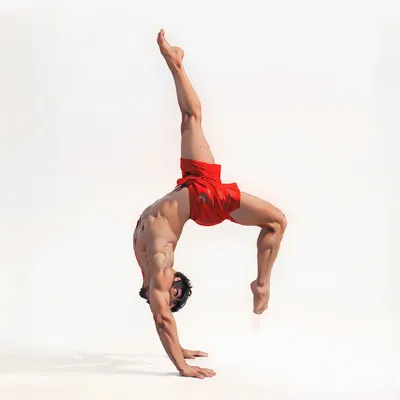
The Stalder Press is the polar opposite. Its goal is to make the entry to a handstand as effortless and efficient as it can be. We don't fight leverage; we outsmart it. By using superior Flexibility and Compression, the athlete shortens the lever of their body, minimizing the work the shoulders have to do. The Stalder is a high-level handstand entry, often seen on parallettes or canes, where energy conservation is paramount. You can't muscle your way through ten consecutive Stalder Presses; you must master the technique, using flexibility as your primary weapon to create a seamless, fluid motion. It’s not about raw power, but the skillful application of it.
3. The Synergy: How Training One Supercharges the Other
3.1. Unmasking the Connection
Here is where the two paths converge. Your Planche improves as you lean your shoulders further forward, increasing the load. The Stalder Press, however, aims to minimize that forward lean through extreme Compression. And in this opposition, the true relationship is revealed. A poorly executed Stalder Press—one with no flexibility and zero compression—is nothing more than a sloppy, forced Straddle Planche. The athlete is simply muscling through the movement because they lack the technique. This makes it painfully clear: working on basic Planche progressions directly builds the raw Shoulder Flexion strength you need to control your Stalder Press, especially when your compression isn't yet perfect.
3.2. The Ultimate Carryover
Conversely, training beginner Stalder Press progressions offers a massive advantage to your Planche journey. It provides a much wider vocabulary of movement than the often limited and static early-stage Planche drills. These dynamic Stalder drills build strength through a greater range of motion and offer quicker wins, which is a powerful psychological tool to avoid the notorious plateaus of Planche training. You build strength, coordination, and momentum. The bottom line is this: if you are training for one, you should be training for the other. They are two sides of the same coin.
3.3. The Meeting Point: The Tuck Press to Handstand
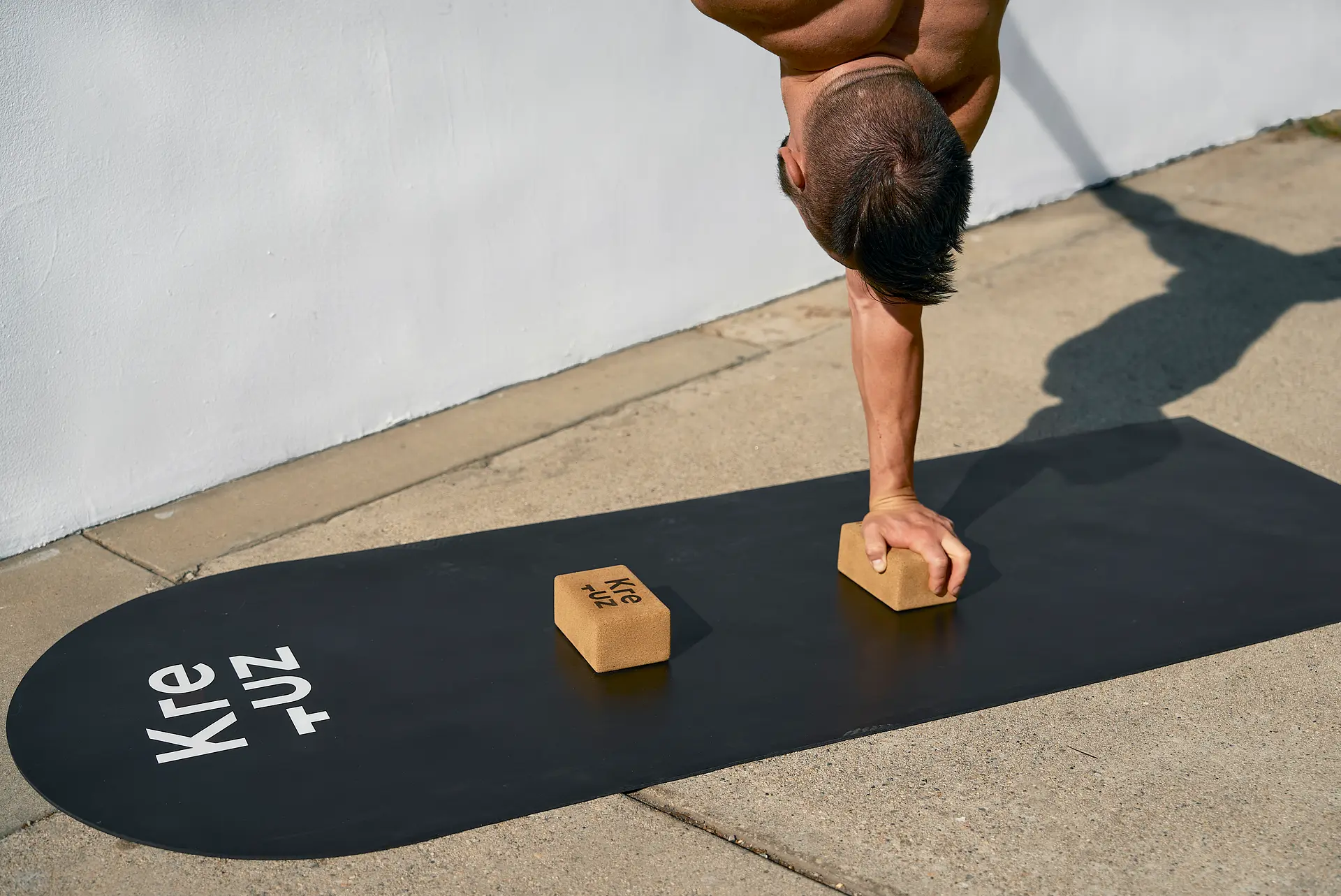
The skill where these two disciplines meet in perfect harmony is the L-Sit Tuck Press to Handstand from an L-Sit. This movement is the ultimate test of both compression strength and shoulder power. It demands the efficiency of a Stalder and the raw pressing force of a Planche. No matter which of the two primary skills is your ultimate goal, your journey should lead you to master this critical milestone. From the Tuck Press to Handstand, the paths diverge into highly specific training, but getting here builds the universal foundation that both skills demand.
4. The Unseen Ally: Handstand Push Ups
4.1. A Bent-Arm Twist
Now for a more abstract connection: the Handstand Push Up (HSPU). While the HSPU is a bent-arm skill, its mechanics have a direct and powerful carryover. In the bottom of a deep HSPU, the angle between your upper arm and torso closes significantly. Pushing up opens this angle to a full 180 degrees at lockout—the exact same range of motion for Shoulder Flexion that you fight for in a Planche or Stalder Press. While bending the arm makes managing the load significantly easier, you are grooving the exact same motor pattern and strengthening the same prime movers. Training your HSPU, especially deep variations like the Deficit Handstand Push Up, builds the specific shoulder strength that will directly translate to your straight-arm work.
5. Forging a Unified Path: Programming and Application
5.1. Weaving It All Together
The beauty of calisthenics is this profound interconnectedness. Planche, Stalder Press, and even Handstand Push Ups are all deeply related, revolving around the critical ability to open the shoulders into flexion against resistance. When you train one, you are, by extension, training for them all. This allows you to focus on one skill while putting others in maintenance mode, confident that you won't lose your gains. But this synergy is a double-edged sword. The extreme overlap makes intelligent programming and respecting recovery times absolutely critical. You can't blast your shoulders with Planche work on Monday and expect to have a productive HSPU session on Tuesday. Your training must be holistic and smart.
5.2. Your Mission
So, what's the takeaway? Stop seeing the Planche and Stalder Press as separate goals on distant horizons. Recognize them as partners in your journey toward elite-level strength. Build your foundation with both, focusing on the Tuck Press to Handstand as your first major objective. Weave in Handstand Push Ups to forge relentless pressing power. Understand the synergy, respect the recovery, and unlock a new level of strength you never thought possible. The path is clear. Get to work.