Advanced Tuck Planche: The Ultimate Guide to Level Up
Stuck at the Tuck Planche? It's time to level up. Here’s the brutal truth and the exact blueprint you need.
TABLE OF CONTENTS
1. Defining the Chasm: Tuck vs. Advanced Tuck Planche
1.1. The Visual Blueprint
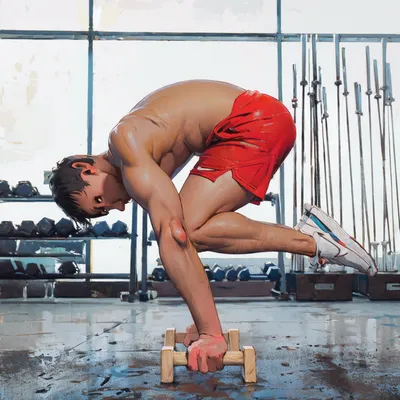
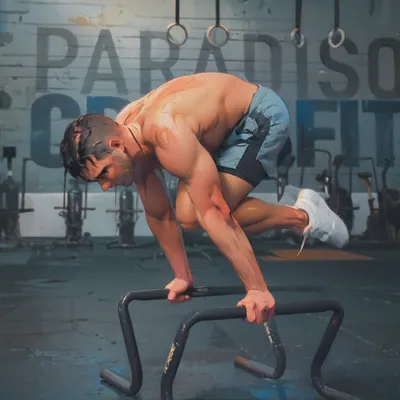
The journey from a Tuck Planche to an Advanced Tuck Planche is not a small step—it's a leap across a chasm of strength and control. Visually, the two skills are worlds apart. In a basic Tuck Planche, the goal is simple survival. You compress your body into the tightest ball possible, pulling your knees towards your chest, often with a rounded upper back and hips that might float slightly higher than your shoulders. It’s a battle of raw will.
The Advanced Tuck Planche introduces a brutal new standard of precision. We are no longer just surviving; we are engineering a line of force. The objective is to begin straightening the body. The knees move away from the chest, pointing directly down towards the floor. In a perfect execution, your shins become parallel to the ground, creating a crisp 90-degree angle at both the hips and the knees. The back, once rounded for compression, must now flatten out, creating a rigid, powerful line from shoulders to hips. This isn't just a different look; it's a different beast entirely.
1.2. The Force & Activation Shift
The shift in muscle activation is as dramatic as the visual change. In the Tuck Planche, your abdominals and hip flexors work overtime, actively pulling your knees into your chest to shorten the lever. It's a game of aggressive Compression.
As you transition to the Advanced Tuck Planche, the script flips. Your back extensors engage to fight the rounding and flatten your torso, a precursor to the true Planche line. While your core remains critical for Core Stability, its role becomes more about stabilization and less about active pulling. The real change, however, is a direct consequence of this new, longer body line. To counterbalance the weight of your hips moving backward, you are forced to lean significantly further forward. This dramatically increases the load on your shoulders, demanding a new level of Shoulder Flexion and Scapular Protraction strength. This increased lean is where most athletes fail. It’s not just about holding a new shape; it’s about commanding a much more demanding biomechanical position.
1.3. The Unchanging Laws of Straight-Arm Strength
Despite the significant differences, the core principles of Straight Arm Strength are non-negotiable and remain constant. Your elbows must stay locked. A bent elbow is a broken line; it negates the purpose of the exercise, shifts the load from the target muscles, and robs your tendons of the specific adaptation they need for more advanced skills like the Straddle Planche or Full Planche.
Scapular Protraction is still king. You must actively push your shoulders forward and wrap your shoulder blades around your rib cage. This isn't for aesthetics; it's for stability and power. A retracted scapula is a weak platform. Full protraction creates the solid base required to engage your pushing muscles to their maximum potential. Finally, your neck must remain in a neutral position. Don't look up like you're about to take flight, and don't crank it to the side to check your form in a mirror. Look at a point on the floor slightly in front of your hands. Protect your spine. These are the laws. Obey them.
2. The Blueprint for Progression: From Tuck to Advanced Tuck
2.1. Step 1: Perfect Your Foundation
Before you can build higher, your foundation must be flawless. You don't run before you can walk, and you don't attempt an Advanced Tuck Planche without a rock-solid Tuck Planche. We're talking about perfect form: fully locked elbows, unwavering Scapular Protraction, and hips held at or near shoulder height for a consistent hold. If any of these elements are shaky, you are not ready. Trying to advance with a flawed foundation is a direct path to frustration and injury. Stay here. Get stronger. Own the tuck before you even think about extending it.
2.2. Step 2: Forge Overwhelming Strength
A longer body line demands a more extreme shoulder lean, and that requires brutal, uncompromising Shoulder Flexion strength. This is where you enter a dedicated strength block. For the next 4-6 weeks, your primary goal is not the Advanced Tuck Planche. Your goal is to get undeniably stronger. Maintain your tuck hold, but shift your training focus to building raw power with two, or even three, planche-specific Straight Arm Strength workouts per week.
Your arsenal should include exercises that build both flexion and protraction strength. Planche Leans are your new best friend. They directly simulate the forward lean you need. Supplement these with drills like the protraction Cat-Cow and Lean Push Ups. Don't neglect general shoulder conditioning; exercises like Dips, Handstand Push Ups, and even the Military Press build the overall capacity that will support your specific skill work. This is the grunt work. Do it.
2.3. Step 3: Hardwire the Coordination
With newfound strength, it's time to teach your body the specific Coordination required for the advanced tuck position. You need to learn how to extend from the hips while keeping the back completely stable—a task that sounds simple but becomes exponentially harder when you're balancing your entire body weight on your hands. This movement pattern must become automatic, a neural pathway forged through relentless repetition.
- Stage One - The Chair Drill: Lay on a chair or bench. Mimic a Tuck Planche by pulling your knees in. Now, extend your legs back until your knees are under your hips, keeping your shins parallel to the floor. Do not let your back arch. Feel the back extensors engage. Isolate the movement at the hip. Practice with single-leg extensions as well.
- Stage Two - Advanced Tuck Planche Floor Extensions: From a solid Tuck Planche on the floor or low parallettes, extend your legs back until your toes tap the ground. Feel the increased shoulder lean required. Then, slide your feet back towards your hands and lift back into your starting tuck. Control every inch of the movement.
- Stage Three - Advanced Tuck Planche Floor Taps: This is the final boss of coordination drills. Start in a Tuck Planche, extend to tap the floor with your feet, but this time, lift them off the floor and pull back into your tuck without your feet ever sliding. The goal is a seamless, controlled tap and return, maintaining perfect form throughout.
2.4. Step 4: Use Bands as a Strategic Tool
Here lies the great paradox of planche training: to practice the correct shoulder lean for a skill, you must already be strong enough to hold it. But how do you get strong enough without practicing it? This is where resistance bands become a strategic tool, not a crutch or a cheat code.
If you've built strength with Planche Leans and Handstand Push Ups but still can't bridge the gap, bands can be the answer. They deload your body just enough to allow you to train the precise position with perfect form. Use a band that is strong enough for your form to be perfect, yet weak enough to be brutally challenging. Always hang the band from directly above and place it around your hips, not your feet. The goal is to support your Center of Mass, not to artificially pull your legs up. Use them wisely, and they can be the key to unlocking the next level.
3. Sidestepping the Pitfalls: Common Advanced Tuck Planche Mistakes
3.1. The Arched Lower Back
This is the most common and deceptive mistake. You extend your legs, your upper back stays rounded with good protraction, but your lower back arches significantly. This is a Coordination failure, not a strength failure. It means you are not extending from the hip joint. Instead, you are keeping the angle between your thighs and torso the same and simply rotating your entire pelvis. This is a dead end. Go back to the chair drills and floor extensions. Re-learn how to isolate the movement. Record yourself. Be ruthlessly critical of your form.
3.2. The Collapsing Scapula
If you initiate the extension and immediately feel your shoulders sink and your shoulder blades wing out, you have a critical lack of Scapular Protraction strength. Do not take this lightly. Protraction isn't just for looks; it is the mechanism that protects your shoulder joint and allows you to apply force effectively. A collapsed scapula is an unstable, weak, and injury-prone shoulder. Go back to your strength block. Hammer your Lean Push Ups, introduce Walking Lean Push Ups, and master the protraction Cat-Cow exercise. Do not move on until your protraction is unshakeable.
3.3. The Dropping Hips
As you extend your legs, your hips drop towards the floor. The internet gurus will tell you this is a lack of back strength. They are wrong. This is almost always a failure of Shoulder Flexion strength. To keep the hips up in a longer line, your shoulders must lean further forward. If they can't handle the load of that increased lean, your hips will drop as a counterbalance. You lack the strength and the confidence to own that forward lean. Your options are clear: go back to a dedicated strength cycle or intensify the strength-focused work in your current plan. More Planche Leans, more overhead work. Build the strength to support the position.
3.4. The Bent Elbows
This is a cardinal sin in all straight-arm skills. If your elbows bend, even slightly, you are failing the movement. You are no longer training the target muscles for a Planche and are instead just doing a partial push-up variation. More importantly, you are robbing your elbow tendons of the crucial Connective Tissue Adaptation needed to handle the immense forces of later progressions like the Maltese or Victorian. There is no compromise here. Keep your elbows locked at all times. If they bend, the set is over. Regress to a variation you can perform with perfect, locked-arm Technique.
4. Forging Your Path to Mastery
4.1. The Final Mandate
Let's cut through the noise. The leap from Tuck Planche to Advanced Tuck Planche is where casual effort ends and serious training begins. It separates those who collect exercises from those who master them. The path is not complex, but it is unforgiving. It hinges on two core truths: you must build overwhelming Straight Arm Strength before you can display it, and you must hardwire the Coordination of the position until it is reflexive.
This isn't about just getting stronger; it's about getting stronger in a very specific, targeted way. It's about understanding the biomechanics and respecting the process. The Advanced Tuck Planche is more than just a cool skill; it’s a testament to your dedication, a physical manifestation of your discipline. It’s the gateway to the elite levels of calisthenics. Now you have the blueprint. The rest is up to you.
Get to work.