How to Master the Tuck Planche: A Complete Guide
The Tuck Planche is your gateway to elite calisthenics. Stop dreaming and start building. Here's how.

TABLE OF CONTENTS
1. Deconstructing the Tuck Planche
1.1. What Exactly is a Tuck Planche?
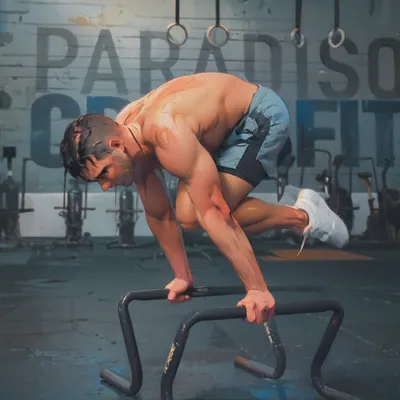
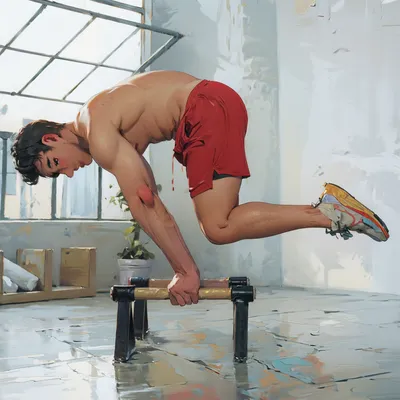
The Tuck Planche is a foundational Calisthenics skill, a critical benchmark on the path to advanced bodyweight mastery. For some, it is the ultimate goal—a testament to dedicated training. For others, it's a vital stepping stone toward the full Planche or the Maltese. Regardless of your ambition, achieving it is significant. It's an advanced-beginner upper body pushing skill where the athlete supports their entire bodyweight on their hands, with the hips held level with the shoulders. As the name implies, the legs are tucked tightly, with the knees pulled aggressively toward the chest. This skill provides an incredible source of motivation and builds highly specific upper-body pushing Strength, making it an essential drill whether you're just starting or refining existing technique.
1.2. The Cornerstone of Straight Arm Strength
High-level skills like the Iron Cross or a full Straddle Planche demand completely locked elbows, a discipline known as Straight Arm Strength. This places immense, unique pressure on the joints and connective tissues, requiring years of careful preparation. The Tuck Planche is often the first true Straight Arm Strength skill an athlete will master, which is precisely what makes it such a pivotal moment in your journey. While you must build Time Under Tension gradually to avoid injury, it is non-negotiable that you focus on locking out your elbows from day one. This builds the crucial Connective Tissue Adaptation that will serve as the foundation for everything that comes next.
1.3. More Than Just Shoulders
When we think of planche conditioning, our minds immediately go to the shoulders and arms. This is correct—all the force travels through the arms and into the floor. However, the Tuck Planche is a test of Full Body Tension. Your core, back, and hips must be incredibly strong and coordinated to work in perfect harmony. The goal is to lift the hips to shoulder height while pulling the knees to the chest, creating a compact, solid unit. Neglecting the rest of the body is a common mistake that leads to frustration and plateaus. True mastery comes from integrating every muscle into a single, unified effort.
2. The Mechanics of the Lean
2.1. The Physics of the Planche
Planches work because of one key principle: the forward lean. Imagine you're in a Push Up position with your feet on a bench. If you walk your hands backward, your shoulders move forward past your wrists. More and more weight transfers from your feet to your hands until, inevitably, your [c]Shoulder Flexion Strength[/e] gives out and you collapse. A planche is simply the act of resisting that collapse. The longer the lever—in this case, your body—the more you must lean to find the balance point. In a Tuck Planche, pulling your knees to your chest dramatically shortens this lever, turning your body into a tight ball. Consequently, it requires the least amount of lean of all planche variations. As you progress to an Advanced Tuck Planche or a Straddle Planche, you untuck and extend the legs, demanding a much greater lean and placing a heavier load on the shoulders.
2.2. The Big Three: Shoulder Actions
To nail your first Tuck Planche and build a robust foundation for the future, a symphony of strength, Coordination, and Technique must come together. While the skill doesn't demand extreme Mobility, having a basic level will certainly aid in Injury Prevention. Without a doubt, the main work happens in the shoulders. Your anterior deltoids, chest, and even your biceps have to fire in unison to hold this demanding static position. This is governed by three critical actions:
- Scapular Protraction: This is the most important concept in all of planching. Protraction means rounding your upper back by pushing your shoulder blades away from your spine, as if trying to make them touch in front of your chest. This creates a solid, stable shelf for your body to rest on, allowing your muscles to engage at their maximum potential while protecting the shoulder joint. You can learn a tuck planche without it, but it's a dangerous shortcut. Later progressions will be impossible, and you'll have to relearn the movement. Invest in protraction from day one. Drills like the Banded Cat Cow and kneeling Protraction Push Ups are non-negotiable.
- Scapular Depression: To create a slight Mechanical Advantage and further protect the shoulders, it is critical to actively pull the shoulder blades down, away from the ears. This action, known as depression, subtly shortens the lever of your torso, shaving off a small but incredibly valuable amount of weight. It's a small detail that makes a huge difference under load.
- Shoulder Flexion: This is the most obvious action. It's the raw Strength of your deltoids, chest, and biceps resisting the forward lean and fighting gravity to keep your hips elevated. Think of it as an isometric front raise, where every fiber is screaming to maintain position.
2.3. The Critical Role of the Core
Here is where the Tuck Planche truly differs from its more advanced cousins. While higher-level planches demand a perfectly flat, neutral back, the tuck planche allows—and even encourages—a rounded back. The key concept here is Compression. Imagine you are in an upper support on parallel bars. Lean your shoulders forward, bend your knees, and pull them powerfully towards your chest. You are now performing a basic Tuck Planche. The more you lean and the higher you lift the knees, the more your hips will rise. The more aggressively you can compress your body—pulling your knees in tight—the less counterbalance your shoulders have to manage. You are making the exercise easier by creating a powerful Mechanical Advantage. This active Compression isn't a passive fold; it's a skill built through dedicated Coordination and strength work with exercises like L Sits and hanging Knee Raises.
3. The Supporting Cast
3.1. Wrists and Elbows: The Foundation
All the pressure generated by your shoulders and core eventually travels through your wrists and into the floor. A sharp wrist angle is unavoidable, so preparation is key. I strongly recommend turning the hands out 45-60 degrees to create a healthier line for the joint. Using parallettes is another excellent option to maintain a neutral wrist, which significantly reduces injury risk. Additionally, keeping your forearms strong with drills like Wrist Curls will add another layer of support. As for the elbows, we've established this is a Straight Arm Strength skill. They must remain fully locked. To facilitate this and engage the pushing muscles optimally, you must externally rotate your arms so the pit of your elbow points forward. This is a non-negotiable point of Technique.
3.2. Biceps and Back: The Unsung Heroes
Often overlooked, the biceps are a common source of planche-related injuries. They play a significant role in resisting the forward lean and, critically, they protect the elbow joint from hyperextending under load. Do not neglect them. Incorporate targeted work like Preacher Curls from the very beginning. The back's role is to connect the shoulders and hips, with the long back extensors working to hold the hips up. However, in the Tuck Planche, the back's job is relatively easy due to the extreme tuck. While exercises like Superman Holds are logical, they rarely address the true limiting factor. The weak link is almost always shoulder strength, not the back.
3.3. Knees and Feet: The Final Detail
Don't let your focus on the upper body cause sloppy form elsewhere. Your knees must be fully bent. Actively engage your Hamstrings to pull your heels towards your glutes. Do not let your feet hang limply. Imagine the floor is lava and pull them up. This final detail contributes to the overall Full Body Tension and tight Compression that makes for a solid, impressive Tuck Planche.
4. Building Your Tuck Planche: The Blueprint
4.1. A Complete Workout Structure
Learning any new skill requires a plan. The road to the Tuck Planche is long, and Consistency is your greatest weapon. By understanding what to train, you can create a structured workout that guarantees progress. While everyone's starting point is unique, the components are universal.
- General & Specific Warm-Up: Every single session starts here. 8-12 minutes of low-impact cardio, followed by mandatory prehab drills for your shoulders, elbows, and wrists.
- Protraction Activation: Prime that crucial Mind-Muscle Connection with low-intensity protraction drills like the Banded Cat Cow.
- Hardest Static Progression: You are fresh and your energy is at its peak. Attack your main strength work now. This is where you'll do your holds—be it a full Tuck Planche hold, a Planche Lean, or a single-leg variation. Focus on perfect form.
- Dynamic Exercises: Training only statics is slow and boring. Incorporate rep-based movements like L-Sit to Tuck Planche lifts or deltoid raises. This builds functional strength in surrounding angles and provides more frequent, motivating wins.
- Bent Arm Work: Build extra protraction and lockout strength with bent-arm work like Pseudo Planche Push Ups. The Tuck Bent Arm Planche is also a fantastic, accessible way to build volume, as the bent arms shorten the levers and reduce the load.
- Core Work: This is tuck-planche specific. You need to pull your knees to your chest, so train it directly. L Sits, hanging leg raises, and sitting leg lifts are all excellent choices.
- Cool Down: Don't skip your post-workout stretches. A healthy body is a strong body. Finish the job.
4.2. Programming and Periodization
Consistency is paramount. Ideally, you will train specifically for the Tuck Planche two or three times per week, ensuring adequate Recovery. You can integrate these components into a full-body routine or dedicate specific days to them. The goal is not soreness; the goal is measurable progress. Aim for one more second of hold time or one more clean rep each week. If you hit a plateau, don't panic—change the stimulus. Take 8-12 weeks to focus on raw Overhead Pushing Strength with Handstand Push Ups or weighted dips. This builds the raw horsepower that will smash through your plateau when you return to specific planche work.
4.3. Training with Bands: A Strategic Tool
Hanging a resistance band from overhead to support your hips is a powerful tool. The paradox of the planche is that you can only train the specific angle you need by holding that angle—which you can't do yet. Bands solve this. By offloading a percentage of your bodyweight, a band allows you to get into the correct position and build highly specific strength and endurance. As you get stronger, you use a lighter band, progressively closing the gap. When using a band, ensure it supports you at the hips, not the ankles, and that it pulls straight up, effectively reducing gravity. I reserve banded holds as a tool to break plateaus, preferring to build a raw sense of Body Awareness first.
5. Your Call to Action
5.1. Is the Tuck Planche Worth the Grind?
Embarking on the journey to the Tuck Planche is a serious undertaking. It demands dedication and carries an inherent risk of injury if approached recklessly. Plateaus can be frustrating, and it is not the most efficient path for pure hypertrophy. But the rewards are immense. It's a cool and impressive move that showcases profound Control and Strength. The gains in pushing power transfer to nearly every other Calisthenics skill, and the process strengthens your joints and tendons for future goals. More importantly, it provides a clear, powerful objective that fosters Discipline and delivers an incredible sense of accomplishment.
The road is long, but with intelligent analysis, self-study, and a solid plan, the winding path full of potholes becomes a straight and even road. Your success hinges on one thing: your ability to show up, day after day, and do the work. Health must always come first, as you can only be consistent if you are injury-free.
So, is it worth it? Absolutely. Now, stop reading.
Get to work.