Calisthenics Form: The Ultimate Guide to Unlocking Your Strength
Stop wasting reps. Master the technique that separates amateurs from athletes. Unlock your true potential.

TABLE OF CONTENTS
1. The Bedrock of Progress: Health & Injury Prevention
1.1. Why Perfect Form is Non-Negotiable
In calisthenics, we don't just work out; we forge a new relationship with our bodies. It's a path of building raw strength, developing intricate coordination, and gaining a profound understanding of what you're capable of. But here's the hard truth: punching out sloppy reps to break a sweat is a waste of your potential. If you want workouts that are ruthlessly efficient and build a resilient, powerful physique, you have to do things right. How you move always matters, but in the world of bodyweight mastery, it matters more. This is about more than just avoiding pain; it's about building a body that is armored against injury, ready for any challenge you throw at it. Understanding why form is the absolute cornerstone of your training is the first—and most critical—step. It's the difference between a lifetime of progress and a journey cut short by preventable setbacks.
1.2. Engineering an Injury-Proof Body
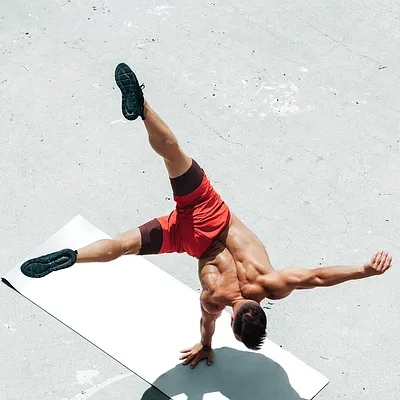
You and I, we have one thing in common: we love to train. To do what we love, we must remain unbroken. An injury isn't just a setback; it's a thief. It steals your momentum, forces your body to divert energy to healing instead of building, and chains you to the sidelines. Your highest priority, above all else, must be to stay healthy. Gains are temporary; a broken body can be permanent. This isn't about being timid; it's about being intelligent. You must analyze the mechanics of every exercise, learn the basics of human anatomy, and understand how to armor yourself against the forces you're manipulating. A simple yet powerful rule to live by: Engage against gravity. In a Planche, you protract your scapula to create a solid platform. In a Handstand, you elevate relentlessly, pushing the ground away. This active engagement creates structural integrity, turning your body into a fortress. It's not passive; it's a constant, conscious battle against the pull of the earth. This is the foundation of Injury Prevention.
2. Unleashing Power: The Physics of Efficient Force Application
2.1. The Science of Alignment
This concept can be elusive when you're just starting, but it's the secret that unlocks elite-level skills. To generate maximum force, your body must be a perfectly aligned Kinetic Chain. Think of it as a weapon system: if a single component is out of place, the entire system misfires. Misalignment doesn't just feel awkward; it actively robs your muscles of their ability to work at their full capacity. This is a critical failure in Movement Pattern efficiency. The most frustrating part? Your body's natural, intuitive path is often the wrong one. It will always seek the path of least resistance, which is rarely the path of greatest strength.
2.2. Case Study: The Planche and the Press
The Planche is a brutal, unforgiving teacher of this principle. Attempt to hold a Tuck Planche without full Scapular Protraction, and you've already lost. Your chest and anterior deltoids are taken out of the equation, leaving your shoulders in a weak, compromised position to fight a battle they cannot win. You're leaking force everywhere. Similarly, consider the Press to Handstand from an L-Sit or a Stalder Press. The beginner's mind screams, "Get the hips up!" This leads to an immediate, instinctive opening of the hips and an arch in the back. This creates a terrible Mechanical Advantage and makes it nearly impossible for the shoulders and back to generate the necessary lift. The elite athlete knows the secret: stay compressed. By focusing first on opening the shoulders (Shoulder Flexion) while maintaining deep Compression, they can then use the powerful back muscles to pull the hips up into a stacked, efficient line. It's physics. It's leverage. It's perfect technique.
3. Sculpting Strength: The Art of Muscle Isolation
3.1. The Compound Conundrum
Nearly every calisthenics exercise is a compound movement, a symphony of muscular contraction across the entire body. This is a double-edged sword. While fantastic for building functional strength, it means some muscles—like the biceps and anterior deltoids—tend to get invited to every party, while others, like the lats and lower traps, are harder to engage effectively. Your goal is not just strength, but a well-balanced, aesthetic, and healthy physique. To achieve this, you must develop all your muscles with intention. The body doesn't grow equally; we all have dominant muscle groups that are eager to take over. This is where your Mind-Muscle Connection becomes your most valuable tool.
3.2. Precision Strikes: Handstand Push-Ups & Front Levers
Correct form is the laser guide for your training. It ensures you're hitting the intended target. If your form breaks down, your body, in its quest for efficiency, will default to using your strongest muscles, not the ones you're trying to develop. This leads to imbalances and plateaus. Look at the Handstand Push Up (HSPU). Maintain a straight, rigid Hollow Body line, and it becomes a masterclass in building Overhead Pushing Strength, obliterating your deltoids. But allow your back to arch, and the angle changes completely. The exercise morphs into a pseudo-incline press, shifting the load to your chest—a muscle likely already well-developed from Push Up variations. You've cheated yourself out of the intended stimulus. The Front Lever tells a similar story. Choose an appropriate progression where you can maintain locked elbows and retracted scapula. This forges a powerful back, engaging your lats, rhomboids, and traps. But if you're overreaching with a progression that's too difficult, your form will collapse. Your elbows will bend, your hips will pike, and your biceps and chest will take over to rescue the movement. You're no longer training the Front Lever; you're just surviving a sloppy pull. Form Collapse is the enemy of progress.
4. From Knowledge to Mastery: Your Path Forward
4.1. Architect Your Own Progress
The evidence is clear: form is not just a detail; it is everything. It is the gatekeeper to your health, the key to unlocking your strength, and the sculptor of your physique. Before you attempt any exercise, you must become its student. Deconstruct it in your mind. What is the primary goal? Which muscles should be firing? What does a perfect rep feel like? It is this deep, analytical approach that transforms mindless repetition into mindful practice. Only by truly understanding the why behind the how can you begin to maximize your results and take ownership of your training journey.
4.2. The Final Rep
Your progress in calisthenics will not be defined by how many reps you can do, but by how many perfect reps you can do. The path to mastery is paved with intentional, flawless movement. Take this knowledge, apply it with relentless consistency, and watch your potential unfold. The gap between where you are and where you want to be is bridged by discipline and perfect execution. Get to work.