Handstand Wrist Pain: A Coach's Guide to Fixing Inflammation
Wrist pain killing your handstand? Stop guessing. Here's the real reason and how to fix it for good.

TABLE OF CONTENTS
1. The Anatomy of the Problem
1.1. Why Your Wrists Are Screaming
Let's be direct. Your ankles are robust, engineered for impact. Your wrists are delicate, designed for nuance, not for supporting your entire bodyweight in a Hand Balance. We defy that design every time we get inverted. So, when your wrists complain, it's not a surprise; it's an expected consequence of pushing boundaries. But discomfort is not the same as debilitating pain. The issue isn't that you're using your wrists—it's how you're using them. A lifetime of disuse has left them unprepared for the intense Compression of a Handstand. When I first dedicated myself to handstands, despite being an elite gymnast, my wrists were a constant battleground. The pain felt different, more insidious. We must understand the root cause to conquer it. This isn't about being fragile; it's about being smart.
1.2. The Vicious Cycle of Inflammation
The wrist is a marvel of engineering: a tight bundle of small bones, ligaments, and tendons with almost zero spare room. When you load it in a handstand, that minimal space shrinks to nothing. This pressure creates friction and micro-trauma, leading to the body's natural healing response: Inflammation. Here's the trap: inflammation causes swelling. Swelling in a space with no room means more pressure. More pressure means more inflammation. This is a self-perpetuating cycle, a downward spiral that ends in chronic pain and forced time off if you don't intervene. Remember this: inflammation isn't inherently bad. It's a signal. It’s your body telling you that you're either doing too much (Overuse) or you're doing something wrong. Ignoring this signal is a critical error.
2. Fortification: How to Prevent Wrist Pain Before It Starts
2.1. Technique is Non-Negotiable
This is where the game is won or lost. Poor technique is the primary driver of wrist pain. The equation is brutally simple: if you sink into your shoulders, they close and shift forward. This sharpens the angle of your wrist, dramatically intensifying the pressure on the joint. It’s a foundational error that punishes beginners most severely—their wrists are unconditioned, and their technique is still developing, creating a perfect storm for injury. The antidote is relentless focus on proper form. Every single rep must be executed with full Scapular Elevation. Think of actively pushing the floor away from you. Keep your workouts short and highly focused. Quality over quantity isn't a suggestion; it's a command.
2.2. Intelligent Programming and Preparation
Hope is not a strategy. You need a plan. Your training, rest, and warm-ups must be deliberate. Embrace the principle of Progressive Overload—build your capacity slowly and systematically. If you're new to this, train handstands every other day for the first few months. No exceptions. But your warm-up protocol extends beyond the gym walls. It's a 24/7 commitment. Keep your wrists and forearms warm throughout the day. Wear a long-sleeved shirt. Avoid sitting next to an air conditioner or holding your hand out of a car window. These small, seemingly insignificant details accumulate. They make the difference between a productive session and a session that ends in pain. This is a core component of long-term Injury Prevention.
2.3. Fueling for Resilience
What you put into your body directly impacts its ability to manage inflammation. This isn't pseudo-science; it's basic physiology. Certain foods can help fortify your system against inflammation. Load up on anti-inflammatory powerhouses like berries and turmeric. Conversely, be aware of foods that can aggravate it: processed sugars, excessive dairy, and for many, nightshades like potatoes. The absolute worst offender? Alcohol. I've done the foolish self-experimentation for you during my years touring with shows. A hangover creates a systemic inflammatory state that your wrists will pay for. There is nothing worse for joint inflammation. Train hard, but party smart.
3. Damage Control: Active Recovery for Inflamed Wrists
3.1. The First Commandment: Reduce the Load
This is the simplest and most difficult instruction to follow: train less. You have a minor injury. Treat it with respect before it becomes a major one. Remember the vicious cycle? To break it, you must reduce the pressure. That means fewer sets, fewer sessions, and more days off from direct handstand work. Don't view this as a setback. View it as a strategic opportunity. Use this time to attack your weaknesses. Work on your full-body fitness, your shoulder stability, and your Flexibility. When you return to full-time handstand training, you'll have built a stronger foundation, and your progress will accelerate past its pre-injury point.
3.2. Training Modifications for the Stubborn Athlete
I know you. The idea of taking time off is unbearable. If you absolutely must continue training for a competition, a show, or your own sanity, you need to modify your approach intelligently. These are not excuses to avoid rest; they are tools to manage load.
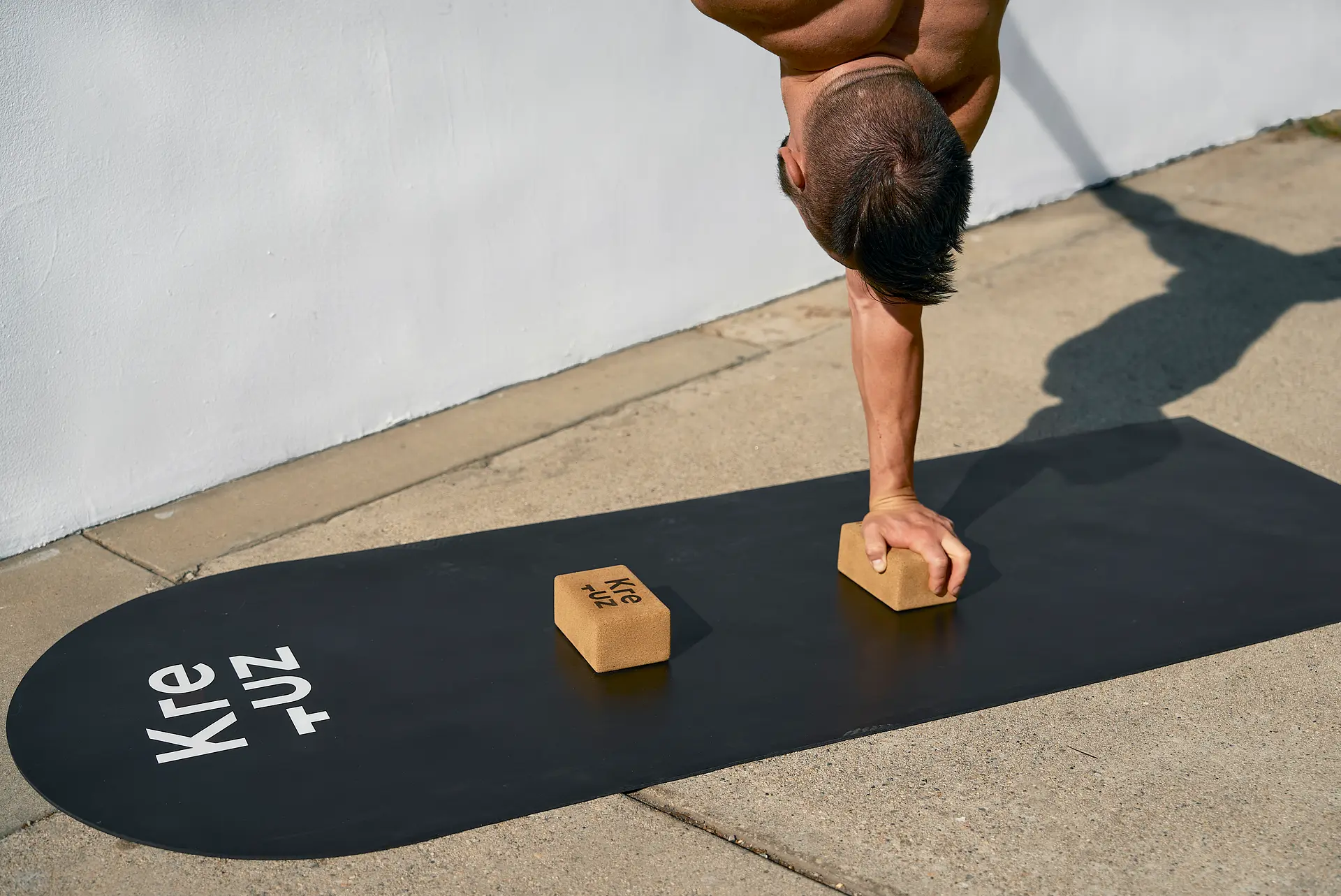
- Declined Surface: Use special handstand blocks, or simply elevate a wooden board with a belt or a mat. This slight decline opens the wrist angle, immediately reducing pressure.
- Parallettes: Using Parallettes places the wrist in a neutral position, removing extension entirely. This is an excellent tool for conditioning exercises like Push Ups, Handstand Push Ups, and progressions for skills like the Planche. Be aware that the 90-degree external hand rotation changes the demands on your shoulders and alters your balance. Use them for strength work, not for re-learning your balance under duress.
3.3. Releasing Upstream Tension
Your wrist pain might not originate in the wrist. Tension in your forearms, biceps, triceps, and shoulders creates a system of tight pulleys that pulls on the delicate structures of the wrist. This tension causes its own inflammation, which can spread downstream. It also restricts your wrist's range of motion, forcing it into compromised positions under load. You must address the entire Kinetic Chain. Regularly roll and stretch your forearms, shoulders, and chest. Keep the entire engine of your upper body loose and mobile. The results will be profound.
4. Your Mandate for Wrist Longevity
4.1. The Cold Hard Truth About Icing
All the strategies discussed will help, but this was the absolute game-changer for me, my clients, and my fellow performers. While medical opinions on Cold Therapy vary, my experience is unequivocal: it works. The protocol is simple: ice your wrists for 8-12 minutes after every single training session, and again before bed. Submerge your entire hand, wrist, and the start of your forearm in a bucket of ice water. If that's too intense, contrast baths—alternating 30 seconds between hot and cold water—are a viable alternative. CRITICAL WARNING: Never ice before training. This numbs pain signals and can reduce tissue pliability, increasing injury risk. There must be at least a six-hour window between your last ice session and your next workout.
4.2. The Last Resort You Must Avoid
It can be tempting to reach for anti-inflammatory drugs like ibuprofen to mask the pain and push through. This is a fool's errand. Inflammation is your body's primary tool for healing and its most important signal that your Movement Pattern is flawed or your volume is too high. Masking that signal is like cutting the wires to your dashboard's warning lights. You're flying blind toward a much more serious injury—one that might require surgery. Furthermore, studies suggest that training on anti-inflammatories can blunt muscle growth by interfering with the Neural Adaptation process. It's inefficient and dangerous. Your health is the foundation of your training. Never sacrifice it for a short-term goal.
4.3. Your Action Plan for Bulletproof Wrists
Let’s distill this down to its core. Wrist pain from inflammation is almost always a symptom of two things: flawed technique and poor load management. Everything else is a supporting factor. Your primary focus must be on perfecting your form—especially maintaining Scapular Elevation—and programming your training with intelligence and patience. Use the tools provided here: smart modifications like Parallettes, diligent recovery protocols like icing, and maintaining upstream Mobility. Respect the signals your body sends you. Chronic injuries are not a badge of honor; they are a sign of a flawed process. Fix the process. Your life does not depend on handstands, but it does depend on your health.
Get to work.