Shoulder Injury Prevention: The Ultimate Calisthenics Guide
Shoulder pain is not a requirement for progress. It's a sign you're training wrong. Let's fix that.

TABLE OF CONTENTS
1. Deconstructing the Myths of Training Injuries
1.1. The “No Pain, No Gain” Fallacy
Your journey in Calisthenics—whether you're a handstand enthusiast or a gymnast—places your shoulders at the epicenter of force. They are required to push, pull, and carry immense loads through a vast Range of Motion. The path to mastery is paved with effort, but it is not paved with injury. There exists a pervasive and dangerous myth in athletics: that injuries are a non-negotiable part of the process. This is fundamentally false. Pain is a signal, not a badge of honor. As someone who has performed over a thousand shows, I can tell you that longevity is not built on ignoring pain, but on respecting it. The highest-level athletes and coaches understand that most non-impact injuries are not accidents; they are failures in programming, awareness, or recovery. An injury is not the end, but it is a massive, avoidable detour. Modern medicine is remarkable, but prevention will always be superior to rehabilitation. Your goal must be to train without forced interruption. To do that, you must dismantle the bro-science and build your foundation on proven principles.
1.2. The Illusion of a “Bulletproof” Body
The concept of a “bulletproof” body is seductive but flawed. It suggests invincibility, a state where you are impervious to harm. Your body is not a machine; it is a biological system that adapts, fatigues, and requires constant maintenance. You can forge a body that is incredibly resilient, but you can never make it invincible. The routines that strengthen your friend's shoulders may not be perfectly suited to your unique structure, goals, and history. True Injury Prevention is not about finding a magic routine; it’s about developing the knowledge to create and constantly adjust your own protocol. Your training, lifestyle, and even age are in constant flux. A truly advanced athlete understands this and tweaks their approach accordingly. This is not a weakness; it is the highest form of athletic intelligence.
2. The Anatomy of a Breakdown: Common Causes of Shoulder Pain
2.1. The Underestimated Saboteur: Lack of Warm-Up
At the top of the list for preventable shoulder injuries is the insufficient or completely absent warm-up. Be honest: how many times have you, feeling warm from a summer walk, jumped straight into your main work? A proper warm-up is far more than raising your heart rate or breaking a light sweat. It is a meticulous, joint-by-joint preparation. It must include prehab exercises that move the shoulder through its entire Range of Motion, dynamic stretches, specific activation work for the Rotator Cuff, and, crucially, low-intensity versions of the skills you are about to train. It's a diagnostic tool as much as a preparatory one.
2.2. Poor Movement Quality & Form Collapse
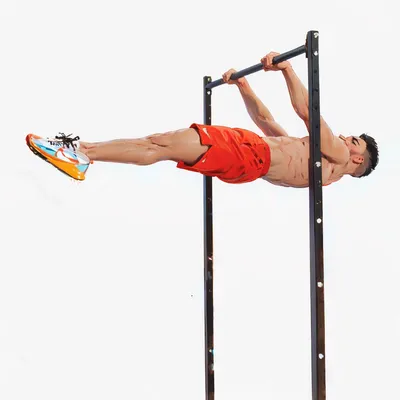
A close second, and arguably intertwined with the first, is poor form. A breakdown in Technique can happen for a myriad of reasons: fatigue, training at a level that is too advanced, or simple lack of knowledge. When your form falters, you can no longer use your muscles to their full potential. The load shifts to tissues not designed to bear it, and something gives. Consider the Planche. If you lose Scapular Protraction, your shoulder blades wing out, your chest disengages, and the entire load is brutally focused onto your anterior deltoids and biceps tendons. This isn't building Strength; it's systematically overloading a weak point until it fails.
2.3. Systemic Neglect and Lack of Care
You demand the performance of a Formula 1 car from your shoulders but often provide the maintenance of a forgotten bicycle. A racing car requires constant, meticulous care to perform at its peak. Your shoulders are no different. You might ice a swollen wrist or massage a sore back, but when was the last time you dedicated specific recovery work to your shoulders? They bear the brunt of your ambition. Repay them with targeted care—stretching, mobility work, and proper recovery protocols. In return, they will grant you the strength, Mobility, and health to continue your pursuit.
3. The Sentinel's Strategy: How to Listen to Your Body
3.1. Spotting Pain During the Warm-Up
The greatest trick to avoiding injury is to see it coming from a distance. Most of us ignore the whispers until they become screams. The warm-up is your early warning system. This is where you connect your mind to your body. As discussed, the warm-up must prepare the joint in all anatomical directions. This process not only builds the small stabilizing muscles essential for joint health but also acts as a daily diagnostic scan. This was the absolute key to my own injury-free career. Before every training session, before every performance, I would dedicate 5-10 minutes of hyper-focused attention to my shoulders, working them with low pressure in every direction. If something hurt that didn't hurt yesterday, I knew something was wrong. This is not a time for distraction; it is the most important part of your session. Feel every muscle. If a Rotator Cuff muscle is angry, you will know it here, before you expose it to the high loads of a Handstand Push Up or Overhead Press.
3.2. Spotting Pain at Home
Prehab isn't confined to the gym. For a dedicated athlete, it becomes a lifestyle. Foam rolling and self-massage are powerful tools for detecting issues early. A healthy, recovered muscle should not be excruciatingly painful under pressure. Use your own fingers to probe the muscles around your shoulder. If you find a tender spot, apply pressure and use a 4-second contract-relax cycle. If the discomfort persists and the muscle does not release, your body is sending a clear signal. Proceed with caution. This vigilance is what separates the chronically injured from the consistently performing.
3.3. What to Do When You Feel Pain
So you've listened. You've detected a signal—something feels off. This is a victory. You've spotted the issue early. The first step is critical: do not panic. Pain is a complex signal; it does not automatically equal injury. Severe soreness is painful, but it's a part of adaptation. The key is to analyze the pain. If you feel a minor twinge during your warm-up, try warming up more. If it subsides, you can proceed with your workout, but with elevated caution. If the pain persists or worsens, you must adjust. Today’s workout is never more important than the next hundred. If you start to feel pain during everyday movements like reaching for something or putting on a shirt, you have ignored the earlier warnings. It is now time for drastic changes to protect your long-term health.
4. Forging Resilient Shoulders: Your Action Protocol
4.1. Balancing the Equation: Agonist vs. Antagonist
True strength is balanced strength. A common path to shoulder injury is creating a massive imbalance between your pushing and pulling muscles. The working muscle is the Agonist, and the opposing muscle that stabilizes the joint is the Antagonist. Picture your pushing muscles (agonist) becoming overwhelmingly strong compared to your pulling muscles (antagonist). Your back and rear delts won't be able to properly stabilize the shoulder joint under heavy pressing loads. This imbalance is a ticking time bomb. You must anticipate this by training your shoulders and back in all directions. Incorporate pulling movements like Pull Ups, Rows, and Face Pulls with the same dedication you give to your pressing.
4.2. The Rotator Cuff Protocol
This shouldn't even need to be said, but it must be hammered home: working your Rotator Cuff with elastic bands is not just for when you feel pain. It must be the absolute core of your daily warm-up. These are the small, crucial muscles that keep your shoulder joint centered and stable. Ten minutes a day will change your athletic life. Focus on pristine form. Use light resistance. If the resistance is too high, the larger muscles like the deltoids will take over, defeating the entire purpose of the exercise. Drills like [e]External Rotation[/c] and [e]Internal Rotation[/c] are non-negotiable. Film yourself, get feedback, and treat these exercises with the respect they deserve.
4.3. Intelligent Recovery and When to Seek Help
Recovery is where you build strength. High-intensity training can create Inflammation. Cold Therapy, or icing the joint after a particularly intense session, can be a game-changer for promoting blood flow and reducing that Inflammation. While some modern research debates its efficacy, countless high-level athletes, myself included, have found it to be an invaluable tool. However, if your pain does not improve after 2-3 days of reduced intensity and dedicated recovery, or if you experience pain in everyday life, it is time to seek professional help. Do not let ego delay this. A physical therapist or doctor can provide a diagnosis and a plan that an article on the internet cannot. You have one body. It needs to support your ambition for years to come.
Your shoulders are not invincible, but they can be made incredibly resilient. Injury Prevention is not a passive activity; it is an active, intelligent, and daily practice. Pay attention, make smart decisions, and dominate your goals.
Get to work.