3 Handstand Mistakes Killing Your Progress (& How to Fix Them)
Your handstand isn't about luck. It's about structure. These 3 common mistakes are killing your gains.
TABLE OF CONTENTS
1. Destroying the Banana Handstand
1.1. The Anatomy of the Banana
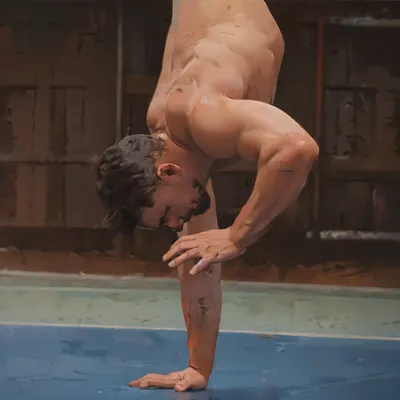
You know the feeling. Some days your Handstand is rock solid, others it crumbles instantly. You feel like you're gambling, just hoping to kick up and magically find the sweet spot. This isn't luck. It's a failure of structure. The most common culprit is the infamous Banana Handstand. This isn't a style choice; it's a mechanical breakdown. When you sink into your shoulders—or in other words, fail to achieve full Scapular Elevation—they close and create an angle. To keep your Center of Mass over your hands, your body has no choice but to compensate. Your back arches, your ribs flare, and your hips push forward. You become a banana. This posture is a massive Energy Leak, making the hold exhausting and unstable. It breaks the Kinetic Chain and puts unnecessary stress on your lower back and wrists.
1.2. The Real Fix: Active Control, Not Just Passive Stretching
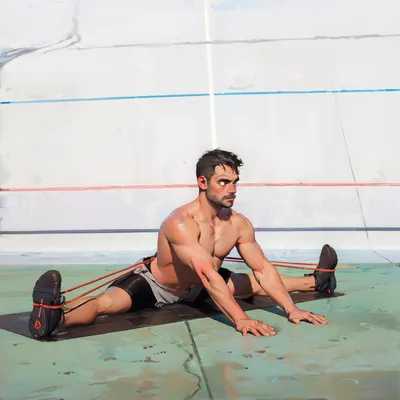
The easy answer is to just stretch your shoulders more. While improving your Shoulder Flexion is important for long-term progress, passive stretching alone is a slow, frustrating path. It builds potential range, but not the strength and Coordination to use it under load. The real solution is a two-pronged attack. You must pair passive stretches with active shoulder opening drills. Think drills where you are actively pulling your arms into the correct overhead position, teaching your brain and muscles how to create and hold a strong, stacked line. Integrate these drills into every warm-up. It doesn’t take more than 10 minutes to start re-patterning this critical movement and build real, usable Mobility. Forget hoping for a good balance day; build a structure that doesn't need it.
2. Stop Ignoring Half Your Body
2.1. Your Legs Are Not Passengers
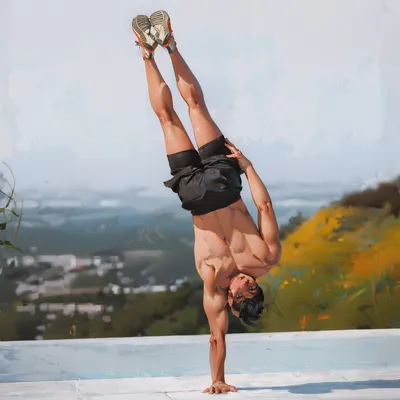
We obsess over shoulders, wrists, and core, but we forget that our legs make up nearly half of our body's length in a Handstand. This makes no sense. You cannot have a solid structure if 50% of it is disconnected and floppy. If your feet are loose, your calves will be loose. If your calves wobble, so will your hamstrings, and that instability will travel right up to your glutes and core, pulling you down. A relaxed leg is a heavy leg. It's dead weight that your shoulders have to fight. A tight, engaged leg becomes part of the structure—a rigid lever that provides stability and control.
2.2. Forging Unbreakable Leg Tension
Handstands are complex. You’re already managing shoulder position, hip alignment, and Fingertip Control. You cannot afford to add “engage the legs” to that checklist in the moment. Leg engagement must become an unconscious reflex. The second your hands touch the floor, your legs must switch on automatically. Isolate this skill. Work on Coordination and conditioning drills on your back, then in a Headstand or Forearm Stand, before bringing it to your hands. Squeeze your legs so hard it feels like you’re trying to wring water out of them. Point your feet hard or flex them completely—just make sure they are active, not passive. This isn't optional. It's a non-negotiable component of a stable Handstand.
3. Eliminating the Pike: The Control Killer
3.1. Trading Control for Comfort
The body is smart. It’s always looking for the path of least resistance. In a Handstand, the more you lean into your fingertips, the more Control you have, but the heavier and more demanding the position feels. To reduce this pressure, the body finds a clever cheat: it pikes at the hips. It’s a subtle bend, just enough to shift your Center of Mass slightly back, unloading the pressure on the hands and making the hold feel significantly lighter. The problem is you are trading muscular effort for control. You've abandoned your first line of defense. A piked Handstand is an unstable one, constantly on the verge of falling backward.
3.2. Mastering Your Center of Mass
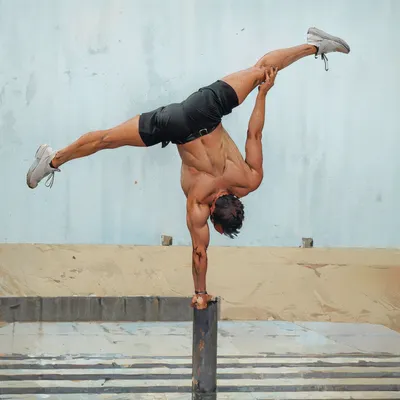
Imagine standing upright with a heavy weight overhead. As long as you lean slightly forward into your toes, you feel in control. The moment that weight drifts back and your balance shifts to your heels, you're in trouble. You've lost your ability to correct. It's the same on your hands. The fingertips are your only tool for correction in one direction. Piking at the hips is like standing at the edge of a cliff. Yes, holding a perfect line with weight in the fingers is exhausting, but it's also where you have maximum authority over the position. You can swap between positions, like a Tuck Handstand or a Straddle Handstand, and you have the ability to move towards a One Arm Handstand. If your goal is a long, static hold, a microscopic pike might be used by elite athletes to conserve energy, but they understand they are staring down a cliff, one millimeter away from falling. For those of us still mastering the skill, the pike is a poison pill. Fight for the straight line and earn your control.
4. Stop Gambling, Start Dominating
4.1. The Harsh Truth: You Aren't Ready
All of these technical flaws are symptoms of a larger issue. You are training skills you haven't earned. You've spent a lifetime on your feet. You can't expect to master the same control on your hands overnight. This takes time. It requires building specific muscles, forging new neural pathways, and developing a deep sense of Upside Down Awareness. If 4 out of 5 of your Handstand attempts end in failure, you are not training handstands. You are practicing falling. This is not productive. It builds bad habits and frustration. There is no shame in this. You must regress to progress.
4.2. Build the Foundation, Own the Skill
Your ego is your enemy. Go back to the wall. Master your Chest to Wall Handstand. Can you hold it for 60 seconds with a perfect line? Can you perform shoulder shrugs and leg lifts without collapsing? Until you are rock solid with the wall as support, you have no business expecting to be stable without it. The mount itself adds a huge layer of complexity. By training at the wall, you remove that variable and focus purely on building the strength, endurance, and alignment. Film your practice. Analyze it mercilessly. The technical tweaks that unlock stability are only possible once the foundational strength is there. Train at the level you are at, not the level you wish you were at. Build a foundation so strong that the freestanding Handstand becomes an inevitability, not a gamble. Get to work.