Stop Balancing: The Secret to True Handstand Control
Chasing that 'floaty' handstand feeling? You're doing it wrong. The secret isn't balance—it's active control.

TABLE OF CONTENTS
1. The Great Handstand Lie
1.1. Deconstructing the Myth of Perfect Balance
Stop chasing the golden point of balance. So many athletes training for the Handstand are searching for a mythical moment of perfect alignment, a floaty, weightless state where everything just clicks. They believe that a well-aligned Handstand is effortless. This is a lie. While a straight line is more efficient than a Banana Handstand, balancing upside down is never truly easy. It is constant, active work. You are not a statue. You are a dynamic system fighting gravity, and to win that fight, you need more than passive balance. You need absolute Control.
1.2. Why Control is Superior to Balance
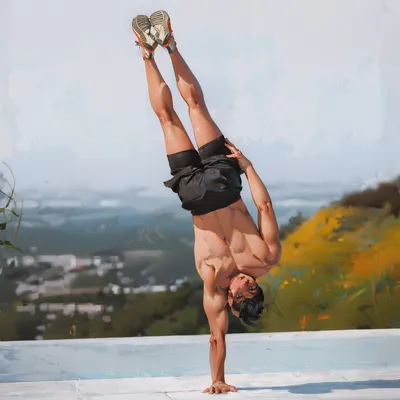
The truth is, your Handstand is meant to move. You want to transition between shapes, walk across the floor, shift to a One-Arm Handstand, or flow into a backbend. Every action has a reaction. If you open one leg into a Straddle Handstand, force travels from your hips, through your shoulders, and into the floor. If you are merely “balanced,” this force will shatter your line, causing you to rotate and fall. But if you have control—if your weight is intentionally shifted forward into your fingertips—you can push back against this pressure. You can absorb the force and make the movement appear effortless. That is the difference between a practitioner and a master.
2. The Nature of Active Stability
2.1. The Unstable Truth: Your Body is Always Correcting
Imagine waiting for a bus, but you've decided to do it standing on one foot with your eyes closed. Are you perfectly still? Of course not. Your ankle is on fire, your foot making thousands of tiny adjustments. It is a constant battle of micro-corrections to maintain your upright position. This is the reality of your Handstand. You are always in a state of falling. You start to fall in one direction, your brain registers the error, and you initiate a counter-maneuver. You catch yourself and push back toward your efficient, stacked line. At first, you push too hard and start falling in the opposite direction. You are playing a constant game: analyze, react, overcorrect. This feedback loop is not a sign of failure; it is the very definition of balancing.
2.2. Forging the Illusion of Stillness
Over time, your Proprioception sharpens. Your Upside Down Awareness becomes second nature. You get faster at recognizing the direction of your fall, and your reactions become infinitely more precise. The wild oscillations become smaller and smaller until they are almost imperceptible. This is how you create the illusion of perfect stillness. While a Handstand might look effortless and static, a closer look at a master’s forearms reveals the truth: the muscles are constantly firing, engaged in a relentless battle to maintain that line. This is Active Stability, not passive balance.
3. The Fingertip Doctrine: Your Steering Wheel for Control
3.1. The Problem with the 'Easy' Position
There is a place in the Handstand where it feels physically easier—where the weight is centered over the heel of your hand and your bones are stacked. This is the “golden point” so many people chase. But it’s a trap. While it might exist for a fleeting moment, you have zero actual Control in this position. It’s like standing flat on the middle of your foot; you can’t sprint forward or catch a heavy ball from that position. You are stable, but you are not ready for action. Relying on this comfortable, “easy” position will limit you technically. You will hit a plateau, unable to shift shapes or progress to more dynamic skills like the Handstand Walk. True progress is forged in the zone of active engagement, not comfort.
3.2. Commanding Your Line with Fingertip Pressure
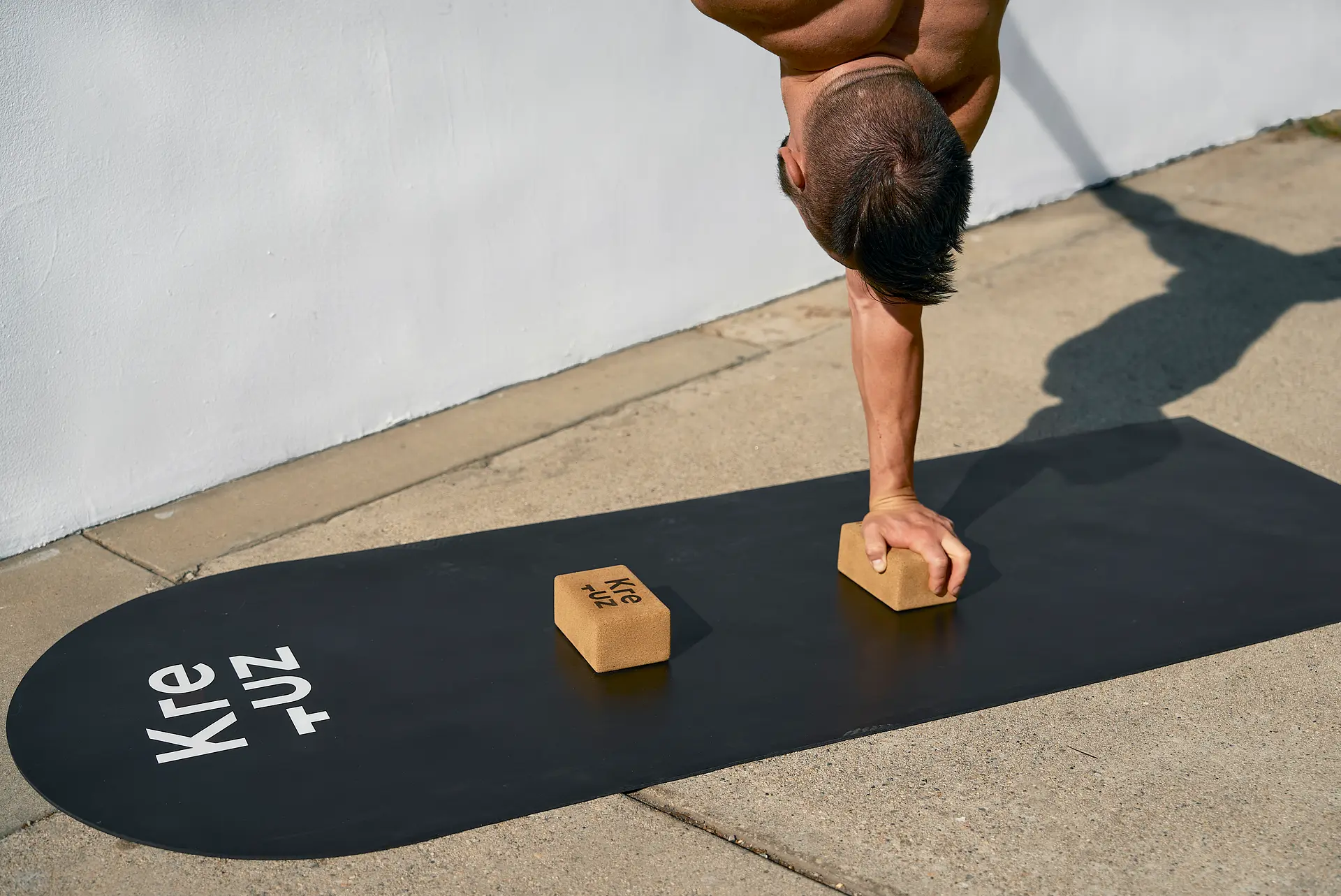
Your fingers are the steering wheel of your Handstand. The key to unlocking true Control is to intentionally shift your weight forward, into the fingertips. This position is harder. It demands more from your forearms, your wrists, and your focus. It requires constant work. But it is this very pressure that gives you authority over your balance. When you feel yourself falling forward (towards your back), you press your fingers into the floor to push yourself back. When you fall backward (towards your stomach), you relax the pressure to allow your weight to shift forward again. This is Fingertip Control. It is the difference between being a passenger in your Handstand and being the pilot. It transforms the Handstand from a static hold into a ready state, prepared for any movement you command.
4. Become the Master of Your Handstand
4.1. The Path Forward: Embrace the Work
The pursuit of an effortless, floating Handstand is a dead end. It’s a myth that holds back countless athletes. The truth is far more empowering: the perfect Handstand is not one that is perfectly still, but one that is perfectly controlled. The slight forward lean, the pressure in your fingertips, the constant micro-adjustments—these are not flaws to be eliminated. They are the very tools of mastery. They are what separate a fragile balance from unbreakable stability.
4.2. Your Action Plan for Total Control
Stop hoping for balance and start commanding Control. From this moment on, every time you get upside down, your mission is clear. You are not searching for stillness; you are practicing active correction. Here is your new doctrine:
- Shift your weight forward. Live on your fingertips. Feel the pressure and learn to modulate it. This is your primary tool.
- Push out tall. Create a powerful, stable structure through maximum Scapular Elevation. A strong frame is easier to control.
- Embrace the hard work. The burn in your forearms, the intense focus—this is the feeling of progress. Do not shy away from it.
Abandon the myth of passive balance. The path to a truly elite Handstand—one that can move, transition, and express true strength—is paved with active, relentless control.
Get to work.