Unlock Your 1-Minute Handstand: 3 Hidden Endurance Killers
Stuck at 30 seconds? Your handstand endurance isn't about strength. It's about these 3 hidden flaws.

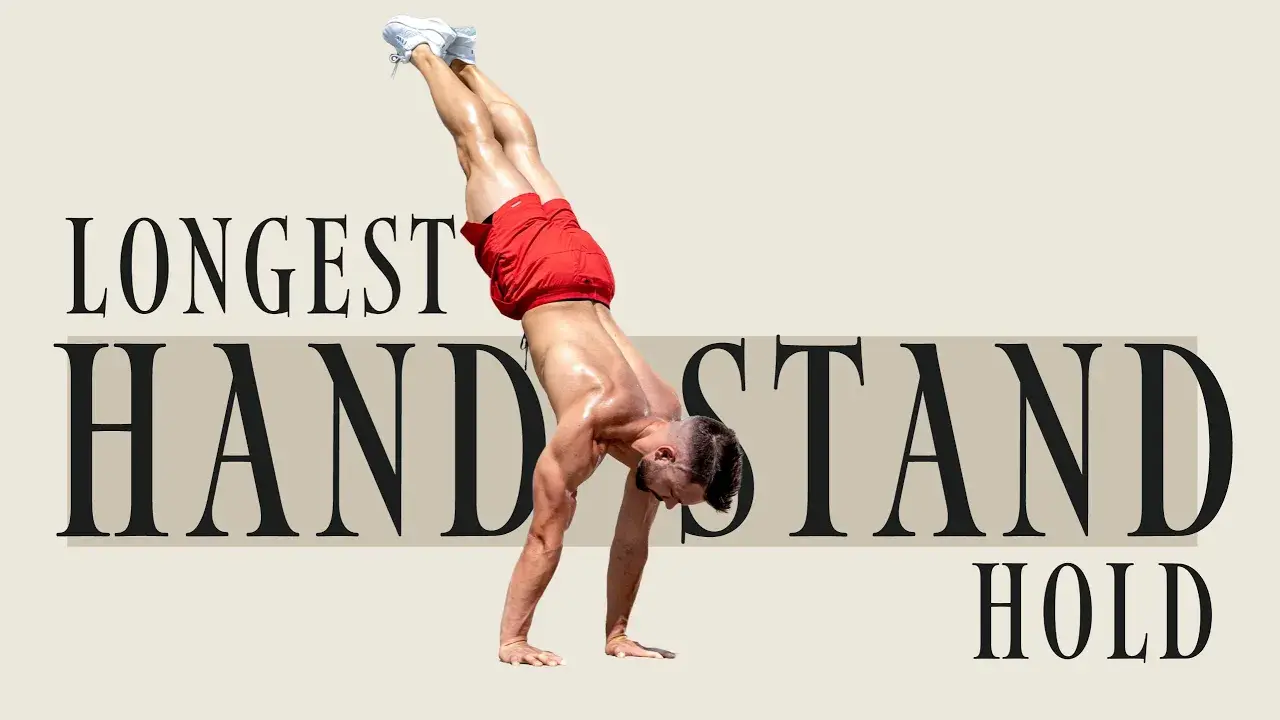
Are you looking to crush the competition, set and break your own records or simply gain more control on your hands whilst standing longer?! Than you have come to the right spot. During this episode of Handstands & The Rest you will learn everything necessary to double your handstand endurance!
TABLE OF CONTENTS
1. Deconstructing the Endurance Wall
1.1. The Illusion of the One-Minute Goal
The one-minute Handstand. It's the Everest for many athletes. But let's be blunt: it's an imaginary milestone. Why one minute? Why not 70 seconds, or 55? While setting goals and shattering records is a powerful driver—and believe me, as a former professional circus performer who once aimed for a one-hour handstand on canes, I get it—the obsession with the clock often masks the real issues. Chasing a number without a strategy is a fast track to frustration. When your progress stalls and you can't hold your handstand as long as you want, it’s not random. It boils down to one of three critical, non-negotiable limiting points. Lucky for you, I’ve battled and conquered all three, both in my own practice and with countless students. Analyzing these flaws, creating a precise plan, and executing with discipline is the only way to tear down that wall. Let’s dissect the problem.
2. The Technical Deficit: Control and Alignment
2.1. The Crisis of Control
If you're falling out of your handstand before your muscles are even burning, your problem is control. You're not fighting fatigue; you're fighting for balance. This isn't a strength issue; it's a crisis of Coordination and Technique. The most common culprit? Attempting to balance from the center of your palms. This is a reactive, defensive posture that leaves you constantly one step behind. The solution is to shift your mindset from catching your balance to commanding it. You must bring your weight forward, into your fingertips. This concept of Fingertip Control is non-negotiable. It turns your hands from passive platforms into active, responsive rudders. Your forearms become the engine of your stability. Combine this with a powerful Scapular Elevation—pushing tall, as if you're trying to hide your ears with your shoulders. This creates a solid foundation. At first, this will feel more exhausting, but this proactive control is the key to unlocking effortless, long-duration holds.
2.2. The Catastrophe of Misalignment
Now, let's consider the opposite scenario: you come down because your shoulders are screaming and your muscles are completely fatigued. You might think you're simply not strong enough, but for a hold of up to a minute, that's rarely the case. The real problem is your alignment. It's catastrophically inefficient. Your handstand probably looks like a rainbow—shoulders closed and sinking, back arched, and hips piked to compensate. This is the infamous "banana back." Think of a mighty oak tree versus one bent and twisted by the wind. Which one stands for a century? The straight one. An aligned structure is an efficient structure. By mastering Joint Stacking—aligning shoulders over elbows over wrists—you allow your skeleton to bear the load, drastically reducing the muscular effort required. A bent, misaligned handstand creates massive Energy Leaks, forcing your muscles to work overtime just to keep you from collapsing. Remember this: technical gains are always faster than strength gains. Fix your line, and your endurance will skyrocket without a single extra rep of conditioning. Your body will thank you for it.
3. The Mental Battlefield
3.1. Conquering the Inner Dialogue
Here's the final frontier. Your control is solid. Your line is impeccable. Your muscles still have fuel in the tank. You didn’t fall... you just came down. This is a mindset problem. Handstand endurance is a brutal mental game. It's a paradox: you must maintain laser-focus on your form, yet simultaneously distract yourself from the mounting discomfort and the voice in your head screaming at you to quit. This is where you need to find what works for you. Can you lose yourself in a song, singing the lyrics in your head? Can you focus on your breathing, counting every inhale and exhale? The mental game is as much a part of your training as the physical. You must build mental calluses just as you build them on your hands. This is about building the grit to push past the desire to stop and tapping into a deeper level of focus.
3.2. The Power of Dynamic Endurance
Static holds are not the only way—and often not the best way—to build endurance. Move away from just staring at a stopwatch. A powerful technique to improve endurance is to find a drill you've mastered and double or triple your usual reps. Think clean, slow Tuck Slides or controlled Handstand Walks. This method is superior for several reasons. First, you're building massive Time Under Tension without the mental burnout of a static hold. Second, the constant, subtle shifts in pressure prevent any single muscle or joint from being overloaded in one direction for too long. Third, and most importantly, you're simultaneously refining your Technique and building endurance. You're not just holding; you're improving. This is how you train smarter, not just harder.
4. Your Blueprint for Endurance Mastery
Breaking the one-minute barrier isn't about brute force; it's a strategic campaign against your weaknesses. First, master your alignment. A straight line is an efficient line, and efficiency is the bedrock of endurance. This is your highest priority. Second, command your balance with your fingertips, shifting from a reactive to a proactive state. Third, forge your mental fortitude. Learn to distract, to focus, and to embrace the discomfort without quitting. Integrate dynamic endurance drills into your routine 1-2 times per week, ideally at the end of a session before a rest day. Analyze, execute, and dominate. Now, get to work.