Fix Your Handstand: It's All in The Shoulders
Still struggling with that banana handstand? Stop blaming your core. The real problem is your shoulders.

TABLE OF CONTENTS
1. The Powerhouse: Why Shoulders Dictate Your Handstand
1.1. The Great Handstand Lie
Let's cut through the noise. You’ve heard the advice. "Engage your abs!" or "Pull your ribs in!" You’ve probably shouted it at yourself in frustration. But here’s the hard truth: for a severe Banana Handstand, squeezing your core is like trying to straighten a skyscraper by polishing the windows. It’s a useless, surface-level fix that won't touch the root of the problem. Engaging the abs on an already arched back just pulls you toward a Planche position. The real work, the real change, happens at the foundation. And in a Handstand, your hands are the concrete, but your shoulders are the steel frame. They are the powerhouse. Everything hinges on them.
1.2. The Anatomy of the Banana
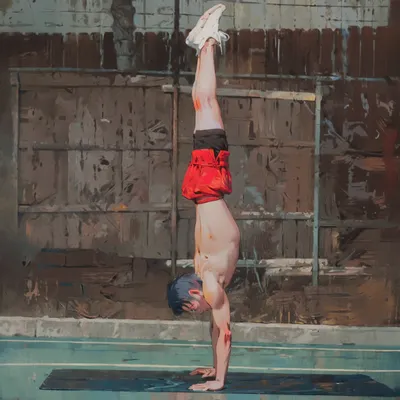
The infamous banana arch isn't a core problem. It's a shoulder problem. It’s a direct consequence of closed shoulders that lack full Shoulder Flexion. This creates an angle at the shoulder joint, and your body, being an efficient survival machine, will do anything to keep your Center of Mass over your hands. So, your back arches automatically to compensate for that angle. Your hips shift back over your hands, and your feet point over to counterbalance the entire broken line. It's a chain reaction of compensation, and it all starts with the shoulders. The fix? It’s not about your abs. It's about achieving powerful Scapular Elevation and pushing tall, creating the structure for a perfectly straight line.
2. The Science of Stability: Elevation for Health and Control
2.1. Elevate for Joint Health
Let's talk about longevity. A handstand shouldn’t just look good; it must be sustainable. Your shoulder is a ball and socket joint. When you hang out in your handstand with a depressed scapula—shoulders shrugged down and away from your ears—your entire body weight is grinding on a tiny piece of bone called the acromion. As a beginner, you probably won't rip it off doing basic drills. But you will, without a doubt, bruise it. I speak from years of personal struggle. You'll feel sore after training and think you did great work. You didn't. You just bruised a bone, which helps absolutely nothing and sabotages your next session. Instead, you must fire up your serratus anterior muscles to achieve full Scapular Elevation. This rotates the shoulder blade, creating a robust, supportive structure that can handle your bodyweight safely. The bonus? This action mechanically pushes your shoulders into a straighter line. Your Instagram pictures are safe.
2.2. Elevate for Unshakeable Stability
Health is paramount, but elevation also grants you unparalleled Control. Picture your shoulder joint as a pyramid with a small ball—your arm—inside. If that ball is at the wide base of the pyramid (depressed scapula), it has a huge area to move around in. It's unstable. There are too many Energy Leaks. Now, push that ball up towards the narrow peak of the pyramid (Scapular Elevation). There’s almost no room for error, no wasted movement. It becomes incredibly stable. Every action has a reaction. Every tiny correction you make with your fingers to balance, every shift of your legs, travels through the Kinetic Chain. If your shoulders are a wobbly foundation, those corrections get lost. The force dissipates. Push that ball to the top of the pyramid. Create a rigid, stable structure to eliminate all unnecessary movement and command your Balance with authority.
3. The Geometry of Balance: Correct Shoulder Placement
3.1. The Forward Lean: Where Control Lives
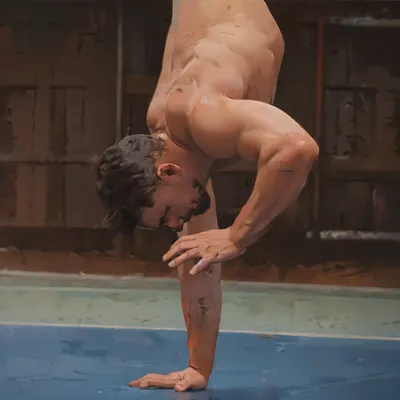
Pushing tall isn't the whole story. Where you place those powerful, elevated shoulders over your hands is just as critical. Growing up as a gymnast and later training at circus school, I was told the shoulders must be stacked directly over the wrists. I couldn’t have been more wrong. Think about lifting something heavy overhead. You don't stand flat-footed. You lean slightly forward, putting the weight into the balls of your feet where you feel safe and in control. A Handstand is identical. Your control lives in your fingertips. To keep weight in your fingertips, your shoulders must be slightly in front of your wrists. If they are stacked directly on top, you are forced to arch your back to shift your Center of Mass forward. This error plagues two types of athletes: those with hypermobile shoulders who slide into this position passively, and those who have been told for years to just "open your shoulders more." Both need to learn to bring their shoulders slightly forward while pushing tall. This is an easy fix with a huge payoff.
3.2. Fixing the Over-Lean
The more difficult problem is when the shoulders lean too far forward, sticking out over the fingertips. This often brings us right back to the original Banana Handstand, as the body arches to stop from falling forward. The fix here is to work on powerful Scapular Elevation to pull the shoulders back over the center of the hands. This isn't just a mental cue; it's a matter of building strength and Coordination. For some, it’s about developing the Mind-Muscle Connection. For others, it requires improving lat and general shoulder Mobility. No matter the cause, the formula is the same: 80% of your time must be invested in active opening, elevation, and awareness drills like Pike Push Up shrugs and Wall Walks. Only 20% should be spent on passive stretches. Build the strength to control your position.
4. The One-Arm Handstand: The Ultimate Shoulder Test
4.1. The Supporting Shoulder
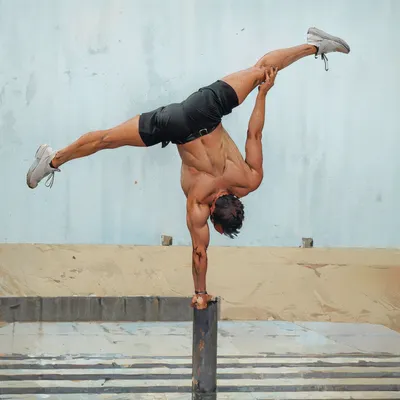
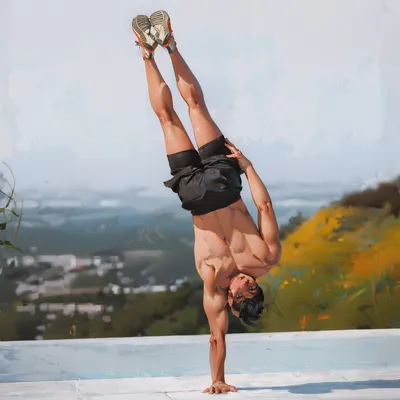
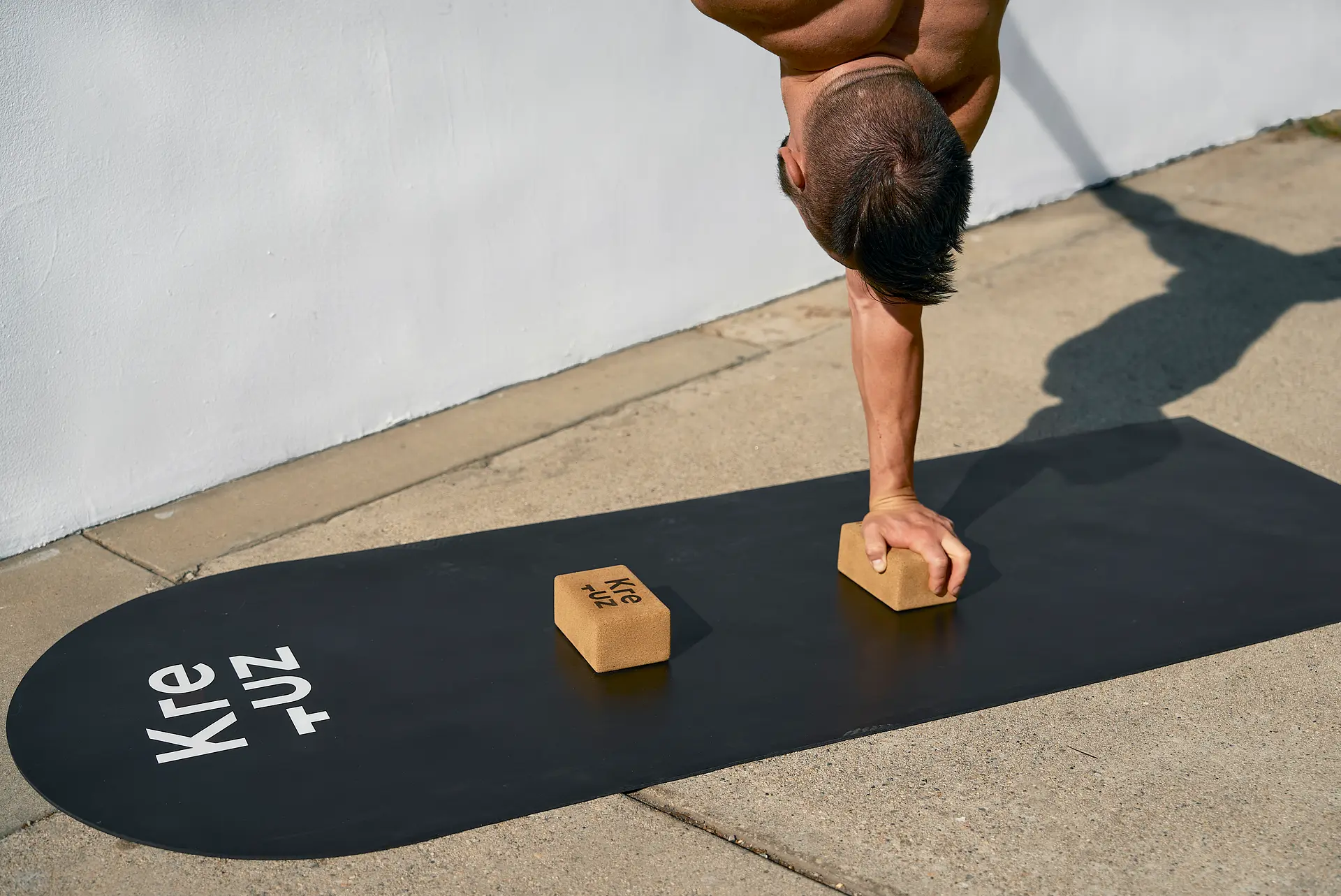
Nothing proves the dominance of the shoulders more than the One Arm Handstand. The supporting shoulder is under immense dynamic load, so proper preparation, elevation, and positioning are non-negotiable for both performance and Injury Prevention. The principles of the two-arm handstand are simply amplified here. A strong, elevated, and correctly placed shoulder is the absolute prerequisite. There are no shortcuts. If your two-arm foundation is weak, your one-arm dream will remain just that—a dream.
4.2. The Free Shoulder: The Hidden Rudder
Here is where it gets interesting. The free shoulder—the one not supporting you—is the hidden rudder that steers your One Arm Handstand. It is the most overlooked component and the cause of most beginner struggles. The free shoulder is connected to the hip via the latissimus dorsi muscle. If you lift that free shoulder up and away from the floor, the lat engages and pulls your hip back toward the center, destroying the crucial Side Bend you worked so hard to create. You fall, frustrated. Worse, when the free shoulder comes up, it also tends to move towards your back. A fascinating truth of the One Arm Handstand is that your body will always follow your free shoulder. If it moves back, you rotate back. If it moves forward, you rotate forward. Your only advantage when it rotates forward is that you have stronger muscles on the front of your body to fight the rotation. The lesson is simple: keep the free shoulder down and controlled. It dictates everything.
5. Master Your Shoulders, Master Your Handstand
So, where does this leave you? The path forward is clear. Stop obsessing over your core and start a disciplined assault on your shoulders. Your Control, your long-term health, and your ultimate success are defined by them. Analyze your own form with a critical eye. Are you truly elevating? Are your shoulders placed for maximum stability? Is your free arm sabotaging your one-arm attempts? You must invest dedicated, focused time into your shoulders during every single training session. The two most critical takeaways are these: master relentless Scapular Elevation to build a strong, healthy foundation, and master the precise forward placement of your shoulders to gain ultimate Control. This is not a quick fix; it's a fundamental shift in your training philosophy. You will thank me down the road. I promise.
Get to work.