Fix Your Handstand Push Up: 3 Common Limiting Points
Stuck on your Handstand Push Up? These 3 common mistakes might be why. Here's how to crush your plateau.

TABLE OF CONTENTS
1. The Triad of Mastery: Strength, Balance, and Mechanics
1.1. The Handstand Push Up Blueprint
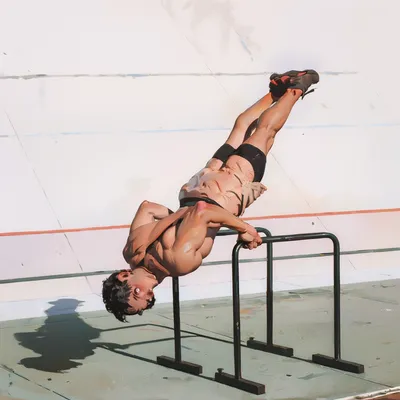
The Handstand Push Up (HSPU) is a pinnacle of calisthenics. It's more than just a cool-looking skill; it’s an incredible tool for forging raw strength, a powerful physique, and elite Hand Balance technique. What makes the HSPU truly exceptional is its adaptability. For the advanced athlete, it’s a freestanding test of technique or a brutal shoulder builder in an L-position. For those on the journey, it’s a pathway that introduces essential drills like the Bent Arm Press or the lower to a Bent Arm Planche. The freestanding HSPU, in particular, forces you to master Fingertip Control—a lesson of immense value for anyone serious about their handstand practice. You aren’t just building muscle; you’re building an integrated system of power and control.
1.2. Why You're Really Stuck
Progressing your Handstand Push Up is a complex challenge because it demands the convergence of multiple qualities. Getting stuck is not a sign of failure; it's a signal to analyze. Every plateau you hit is a data point. The path to a clean, powerful HSPU requires a relentless pursuit of:
- A) Raw Pushing Strength: The brute force to move your bodyweight against gravity. This is non-negotiable.
- B) Hand Balance Proficiency: If your handstand is shaky, your sets are interrupted by falls, not muscular failure. You can't build strength if you can't stay upside down.
- C) Mechanical Understanding: A deep, intuitive feel for weight transfer, alignment, and leverage. You must become a master of your own body's physics.
Bringing these three pillars together takes time and dedication. You will encounter roadblocks. The key isn't to avoid them, but to have the tools to systematically dismantle them when they appear. Let's deconstruct the three most common limiting points and provide you with the blueprint to overcome them.
2. Flaw #1: The Unstable Lockout
2.1. The Problem: Chasing the Wrong Feeling
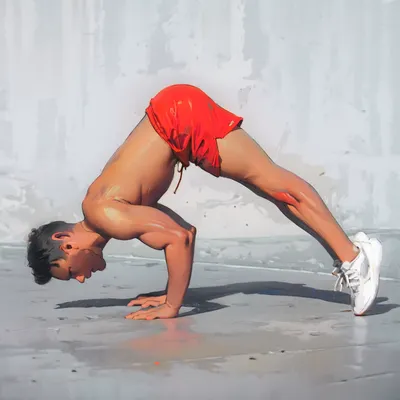
Here's a familiar scenario: You possess the strength. Your handstand is solid. You control the negative, press back up with power, but as you reach the top... you lose it. Balance evaporates, your weight shifts to the heel of your palms, and the handstand collapses. The problem isn't a lack of strength at the top; it's that you've been rehearsing the wrong Movement Pattern all along. Chances are, at the top of every L Handstand Push Up or Pike Push Up, you lock out by looking towards your feet and throwing your shoulders into excessive Shoulder Flexion. Why? Because it feels like a strong, definitive finish. But it’s a trap. That feeling of completion is actively sabotaging your freestanding goal.
2.2. The Fix: Re-engineer Your Movement Pattern
Stop preparing for a movement you don't want to perform. Your training must mirror your goal with absolute precision. To fix the unstable lockout, you must obsess over alignment. During every single rep of your assistance work—from Pike Push Ups to Wall Handstand Push Ups—you must look at your hands the entire time. Focus on stacking your joints and maintaining weight in your fingertips. The key action is a powerful Scapular Elevation at the top of the rep. Instead of shrugging into a misaligned position, you need to push tall, creating a solid, integrated structure from your hands to your hips. This isn't just about finishing the rep; it's about finishing it in a position that is balanced, stable, and ready for the next one. You must make perfect alignment a non-negotiable habit.
3. Flaw #2: The Arching Back Collapse
3.1. The Problem: Compensating for Weakness
An arched back during the upward press is one of the most common dysfunctions in the Handstand Push Up. It can plague you in the freestanding version or any of its progressions. The root cause is brutally simple: you are not strong enough in the correct muscles. When your shoulders fatigue or lack the specific strength for the movement, your body, in its infinite wisdom to find the path of least resistance, will instinctively arch. This arch changes the angle of the shoulders, allowing your much stronger pectoral muscles to take over. It turns a vertical press into a high-incline press. You might complete the rep, but you've done it by recruiting the wrong movers and ingraining a faulty, inefficient pattern that will limit your peak potential and increase injury risk.
3.2. The Fix: Regress to Build Raw Strength
There is no shortcut here. You must take a step back to build overwhelming strength and awareness in the proper planes of movement. The goal is to fortify your shoulders and upper chest so that your body no longer needs to cheat. Two drills are exceptionally effective for this:
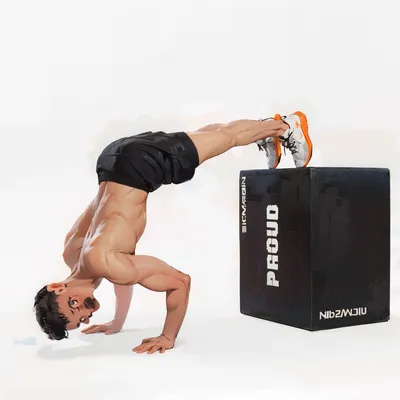
- Dead HSPU: In all its progressions, from Pike Push Ups to wall-assisted versions, place your head on the floor between each rep. This eliminates the stretch-reflex and forces you to generate raw strength from the very bottom of the movement, the exact point where the arch often begins.
- Chest to Wall HSPU: This variation is a monster for developing upper chest strength and the specific coordination needed to press vertically. It provides the stability of the wall while forcing a stricter movement path than the back-to-wall version.
By regressing and focusing on these targeted drills, you're not just getting stronger; you're teaching your body a new, more powerful way to move.
4. Flaw #3: The Bottom-Position Dead End
4.1. The Problem: A Neuromuscular Void
You're working a progression like the Headstand Push Up, where you lower to your head and press back up. But when your head is on the floor... nothing happens. You push with all your might, and you feel completely stuck. It’s as if the muscles you need simply don’t exist. This isn't unusual; it’s a classic case of a neuromuscular dead zone. Your brain hasn't yet built a strong connection to the specific motor units required to initiate force from that deeply disadvantaged position. You lack the precise coordination and mechanical feeling to engage the right fibers at the right time.
4.2. The Fix: Build Strength and Coordination from the Ground Up
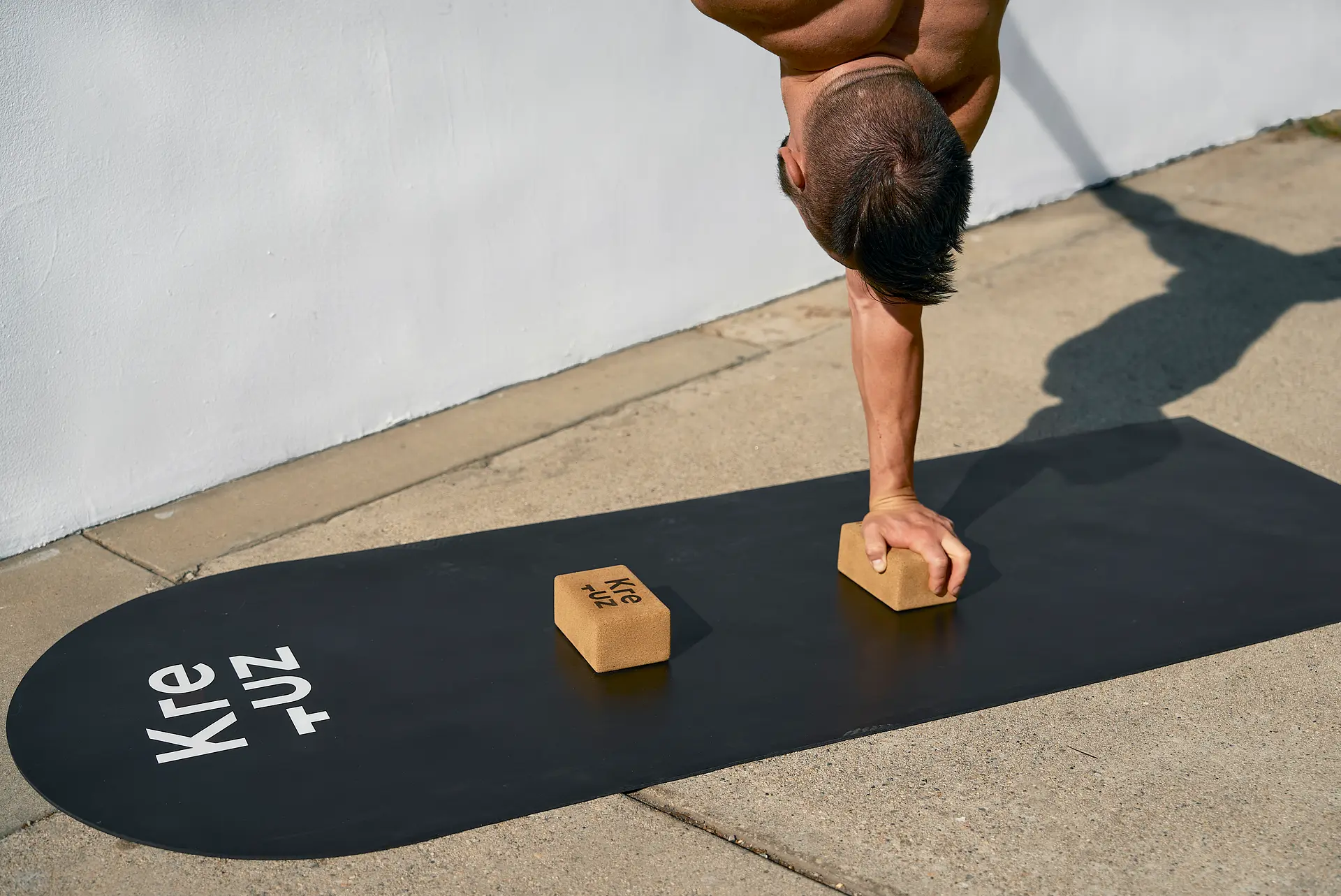
The solution is to find progressions that reduce the load or improve the mechanical advantage, allowing you to bridge that neuromuscular gap. We need to build not just brute strength, but a highly refined Mind-Muscle Connection. For the Headstand Push Up, the fix is elegantly simple: elevate your head. Start by placing a yoga block or a few books under your head. This reduces the range of motion and puts you in a stronger position to press from. Perform your reps here, with perfect form. Over the course of weeks and months, gradually reduce the elevation—one thin book at a time. This methodical application of Progressive Overload allows you to build strength, coordination, and confidence in tandem. One day, you’ll push up from the floor and won't even realize you've conquered the roadblock you once thought was insurmountable.
5. Forge Your Path to HSPU Dominance
5.1. Your Action Plan
No matter where you are in your journey, the principle remains the same: when you get stuck, take an honest look at your execution and regress. True progress is built on a foundation of flawless form. Your goal isn't just to complete the rep; it's to own the movement. The path to the full freestanding Handstand Push Up is paved with mastering its progressions. Build overwhelming strength and unshakable control in the precise movement pattern of your goal, and in all the small variations around it. Acknowledge your limiting points not as walls, but as doors to a new level of strength and understanding.
5.2. The Final Rep
Summarizing your mission is simple. First, master your alignment; an unstable lockout is a technical flaw, not a strength deficit. Second, build honest strength; eliminate the arch by regressing to progressions that force correct muscle engagement. The Handstand Push Up is a testament to dedication. It doesn't yield to shortcuts or sloppy reps. It demands precision. It rewards persistence. Now, you have the blueprint.
Get to work.