Floor vs Parallettes HSPU: Which Builds More Strength?
Floor or parallettes for your HSPUs? The answer isn't what you think. Here's how to choose for max gains.

TABLE OF CONTENTS
1. The Critical Choice: Grip, Pressure, and Control
Handstands on the floor versus handstands on parallettes are two entirely different beasts. Depending on your training history, you likely have a strong preference. But preference isn't the same as strategy. To build elite strength, you can't just stick to what's comfortable. You must understand the battlefield. Both the floor and parallettes have a specific, strategic place in your routine. The key is knowing when to use each weapon.
1.1. The Grip That Changes Everything
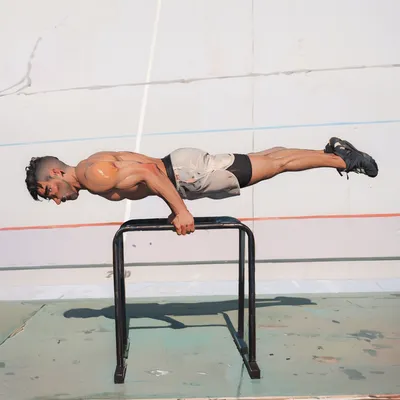
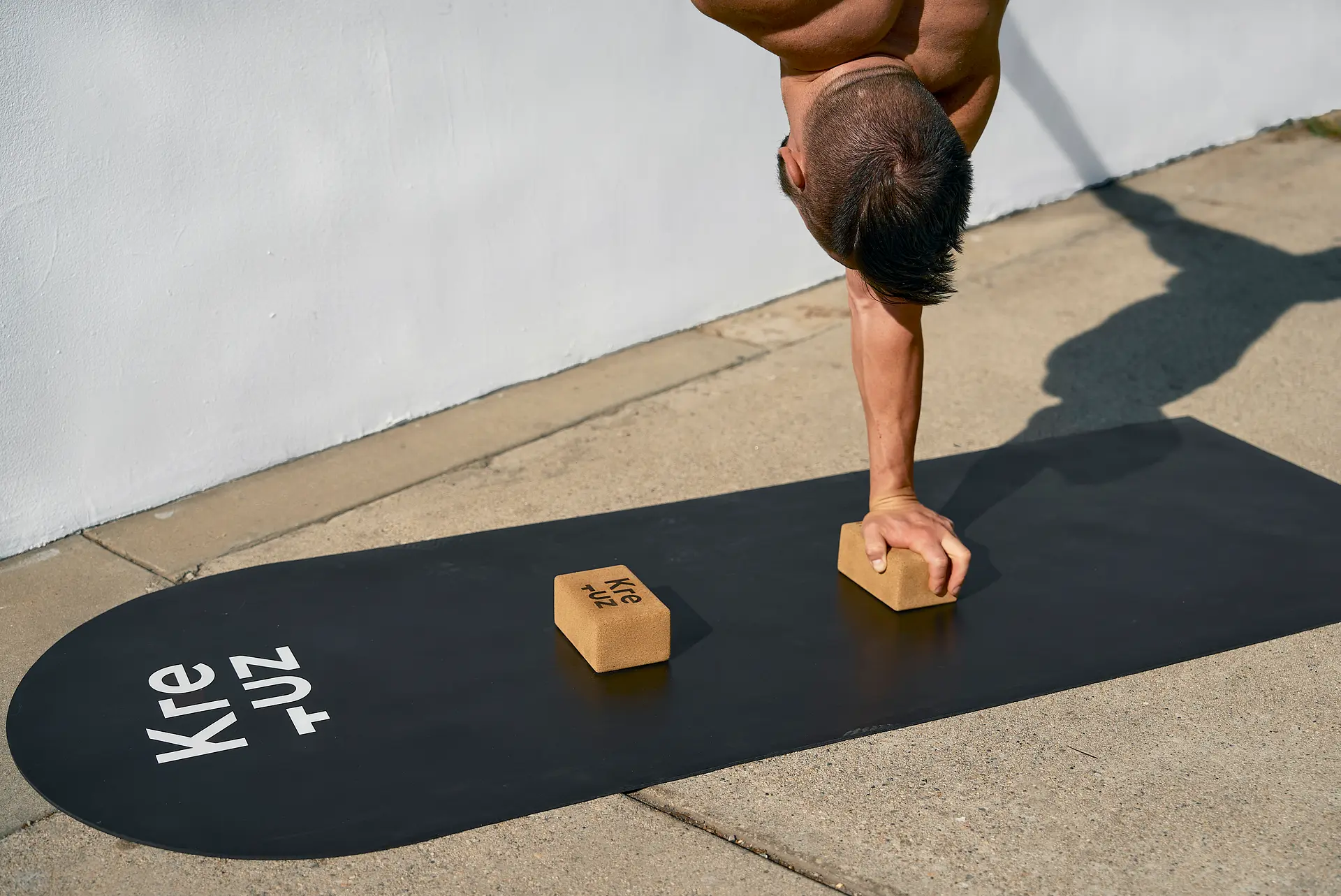
The most obvious shift from floor to parallettes is your hand position. On the floor, your hand is flat, fingers splayed, creating your Base of Support. On parallettes, you're actively gripping a bar, with your hands in a neutral position, typically rotated 90 degrees. This isn't just a minor tweak; it fundamentally alters the biomechanics of the entire movement, from your wrist all the way to your shoulders.
1.2. Winning the War on Wrist Pain
This is the number one reason many athletes make the switch. When you perform a Handstand Push Up on the floor, your wrists are forced into extreme hyperextension under the full load of your bodyweight. For some, this is manageable for a few reps. But for consistent, high-volume training, you're playing with fire. The constant pressure in that end-range position can lead to Inflammation, discomfort, and chronic Overuse injuries that can halt your progress for months. Parallettes solve this problem instantly. By allowing a neutral grip, your wrists remain in a strong, natural position. This dramatically reduces the stress, allowing you to focus on what matters: building raw Overhead Pushing Strength without the fear of your wrists giving out before your muscles do. This is non-negotiable for Injury Prevention and training longevity.
1.3. The Illusion of Floor Control
On the floor, your balance is a one-way street. Your five fingers, spread wide, are exceptional at providing Fingertip Control. As long as your Center of Mass is falling forward towards your fingers, you can push, correct, and guide your Handstand. You are in command. The problem arises the second you start to fall in any other direction—sideways or, even worse, backward over your palm. You have no fingers there. There is no biological mechanism to save you. If you fall, you are gone. Parallettes change the game by giving you three-dimensional control. The act of gripping the bar creates a powerful connection. Your wrists and forearms can now pull you back from the brink, no matter which direction you fall. You can fight for balance with much more authority, turning a potential fall into a successful rep.
2. Unlocking New Angles for Strength
The unique grip and stability of parallettes do more than just protect your joints; they unlock new movement possibilities and ways to challenge your muscles.
2.1. The Freedom of Elbow Path
The enhanced Control you gain from gripping the bars allows you to manipulate your body in ways the floor simply won't allow. During a floor Handstand Push Up, your elbows typically stay tucked in close to your body. Flaring them out is often a sign of form collapse. On parallettes, however, a controlled elbow flare becomes a strategic choice. You can purposely drive your elbows out to the side, keeping your torso more vertical and lowering your head directly between your hands instead of in front of them. This isn't a "better" way to do a HSPU, but it is a different way. It shifts the muscular emphasis, hammering your triceps and different heads of the deltoid, turning the exercise into a new weapon for building well-rounded strength.
2.2. The Elevation Advantage
There's an undeniable psychological component to training at height. But beyond the thrill, the elevation provided by parallettes has critical, practical implications for your Handstand Push Up training. It is both a tool and a test.
2.3. The Honest Reality of Falling
Let's be clear: what goes up, must come down. The added height of parallettes introduces a higher consequence for failure. If you lose your balance on the floor, you can step down. If you lose your balance on high parallettes, you have to fall. Even with superior grip Control, this means you must be more disciplined. You might need to abort the fight for balance sooner to ensure a safe bail. Furthermore, because parallettes are two separate implements, a panicked step to save yourself can cause one to tip over, creating a far more dangerous scenario. Start slow. Get comfortable with the physics of the equipment on low parallettes before you start chasing max reps. Treat every new set of bars with respect. It's always better to be safe than to be sorry.
3. The Quest for Deeper Reps and Greater Strength
For advanced athletes, the single greatest reason to use parallettes is to increase the range of motion. This is the key to breaking through plateaus and building strength that floor-based movements cannot.
3.1. Going Deeper Than the Floor Allows
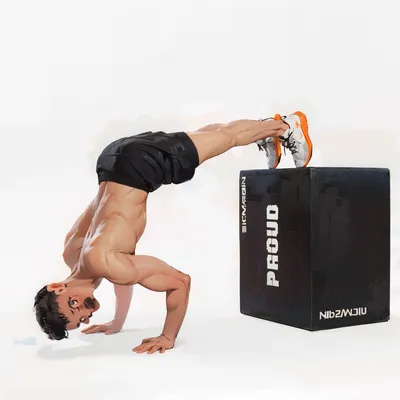
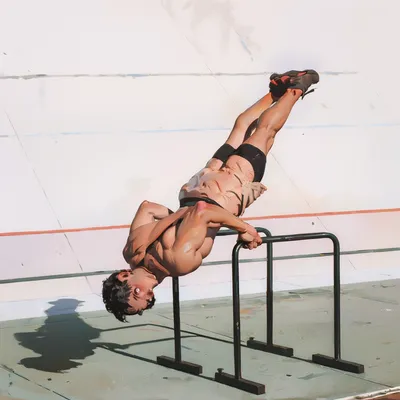
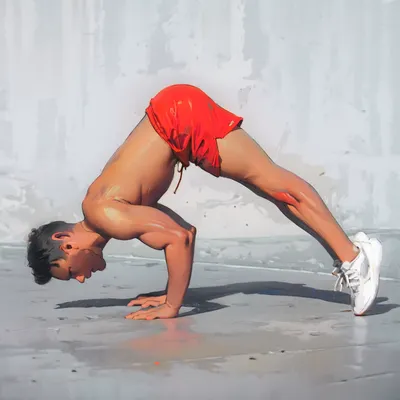
The single biggest advantage of parallettes is the ability to perform a Deep Handstand Push Up. On the floor, the movement ends when your head touches the ground. To go deeper, you need to set up on boxes or ledges, which introduces instability and risk. Parallettes eliminate this problem. With your hands elevated, you can simply continue lowering your head past your hands, dramatically increasing the Range of Motion. This isn't just for advanced athletes. Incorporating deficit reps with progressions like wall-assisted HSPUs or even Pike Push Ups on parallettes is a powerful tool for building strength through a greater range, which is a core tenet of Progressive Overload.
3.2. The Challenge of the Mount
There's no sugarcoating it: getting into a Handstand on parallettes is harder. Whether you are jumping from the floor and need to clear the extra height, or starting with your feet on the bars, the mount is a skill in itself. It requires more power, Coordination, and Confidence. If you can't comfortably get up 4 out of 5 times, you need to train the mount separately. Don't let your strength workout be limited by your entry skill. Use the wall to train your parallette HSPUs without the balance component, and dedicate separate time to mastering your parallette kick-ups and mounts. Isolate the weakness, destroy it, then integrate it back into your main workout.
3.3. The Ultimate Convenience Factor
Here is the one undisputed victory for the floor: availability. You can find a piece of floor to train on anywhere in the world. Parallettes, especially sturdy, high-quality ones, are not exactly backpack-friendly. They are perfect for a dedicated home gym space, but can be a burden to transport. This is a practical consideration. The best tool is the one you have access to. If your only option is the floor, then master the floor. But if you have the choice, the strategic advantages of parallettes are undeniable.
4. The Final Verdict: Your Strategic Choice
So, floor versus parallettes: which is the champion? The truth is, the athlete who understands how to use both is the champion. For my training, given my history and stiff wrists, parallettes are the clear winner for volume and depth. I appreciate the reduced risk of wrist pain and the challenge of deeper reps. But the floor is my go-to for quick sessions and foundational Body Awareness drills. The right choice for you depends on your goals, your body, and your access to equipment. Are you prioritizing wrist health and maximum Range of Motion? Parallettes. Are you focused on convenience and mastering the fundamentals? The floor. Analyze your needs, understand the trade-offs, and choose your tool with purpose. Don't just train; train strategically.
Get to work.