How to Master the Handstand Push Up: The Ultimate Guide
Stop guessing. Start pressing. Our ultimate guide to the Handstand Push Up breaks down the form, progressions, and secrets to elite strength.

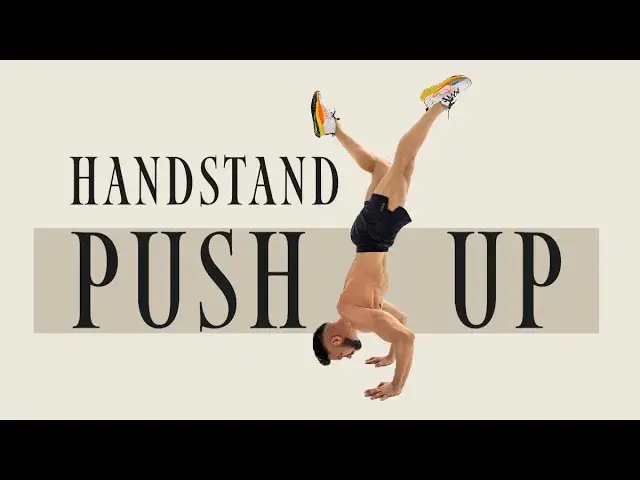
Handstand Push Ups are some of my favorite Calisthenics and Gymnastics skills there are. They are a great and stable way to get into the handstand, they are fun, they cool, they are an outstanding way to build upper body pushing strenght using bodyweight only and they are an indispensable part of a bodyweight body building training routine.
TABLE OF CONTENTS
1. Deconstructing the Handstand Push Up
1.1. Why the HSPU is a Keystone Skill
The Handstand Push Up (HSPU) is far more than a party trick; it's a supreme test of Strength and Balance. Mastering this movement builds raw Overhead Pushing Strength, forges superior Control in your Handstand, and serves as a powerhouse Compound Exercise for Bodyweight Strength training. It's a versatile skill you can train on the floor, on parallettes, or even gymnastic rings—anywhere you can safely place your hands. The journey to the full HSPU is rewarding in itself, unlocking incredible skills like the Bent Arm Press to Handstand along the way. Achieving proficiency here isn't an endpoint; it's a gateway. It opens the door to elite Calisthenics skills like the coveted 90 Degree Push Up, making it a foundational pillar in any serious athlete's arsenal.
1.2. The Spectrum of Strength: Lean and Muscle Engagement
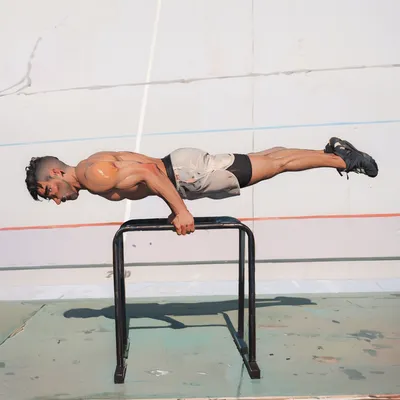
Let’s get precise. The muscles worked in a Handstand Push Up are not static; they exist on a spectrum determined by your body's lean. This is the same principle seen in a weighted shoulder press versus an incline bench press. A perfectly vertical HSPU, with a straight body line, hammers the anterior deltoids, demanding pure Overhead Pushing Strength. As you introduce more lean—by bringing your face further away from your hands on the descent—your body must slide towards a Planche position to maintain balance. This forward Weight Shift engages the upper chest much more significantly. At the extreme ends of this spectrum, you have the vertical Military Press and the horizontal Planche Push Up, which is almost entirely a chest and straight-arm dominant movement.
2. Mastering the Mechanics
2.1. The Art of the Lean
The degree of lean in your HSPU is dictated by a single, critical factor: where your head travels in relation to your hands. The further forward your face moves, the more your entire body must lean to keep your Center of Mass balanced over your hands. A strict, vertical Handstand Push Up is a formidable challenge of balance and shoulder strength, with immense carryover to stabilizing your straight Handstand and even the One Arm Handstand. Conversely, a greater lean builds the specific Shoulder Flexion Strength and chest engagement that directly prepares you for advanced skills like the Planche Push Up and the 90 Degree Push Up. Choosing your lean is choosing your goal.
2.2. Perfecting Your Form Cues
Executing a powerful and safe HSPU requires relentless attention to detail. First, control your elbows. Flaring them out past 45 degrees is a common mistake that creates a weak, unstable position. It's a dead-end Movement Pattern that won't translate to more advanced progressions. Second, focus on Scapular Elevation. Think of actively shrugging and pushing your shoulders towards your ears throughout the entire movement. This is non-negotiable for creating a stable platform, especially at the top of the rep where you need to control your Handstand. As you descend, the scapula can move more naturally, but it must be stable. Finally, maintain a shoulder-width hand position. While a wide grip might look impressive, it limits your Range of Motion and control, making it impractical for fluid transitions into other skills. Discipline in form is what separates good from great.
3. The Path to Dominance: Training and Progressions
3.1. Structuring Your Training
The freestanding HSPU demands a high level of comfort in a Freestanding Handstand. However, you don't need to wait until your Handstand is perfect to begin. In fact, we strongly recommend starting HSPU conditioning early. The additional strength will dramatically improve your balance, and the focused work will accelerate your Body Awareness and Proprioception. A smart Workout Split is key. Always perform your strict Handstand Technique practice before your HSPU conditioning. You can even separate them into different sessions. Remember, HSPU training is intense strength work; your muscles need at least 48 hours for Recovery. Strict handstand practice, being less taxing, can be done almost daily. And never, ever skip your warm-up and Injury Prevention prehab work.
3.2. The Ladder of Progressions
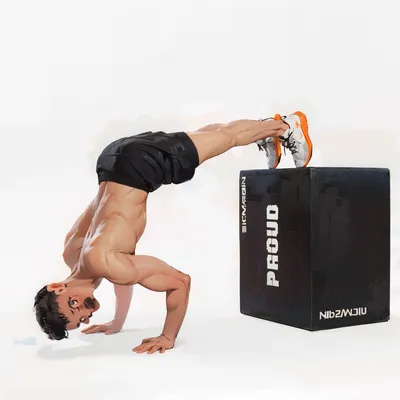
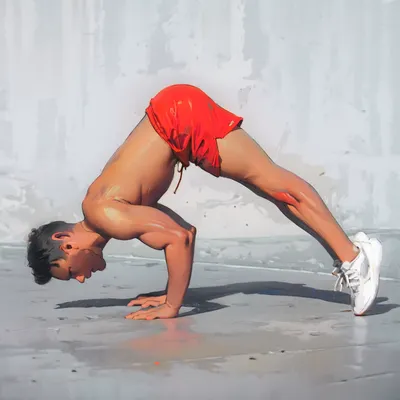
Avoid the trap of grinding away at one single progression until you burn out. The most effective path is to work with as many variations as possible. This strategy prevents plateaus, keeps training engaging, and builds a more resilient and coordinated body by challenging it in diverse ways. The core principle of HSPU progressions is Progressive Overload: gradually increasing the weight on your hands. You'll start in a Pike Push Up position and systematically work your way to vertical. The classic progression ladder includes:
- Pike Push Up
- Pike Push Up with Elevated Feet
- L Handstand Push Up
- Back to Wall Handstand Push Up
- Chest to Wall Handstand Push Up
- Partial Freestanding Handstand Push Up
- Full Freestanding Handstand Push Up
4. Shattering Plateaus and Beyond
4.1. Advanced Overload Techniques
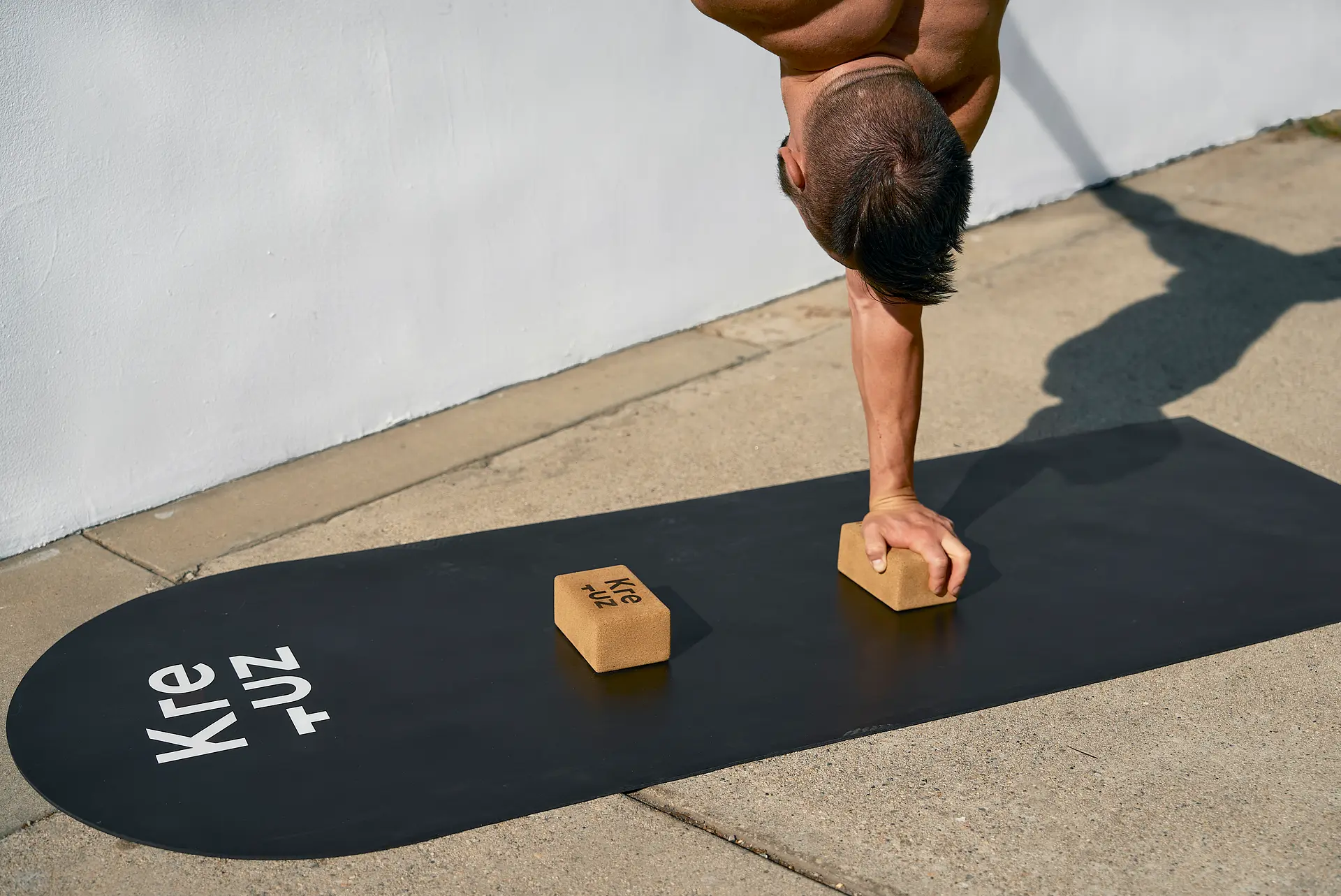
Inevitably, you will hit a plateau. This is not a sign of failure; it is a signal to train smarter. Your creativity is the only limit. To break through, you can deploy a variety of advanced techniques. Add weight with a vest to an easier progression to force new adaptations. Increase the Range of Motion by elevating your hands on parallettes or blocks, forcing your head to travel deeper. Master the negative, slowing down the eccentric portion of the lift to build incredible Control and Time Under Tension. Use drop sets, moving from a hard progression to an easier one without rest. For instance, lower down in a Chest to Wall Handstand Push Up and push back up in an L Handstand Push Up by placing your knees on a box. These methods are your tools to ensure progress never stops.
4.2. The Road Ahead: What's Next?
Earning your first clean, freestanding Handstand Push Up is an incredible milestone. But it's just the beginning. The road to mastery is long, and there are countless ways to continue increasing the difficulty. You can add weight, but ensure you use a secure vest; you don’t want weights falling on your head. You can elevate your hands on benches, parallettes, or P-bars to increase the deficit and build even greater strength. This also introduces new balance challenges, forcing further adaptation. If you're using a weightlifting bench, seek one with a hard surface; the soft padding of typical benches creates an unstable base. The journey into advanced Calisthenics is vast. The first rep is just the start of an even longer road.
5. Forge Your Pressing Power
5.1. Your Blueprint for Action
The Handstand Push Up is a defining skill in Calisthenics, a true synthesis of Strength, Balance, and Control. The two most critical takeaways are to master the fundamentals of form—particularly elbow position and Scapular Elevation—and to embrace a wide variety of progressions to build a resilient, plateau-proof body. The path is not about finding shortcuts, but about intelligent, consistent application of effort. Your journey from a basic Pike Push Up to a full Freestanding Handstand Push Up and beyond is a testament to your dedication. Now you have the blueprint.
Get to work.