Handstand Flexibility: The Secret to an Effortless Line
You think you need pure strength for handstands? Wrong. Your flexibility is the key to unlocking elite control.

TABLE OF CONTENTS
1. The Handstand's Triple Threat
1.1. The Brutal Truth About Balance
Learning to Handstand is hard. There are no shortcuts. But there are ways to make the path less brutal. Think of it as a three-front war: you can win with overwhelming Strength, you can win with flawless Technique, or you can stack the deck in your favor with superior Flexibility. Many athletes believe they just need to get stronger, to force the body into submission. They treat the Handstand like a door that says 'pull'—they just push harder until it breaks open. This can work. You can achieve a Handstand while being completely stiff, but it will be a constant, inefficient battle. It will be heavy. It will be a grind. And it will put you on the fast track to injury. True mastery isn't about brute force; it's about efficiency. Flexibility is not a prerequisite, but it's the ultimate amplifier for your strength and technique, creating Mechanical Advantage that makes the impossible feel effortless.
1.2. Why Mobility is a Non-Negotiable
Let's be clear: Flexibility isn't just about doing the splits. It's about creating a more efficient, healthier, and sustainable handstand practice. It's about unlocking ranges of motion that allow for perfect Alignment. Higher levels of Mobility—which is Flexibility combined with Control—transform your handstand from a shaky struggle into a display of quiet power. It reduces the stress on your joints and eliminates the Energy Leaks that drain your endurance. Every degree of movement you unlock is another tool in your arsenal, another way to make your handstand lighter, stronger, and built to last.
2. Unlocking Your Handstand Potential
2.1. Forging an Unbreakable Line
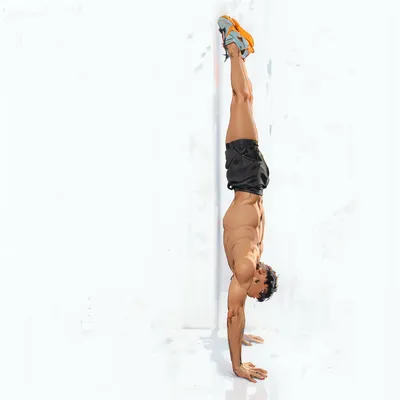
A perfect handstand line is a weapon. It's the physical manifestation of efficiency. The foundation of this line is built on your shoulders. If you lack the Mobility to achieve full Shoulder Flexion and Scapular Elevation, your shoulders are doomed to be closed. A closed shoulder angle forces your back to compensate, creating the infamous Banana Handstand. This arch costs a tremendous amount of energy and skyrockets the injury risk in your wrists, shoulders, and lower back. An open, elevated shoulder girdle allows for perfect Joint Stacking, creating a straight, powerful structure. While it's possible to see even a One Arm Handstand with slightly closed shoulders, the path there is exponentially harder and riskier. Don't fight your own anatomy. Open your shoulders.
2.2. Dominating Your Mounts
Your entry into the handstand sets the tone for the entire hold. A clumsy mount leads to a chaotic fight for balance. Flexible Hamstrings are the key to a controlled and consistent Kick Up to Handstand. Why? Because they allow your hips to start higher, closer to the final stacked position, before your foot even leaves the ground. This shortens the blind 'float' period, giving you less time to make mistakes and more time to establish Control. If your Hamstrings are tight, you'll be forced to compensate with more Momentum or by bending your knees, both of which introduce variables that kill consistency. Or you'll have to rely on a Tuck Mount, which is a fantastic drill but still benefits from the compression that flexible hamstrings allow.
2.3. The Middle Split Advantage
Picture your legs as the wings of an airplane. Wide wings provide immense stability. The same is true for your Handstand. A wide straddle, unlocked by a good middle split, gives you a massive Base of Support to play with. You can use your legs to make micro-corrections and save yourself from falling. It's absolutely possible to learn a One Arm Handstand with legs together or in a narrow straddle, but you will need significantly more raw Overhead Pushing Strength to stabilize the position. Furthermore, good Adductors mobility allows you to train crucial drills like chest-to-wall side bends effectively. Without it, your hips get pushed away from the wall, forcing your lower back into a dangerous arch. The middle split isn't just for looks; it's arguably the single most advantageous area of Flexibility for a handbalancer.
2.4. The Press to Handstand Code
The Press to Handstand is the ultimate marriage of Strength and Flexibility. Incredible hamstring, hip, and even lower back mobility creates a massive Mechanical Advantage, allowing you to float up with what looks like zero effort. The more mobile you are, the closer you get to ideal technique. However, even here, flexibility isn't an absolute necessity. An athlete who is stiff can bypass the need for a flexible pike or straddle by developing superhuman Straight Arm Strength and learning a Planche Press to Handstand. It's the long road, the brute force approach, but it proves the point: there are multiple paths to the top. The question is, which path is smarter?
2.5. Bulletproofing Your Wrists
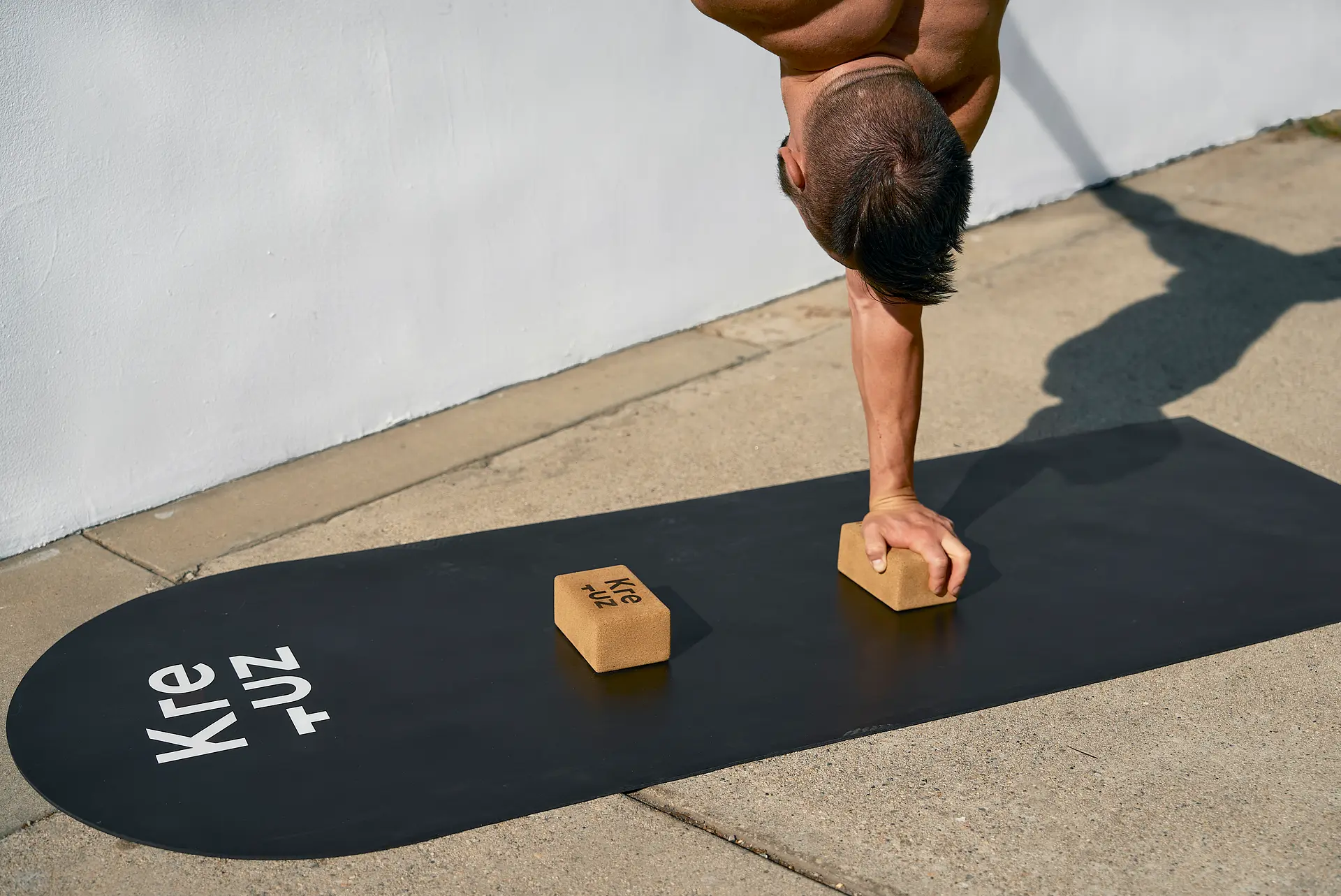
We obsess over shoulders and hamstrings, but the most forgotten—and often first to fail—mobility requirement is in the wrists. Personally, I have naturally tight wrists. This means I have to be religious with my warm-ups and mobilization drills before every single session. Without adequate wrist extension, doing a Handstand on a flat surface becomes a high-risk activity. The pressure is immense. On cold days or during periods of high training volume, the floor can feel like concrete. This is where you must be smart. Using parallettes, declined blocks, or a slightly elevated plank can decrease the angle on your wrist, reducing pressure and allowing you to train safely. Neglecting your wrists is a rookie mistake that will halt your progress faster than anything else.
3. The Strategy for Smart Flexibility
3.1. The Pre-Session Protocol
Time is a finite resource. Your training must be ruthlessly efficient. The old debate of whether to stretch before or after a workout is irrelevant. The answer is both, but with intelligence. Dedicate 5-10 minutes before every handstand session to targeted stretching. This is non-negotiable. You're hitting two targets with one stone: first, your handstand session will be vastly more productive as your joints are prepped and ready for action. Second, you build the habit of Consistency, which is the only thing that creates long-term flexibility gains. This isn't just a warm-up; it's an investment in your performance.
3.2. Just-In-Time Mobility
Beyond the initial warm-up, I want you to get specific. Immediately before working on a skill, stretch the exact muscles required for that skill. Working on your Pike Press to Handstand? Perform a deep hamstring stretch right before your set. This concept is called Specificity. Your body is always slightly more pliable immediately after a stretch, and priming the Movement Pattern fires up your Mind-Muscle Connection. The result is an instant improvement in technique and a deeper, more effective training stimulus.
3.3. The Religion of Form
Stop chasing depth and start chasing quality. Analyze your stretches. Understand the anatomy. Know which muscle is the target and how to manipulate your position to intensify the stretch cleanly. The goal is not to endure the most pain; it is to master the Movement Pattern. Mindlessly pushing into discomfort is a recipe for injury, not progress. Clean form, even in a shallower position, is infinitely more valuable than sloppy, deep stretching. Treat your flexibility training with the same technical precision as your skill work. Focus on perfect execution. This is how you build lasting results.
3.4. The Long Game
If you're serious about Calisthenics, you know gains don't happen overnight. Flexibility gains are even slower. Abandon the expectation of seeing significant changes today, next week, or even next month. This is the long game. Commit to a consistent plan for a minimum of six months before you even think about judging your progress. Consistency is the only magic pill. Show up, do the work, and trust the process. The results will come, but they demand patience and Discipline.
4. Building Your Flexibility Engine
4.1. From Habit to Workout
Once stretching before your handstand sessions becomes an unbreakable habit, it's time to escalate. Add one dedicated flexibility session to your weekly plan. This is a workout focused purely on stretching, allowing you to go deeper and spend more Time Under Tension. But do not drop the daily pre-session stretches—they are the foundation. The dedicated session is the accelerator. This combination of frequent, short stretches and a weekly deep-dive session creates the ideal environment for rapid and sustainable progress.
4.2. Training One Step Ahead
Flexibility gains are slow, and you never want your mobility to be the bottleneck for your skill progress. You must train one step ahead. Are you currently mastering your wall handstands? You know the Press to Handstand and Kick Up to Handstand are next. Start investing heavily in your Hamstrings now. Are you getting solid with your freestanding holds? The One Arm Handstand is likely on your mind. Don't sleep on your middle split and Deep Side Bend mobility. Anticipate the demands of your future goals and prepare your body in advance. This is the hallmark of a strategic athlete.
4.3. The Active vs. Passive Debate
Here's a critical distinction: Passive Flexibility is the range you can achieve with an external force (like gravity or a partner). Active Flexibility is the range you can achieve and control using only your own muscles. You absolutely need Active Flexibility to control your newly acquired ranges of motion. However, your active range can never exceed your passive range. Therefore, your primary focus should be on increasing your Passive Flexibility. This is the safest and fastest way to make progress. While some active conditioning is crucial, excessive amounts can often lead to overuse injuries. Build the range first, then build control within it. It's a simple, effective hierarchy.
5. The Verdict: Force vs. Finesse
Flexibility is not strictly necessary for your Handstand. You can, through sheer will and brute force, achieve incredible skills while being stiff. But this is the path of inefficiency, the road paved with frustration and a higher risk of injury. True mastery lies in finesse. By developing your Mobility, you create Mechanical Advantage. You unlock superior Technique and build a level of Alignment that makes your Handstand feel light, healthy, and sustainable. You transform a battle against gravity into a dance with it. The choice is yours: do you want to fight your body, or do you want to unlock its true potential? Get to work.