Handstand Slide Away: The Ultimate Drill for Freestanding Control
Ditch the wall for good. This one drill builds the strength, control, and confidence you've been missing.

TABLE OF CONTENTS
1. The Wall is Your Ultimate Training Partner
1.1. Why the Wall Is Not a Crutch
The internet is flooded with self-proclaimed handstand experts, each touting an endless list of "essential" drills. The noise can be overwhelming, leading to butterfly kicks and back-to-wall kick-ups that do little more than build bad habits. It's time to cut through the clutter. Forget what you've been told about the wall being a regression or a punishment. In high-level calisthenics, the wall is a precision instrument. It’s your opportunity for relentless growth, technical refinement, and raw strength gains. By using the wall, we strategically remove the element of balance—and therefore, chance—from the equation. This allows us to focus entirely on building a rock-solid foundation of strength and perfect alignment. It introduces consistency, enabling you to apply Progressive Overload and build critical Time Under Tension without the frustration of constantly falling. A training session becomes a guaranteed 15 sets of quality work, not a game of luck. For advanced athletes, the wall provides instant, unforgiving feedback on your form. Pike, rotate, or arch, and you'll know it immediately. The wall demands honesty.
1.2. Introducing the Handstand Slide Away
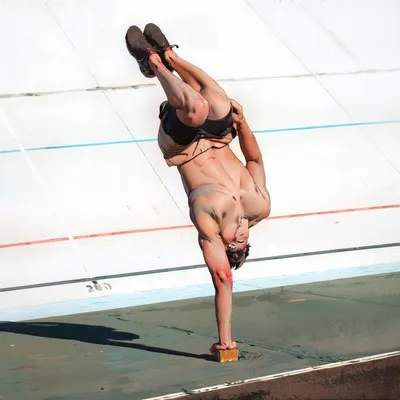
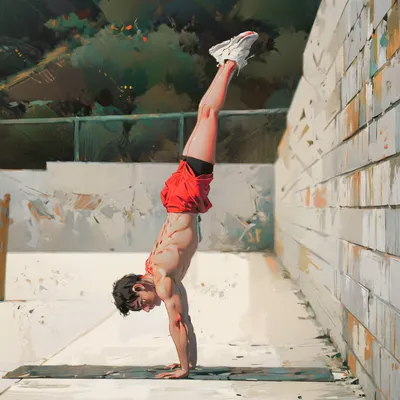
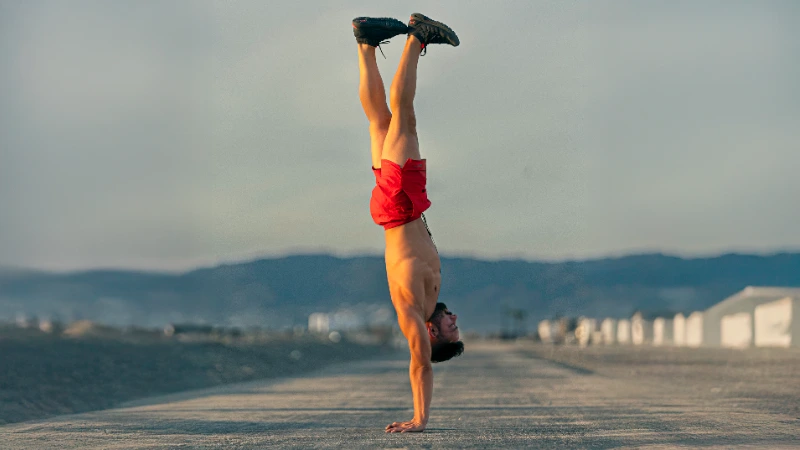
Now that we agree the wall is an invaluable tool, let's focus on the single most effective exercise you can do there: the Handstand Slide Away. This drill is my secret weapon for a reason. It is a masterclass in handstand mechanics, systematically teaching you everything you need to know while building formidable strength at every stage of your journey. The Handstand Slide Away involves starting in a clean Chest to Wall Handstand and leaning the shoulders forward, transferring weight away from the wall until your feet lift off, forcing you to catch and stabilize into a freestanding Handstand. It’s the perfect bridge from wall-supported stability to open-space control.
2. Mastering the Slide Away: Technique & Execution
2.1. The Step-by-Step Execution
Precision is everything. Rushing this movement will rob you of its benefits. Follow these steps meticulously to build flawless technique from the ground up.
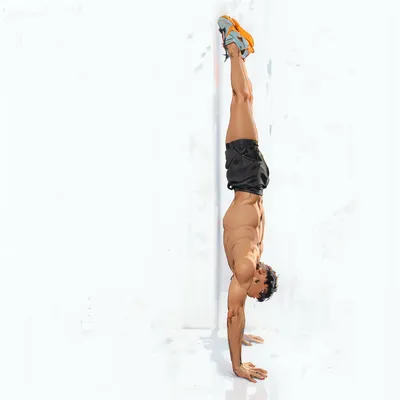
- Starting Position: Begin in a Chest to Wall Handstand, creating a rigid, straight line from your wrists to your toes. Your body should be a single, solid unit. Engage your core, glutes, and legs.
- The Lean: Initiate the movement from the shoulders. Imagine a hook between your shoulder blades pulling you directly away from the wall. This is a controlled forward lean, not a drop. The only angles that should change are at your wrists and shoulders. Maintain total body tension.
- The Transfer: As your shoulders move forward, your feet will naturally begin to slide down the wall. This is where your scapula must transition from Scapular Elevation into Scapular Protraction. Feel the weight shift from your palms into your fingertips. This development of Fingertip Control is non-negotiable.
- The Takeoff: As you reach the apex of your lean, your feet will become light. This is the critical moment. Allow both feet to leave the wall simultaneously. Do not kick. Push forcefully through your fingertips and resist the forward fall with your shoulders.
- The Catch & Hold: As your feet travel away from the wall, you must simultaneously and carefully bring your shoulders back toward the wall, stacking every joint vertically over the center of your hands. This is not a violent throw but a controlled realignment. Push tall into full Scapular Elevation, hold your freestanding Handstand, and then return to the wall with the same unwavering control.
2.2. Critical Benefits of the Slide Away
The Handstand Slide Away wouldn't be the ultimate wall drill without a powerful list of benefits. Mastering this with proper form is a direct investment in your entire calisthenics practice.
- Develops Specific Balance & Control: This drill is unmatched in teaching you how to manage weight shifts through your hands and shoulders. Every rep is a controlled fall and a precise catch, which is the very essence of hand-balancing. You learn to react, adapt, and correct—the fundamental skills that create the illusion of stillness.
- Forges Elite Strength: The lean, realignment, and controlled push build incredible Straight Arm Strength in the shoulders and triceps. This is the exact strength required to dominate not just the Handstand, but also skills like the Handstand Push Up and even progressions towards the Tuck Planche.
- Hardwires Coordination & Accuracy: Once your feet are off the wall, the realignment isn't about brute force; it's about precision. You learn to modulate your strength, applying just enough force at the right time. This motor control is what separates a sloppy handstand from a clean, controlled one.
- Builds Confidence & Obliterates Fear: The slide away forces you to dynamically move towards your back—the same direction you fall in a kick-up. You will bail. You will fail. And you will realize it's no big deal. Your body learns that falling is safe, systematically dismantling the fear that holds so many athletes back.
3. Progressions and Common Errors
3.1. Regressions & Progressions
Individuality is king. A truly great exercise can be adapted to any level. The Handstand Slide Away is a perfect example. Whether you're a complete beginner or a seasoned pro, there is a variation for you.
- Regression - The Half Slide Away: If you lack the shoulder strength for the full movement, the answer isn't to give up; it's to get stronger. The Half Slide Away is the perfect tool. Keep your feet on the wall at all times. Focus solely on the lean—shoulders forward, feet sliding down—and the push back—shoulders back, feet sliding up. This isolates the strength component, building a powerful foundation while maintaining perfect form and high core engagement.
- Progression - Advanced Dynamics: Once you master the basic Handstand Slide Away, the possibilities are endless. Challenge your stability by performing leg isolations like the Slide Away to Straddle Handstand or Tuck Handstand shapes after the catch. Add single-leg wall taps to improve your control. You can even perform Straddle Slide Aways to build specific strength for the Straddle Press to Handstand. A lack of creativity is your only limit.
3.2. How to Avoid Common Mistakes
The only downside to this drill is the room for error. Mistakes can either stall your progress entirely or, worse, build bad habits that will haunt you later. Film yourself and be brutally honest.
- Not Leaning the Shoulders Enough: A timid lean won't be enough to unweight your feet. You must commit and shift your shoulders far forward, almost into a Planche lean. If you aren't leaning far enough, you'll either stay stuck to the wall or be forced to cheat by kicking off.
- Arching the Back & Losing Protraction: As you lean, your back must remain a rigid, straight line. If you lose the transition from Scapular Elevation to Scapular Protraction, your back will arch. This keeps your weight on the wall, making a clean takeoff impossible. The line from your shoulders to your feet must not break.
- Splitting the Feet: Taking off one foot at a time is a common cheat. While you might get some hold time, you are robbing yourself of the specific strength gains from a proper, two-footed takeoff. Focus on quality reps with feet together.
- Snapping the Shoulders Back Too Fast: The moment after your feet leave the wall is delicate. A common, fear-based reaction is to immediately throw the shoulders back towards the wall. This causes your body to arch and you'll fall right back to the start. You must force yourself to stay fingertip-heavy, keeping the shoulders forward as your feet travel, then slowly and deliberately realign the entire Kinetic Chain.
4. The Path Forward: From Wall to Open Space
4.1. Your New Training Philosophy
The Handstand Slide Away is more than just an exercise; it's a complete system for handstand mastery. It builds strength, coordination, awareness, and confidence in a single, efficient movement. By making this drill the cornerstone of your wall practice, you are building a direct bridge to freestanding control. Forget the endless, disconnected drills. Focus on mastering this one progression with surgical precision. Stay consistent, training 3 times per week for 20-45 minutes. Pay relentless attention to your form, focusing on Scapular Elevation, movement isolation, and adjusting the difficulty to your precise level. The goal is no longer just to do a Handstand; it's to understand it from the ground up.
4.2. Beyond the Slide Away
Mastering the Handstand Slide Away builds the physical and mental attributes for all other handstand skills. The strength gained translates directly to Handstand Push Ups. The control learned is the foundation for advanced holds like the One Arm Handstand. The body awareness you develop will accelerate your progress in every calisthenics skill you pursue. Stop chasing random tips and mystical shortcuts. The path to an elite Handstand is paved with intelligent, consistent work. This is the work. It will give you everything you need to leave the wall behind and own your space. Get to work.