Handstand Head Position: The Ultimate Guide to a Straighter Line
The #1 handstand mistake that's secretly killing your line and hurting your shoulders. It's time to fix it.

TABLE OF CONTENTS
1. The Foundational Mistake in Handstand Alignment
1.1. The Great Head Position Debate
Where should your head be? Where do you look? This is a question that floods my inbox, a fundamental detail that separates the amateurs from the artists. I was fortunate; coming from artistic gymnastics, the answer was brutally simple and drilled into me from day one: look at your hands. When you’re inverted, your hands are your new feet. You wouldn’t run with your eyes closed, so why would you balance on your hands while staring into the void? The same raw logic applies to a One Arm Handstand; your focus must be on your point of contact, your anchor in space.
Yet, the debate rages on, especially for those just starting their journey. Many argue that tucking the chin to the chest feels better, that it creates a straighter line. And in a superficial sense, they aren't wrong. It feels easier. But ease is a trap. Choosing to tuck your chin for a quick aesthetic fix is like taking a taxi to a marathon finish line. You might get a picture, but you didn't run the race. You haven't forged the Strength. This is a cheap trick for an instant-gratification result, and it will sabotage your long-term progress. It's time to unlearn the lie.
1.2. Why Tucking Your Chin is a Trap
You might be starting out. Your Shoulder Flexion is limited, your Coordination is still developing, and the Scapular Elevation needed for a truly tall, stacked line isn't there yet. This is normal. The common result is sinking into the shoulders, which slide forward, forcing your back to arch to compensate. This is the anatomy of the infamous Banana Handstand. When you tuck your chin, it forces the shoulders to open more, creating the illusion of a straighter line. But this is a dangerous illusion.
Here’s the critical distinction: you are achieving this line through shoulder extension, not elevation. You are creating instability and grinding on the shoulder joint, not building a powerful, supportive structure. True stability comes from actively elevating the scapula, creating space and protection for the entire shoulder joint. Using the chin tuck is a shortcut that bypasses the very work you need to do. It's like ordering takeout every night and wondering why you still can’t cook. You are avoiding the skill you claim you want to build.
2. Forging The Correct Handstand Gaze
2.1. The Non-Negotiable Target: Your Hands
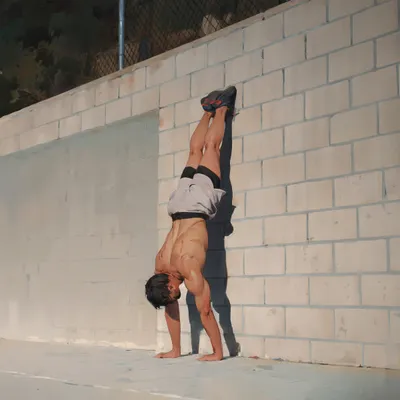
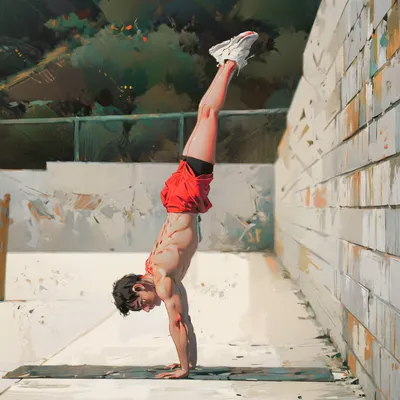
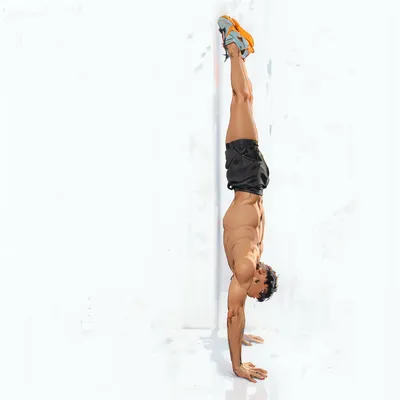
Let's cut right to the chase. You must look directly at the floor, in the space right between your hands. No exceptions. From a side profile view, your chin should be completely hidden by your shoulder. The cue I was given as a kid in gymnastics was this: if you wrinkle your forehead and look as far up with your eyes as you can, your gaze should just skim past your fingertips. This slight neck extension is what facilitates proper Scapular Elevation and locks your structure into place.
Film yourself from the side. Is your chin visible? If it is, do not panic. This is a fixable error. The adjustment must be gradual. It will feel strange, even wrong at first. Your body has built a Movement Pattern around the incorrect position. But every repetition with the correct gaze is an investment in your future Handstand. It will pay dividends in Control, stability, and power.
2.2. The Wall Drill That Reveals All
Let’s use a drill to make this concept brutally clear: the Tuck Slide at the wall. The objective is to maintain a perfect vertical line through the hands, shoulders, and hips while pulling the knees as low as possible. The lower the knees, the more intense the pressure on the shoulders. Many coaches will tell you to tuck your chin to keep your shoulders from moving forward. They are right—your shoulders do stay in place. But you are not training what you came here to train. You are cheating the system.
You are meant to be building the Overhead Pushing Strength and Scapular Stability to resist that forward collapse. By tucking your chin, you bypass that struggle entirely. You are not building resilience; you are rehearsing avoidance. Stop rehearsing failure. Correct the head position, feel the immense challenge of keeping the shoulders stacked, and that is where the real training begins.
3. The Path from Banana to Bulletproof
3.1. Embrace the Banana, Then Conquer It
So, your Handstand feels significantly better when you tuck your chin. You’re deep in the banana habit. Here is your mission for the next several months: we are going to work from the Banana Handstand, not against it. First, pull your head back into the correct position. Yes, this will likely cause your shoulders to close a bit and your back to arch even more. This is okay. This is our new, honest starting point.
From this suboptimal but structurally correct position, we now have one singular focus: Scapular Elevation. Instead of just trying to open the shoulders, you will focus on pushing them tall. Your new mantra is: "Reach the ceiling with your feet." Imagine you are trying to cover your ears with your shoulders so you can’t hear anything. This is the feeling of true elevation. It will feel like a step backward at first. Your line might look worse before it gets better. This is a necessary regression. It is the only path to rebuilding your technique, gaining true Control, and forging an unbreakable Handstand line.
3.2. Advanced Application: The One Arm Gaze
For the advanced hand balancers reading this, let's address the nuances. Firstly, the head-in Handstand where you look at your feet. It’s a cool party trick, a demonstration of Proprioception and control, but it is a dead end. It does not build transferable Strength towards skills like the Press to Handstand or the pinnacle skill, the One Arm Handstand. It is a novelty, not a foundation.
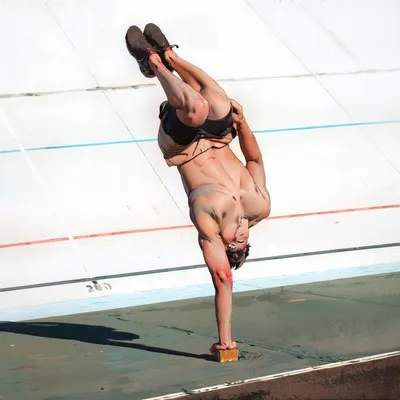
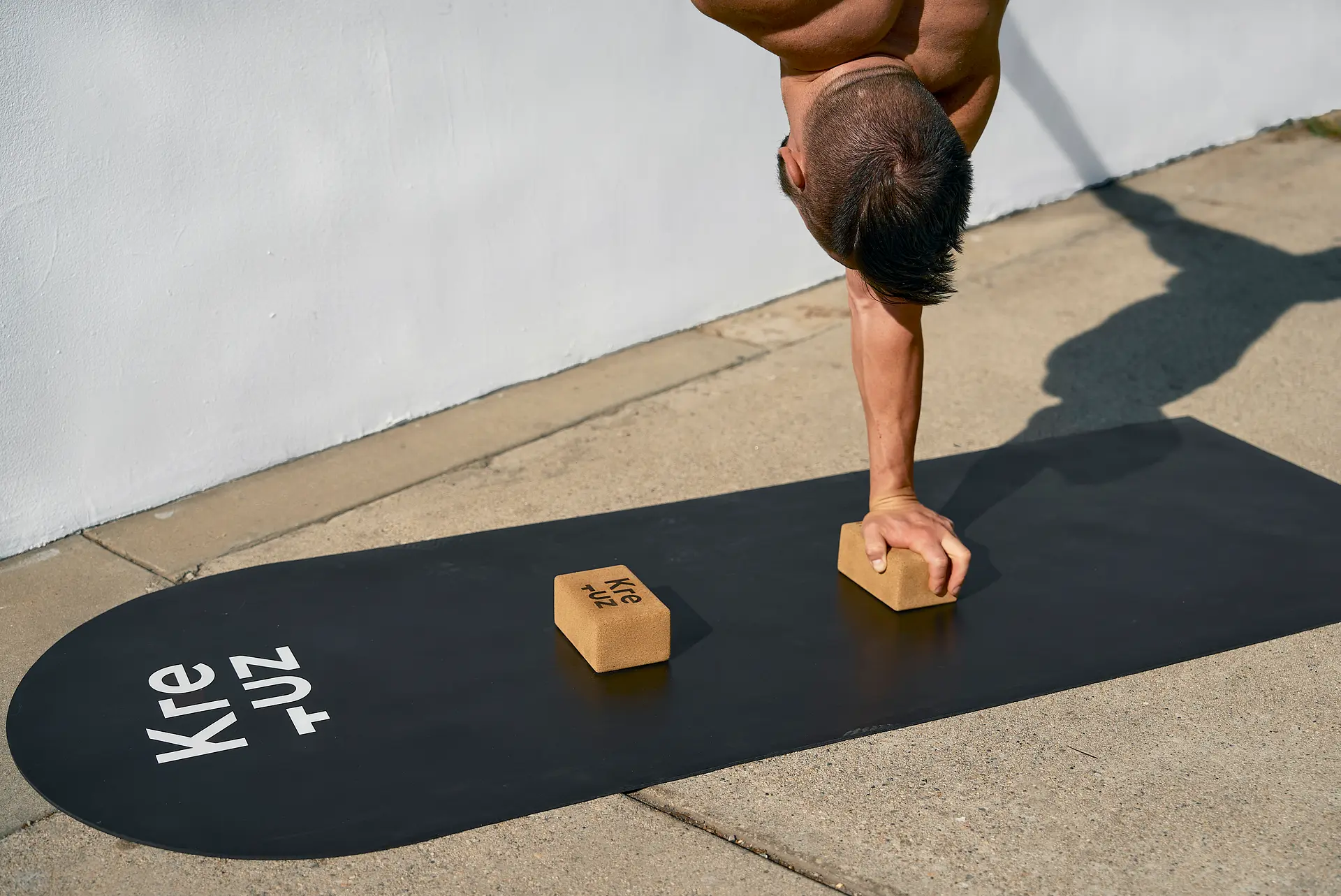
When you transition to a One Arm Handstand, the rules change again, but the principle remains. Your focus must shift. You should be looking at your supporting hand, specifically the first knuckle of your index finger. I’ve discussed this with countless professional hand balancers. While their specific focal points vary slightly, the consensus is that looking at the hand is optimal because the distance from eye to hand never changes. Looking at the floor requires constant focal adjustment as your environment changes. The moment you shift your weight, your gaze must shift with it. This is a non-negotiable component of high-level Hand Balance.
4. The Final Mandate: Elevate and Dominate
Let's be clear. The path to a straight, powerful, and controlled Handstand—one that serves as a gateway to elite skills, not just a desperate kick-up into a fall—is built on a few core truths. You must look at your hands. This is the unbreakable rule of Joint Stacking and creating a stable Kinetic Chain. It allows for the precise Fingertip Control necessary for balance.
More importantly, you must elevate your shoulders. This is not about passive Flexibility; it's about active, brutal Strength and creating a bulletproof structure. The chin tuck is a lie you tell yourself for a momentary aesthetic win, but it costs you stability, power, and long-term shoulder health. Abandon the shortcuts. Embrace the honest work of building your Handstand from a foundation of true strength and perfect Technique. The process is the prize. Now, you have the blueprint.
Get to work.