Leg Lifts: The Hidden Key to Your Press to Handstand
Your leg lifts are lying to you. I can tell if you have a press to handstand just by watching them.
TABLE OF CONTENTS
1. The Undeniable Connection
1.1. Why Your Leg Lifts Reveal Everything
By looking at your Hanging Leg Lift, I can tell with near-absolute certainty if you have a good Press to Handstand. It's not magic; it’s Biomechanics. I was lucky. My coaches drove these principles into me from a young age, forcing me to master the humble Leg Lift long before I ever attempted a press. That brutal foundation gave me an intuitive understanding of the key principles: precise Technique, the right muscle engagement, at the right time, in the right direction. Both of these elite movements hinge on the exact same pillars of performance: extreme Hamstrings Flexibility, ferocious hip flexor Strength, and the razor-sharp Coordination to weave them together. The Press to Handstand is a showcase of the body as a single, interconnected Kinetic Chain. Your leg lift is the diagnostic tool that reveals its weakest link.
1.2. The Efficiency of Compression
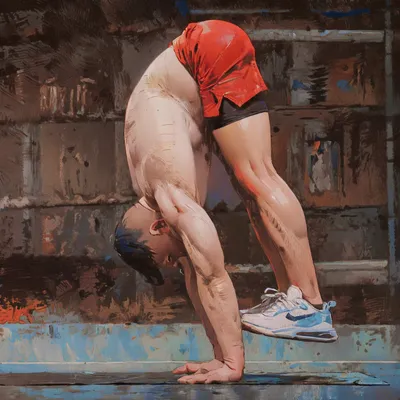
A Press to Handstand becomes exponentially easier and more efficient with superior Compression. If you can fold your body in half, you minimize the forward lean required to shift your Center of Mass over your hands. This isn't just about looking clean; it's about pure performance. Less lean means less demand on your shoulder muscles, preserving strength and energy. It also means your wrists bend less, a critical factor for Injury Prevention and training longevity. The same logic governs the Hanging Leg Lift. Elite-level reps are not about swinging or using momentum. They are about pure, controlled Compression, lifting the legs with the hip flexors alone. The longer you can maintain a stable torso without rolling your chest and shoulders forward, the more efficient the movement becomes. More efficiency means less strain, less pressure, and a healthier body that can perform at a high level for decades. That is the ultimate goal.
2. The Science of the Tilt
2.1. The Shared Engine: Anterior Pelvic Tilt
To get your feet to the bar without turning the movement into a full-body convulsion, you need more than just passive Hamstrings Flexibility. You need a profound Mind-Muscle Connection and the ability to execute a precise, powerful Anterior Pelvic Tilt. This is the engine that drives both skills. As you engage your hip flexors to shrink the angle between your torso and thighs, you must simultaneously fire your lower back muscles. Their job is to pull the pelvis forward and up, creating that slight arch. Without this counter-engagement, your lower back would immediately round into a Posterior Pelvic Tilt, killing all power and efficiency. This is a non-negotiable point of performance. The engagement feels identical whether you are pressing from the floor or hanging from a bar.
2.2. A Drill to Master the Tilt
Building this specific Coordination doesn't happen by accident. It requires deliberate, focused practice. A fantastic drill is the L-Handstand Pelvic Tilt on a box. Place your feet on a box in an L-shaped Handstand. From this position, focus solely on moving your pelvis, alternating between a rounded Posterior Pelvic Tilt and an arched Anterior Pelvic Tilt. The goal is to isolate the movement, feeling the lower back and glutes engage to control the tilt. This drill directly translates the required sensation for both the Press to Handstand and the hanging Leg Lift.
2.3. Where Gravity Changes the Game
While the muscular engagement is nearly identical, there is one crucial difference between the two movements: gravity. In a Press to Handstand, you are fighting gravity. You must actively lift and rotate your hips against its pull to achieve the Anterior Pelvic Tilt[/e]. It is a battle of raw [c]Strength. When performing a Hanging Leg Lift, however, gravity becomes your ally—but only if you have the requisite hamstring Flexibility. If your hamstrings are open enough, gravity will assist in pulling your hips into that perfect anterior tilt. This is why mastering the tilt in a hanging position can be such a powerful tool; it teaches your nervous system the correct pattern with assistance, building the blueprint you'll need when you fight against gravity in the press.
3. Forging the Perfect Leg Lift
3.1. Stretch with Purpose
To improve your leg lift, you must first improve your Flexibility. Your Active Flexibility—what you can achieve with your own muscular power—will never exceed your Passive Flexibility. This means you must relentlessly work on your seated pike stretch. But stretching without intelligence is a waste of time. When you work your Hamstrings, ensure you are properly warmed up. The goal is not to touch your forehead to your knees by rounding your spine. The goal is to bring your belly button to your toes by initiating the movement with an Anterior Pelvic Tilt. Keep your back straight. Use yoga blocks to support your hands and maintain a healthy, effective position. This is about creating usable range, not just forcing a shape.
3.2. Build Foundational Strength
Beyond flexibility, you need brute Strength. Obvious, yes, but we need to be specific. You need powerful hip flexors and a solid core, which you can build with progressions of lying, sitting, and eventually hanging knee raises and Leg Lift variations. But don't forget the less obvious requirement: grip strength. A set of 10 perfect leg lifts can take 30 seconds or more. If you can't even perform a one-minute Dead Hang, your grip will fail long before your core does. Incorporate dedicated grip work, like timed hangs, at the end of your workouts. You cannot build a castle on a foundation of sand.
3.3. Refine Your Coordination
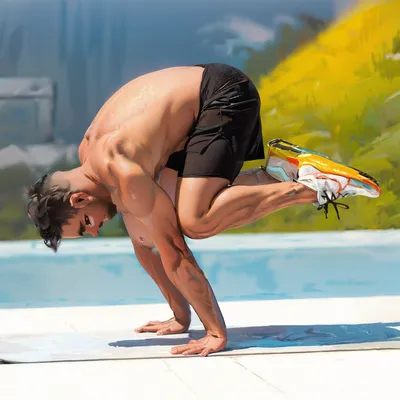
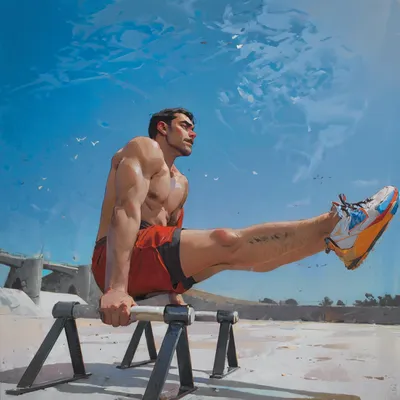
This is where it all comes together. All the stretching and strength in the world is useless without the Coordination to apply it. This entire article is about building that specific Mind-Muscle Connection. Every rep of every drill must be performed with intent. Learn to feel your hip flexors fire while your lower back engages to hold the pelvis in that critical Anterior Pelvic Tilt. It’s a subtle, internal battle, but it is the key. Drills like the Tuck Handstand and L-Sit are also phenomenal for developing this specific type of compression strength and control.
4. The Verdict: Your Path Forward
Are Hanging Leg Lifts a mandatory prerequisite for the Press to Handstand? No. There are athletes who can press without having a perfect leg lift. But are they one of the most effective diagnostic and developmental tools on your journey? Absolutely. By dissecting and perfecting your leg lift, you are not taking a detour; you are sharpening the exact blade you need to master the press. You are forging the specific Compression Strength, the neural Coordination, and the Mind-Muscle Connection that separate a clumsy effort from a display of masterful control. Take every advantage you can get. Give nothing back. Get to work.