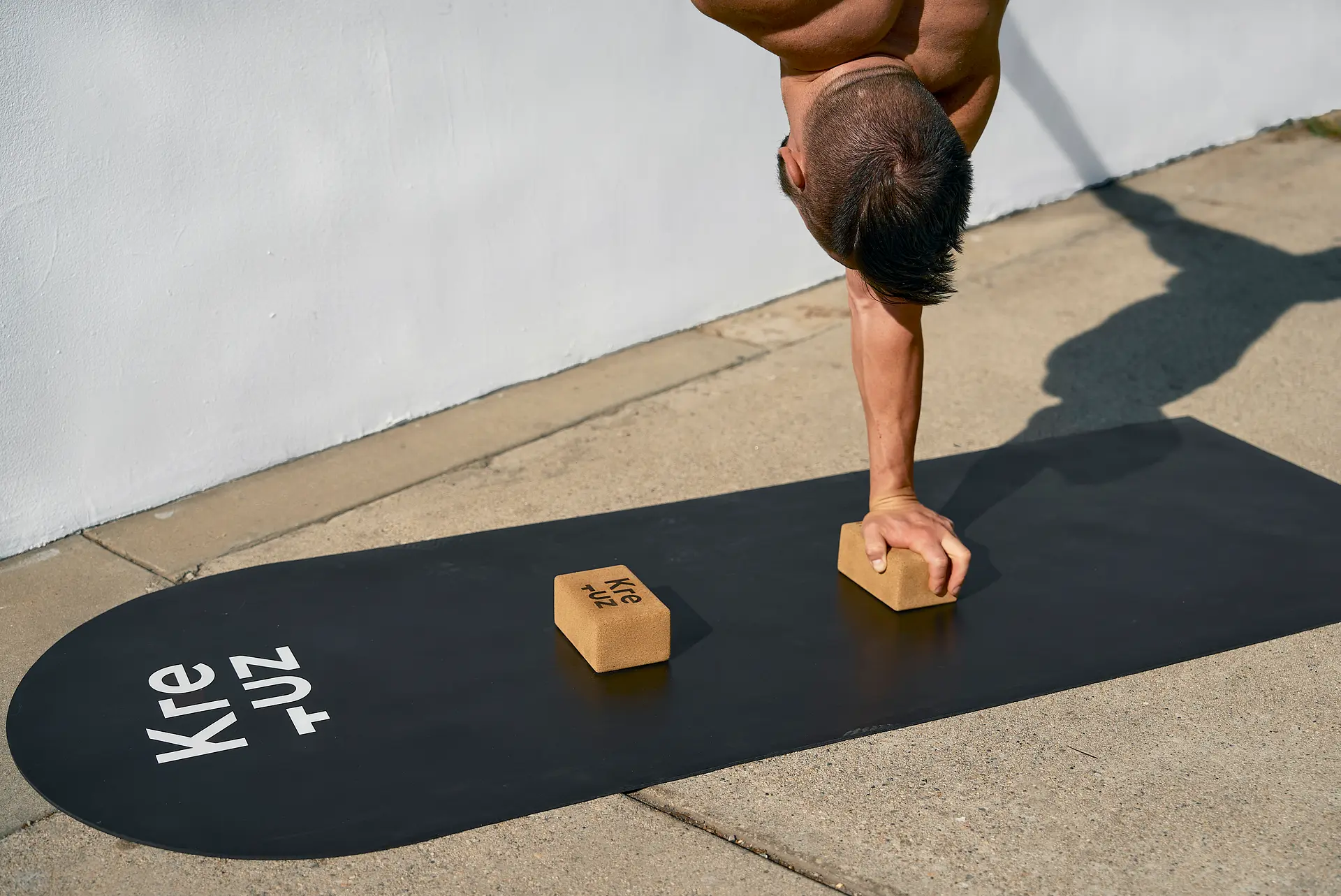
Press to Handstand: The Secret Gains You're Missing
Stop chasing the Press to Handstand. The real prize isn't the skill—it's the 'free gains' you get.

TABLE OF CONTENTS
1. Forge Bulletproof Shoulders and Scapular Armor
1.1. The Ultimate Handstand Safety Net
The Press to Handstand is an overwhelming, complex goal. It's easy to feel lost, questioning every part of your training. We look for a simple path, a direct line from where we are to where we want to be. But the journey to an elite skill is rarely linear. Here’s the secret: you don't need to be training for the press to reap its rewards. You train the press for the immense bonuses it delivers along the way. One of the most powerful is building the Scapular Stability to save almost any failed Handstand. Long before you achieve a full press, you will master partial reps. This means lowering halfway down from a Handstand and pushing right back up. Once you can do this, you essentially build a safety net. You can catch nearly any handstand that starts to fall and push back to a solid position. It's the ultimate get-out-of-jail-free card for your balance.
1.2. The Engine for Inverted Control
When you work drills like Walking Deads or Bench Zombies, you feel your shoulder and back muscles firing. Those are the exact engines that pull you back to safety when your hips drop. This isn't just about saving a failed rep; it's about transforming your entire inverted practice. The more Press to Handstand conditioning you do, the stronger your arms and shoulders become. Your Handstand stops being a desperate act of balancing and becomes an act of total control. This is the difference between surviving upside down and owning the position. True Hand Balance is not about wobbling; it’s about commanding your body in space.
2. Master Unshakeable Core Strength and Compression
2.1. Forging an Iron Core for the Beach and Beyond
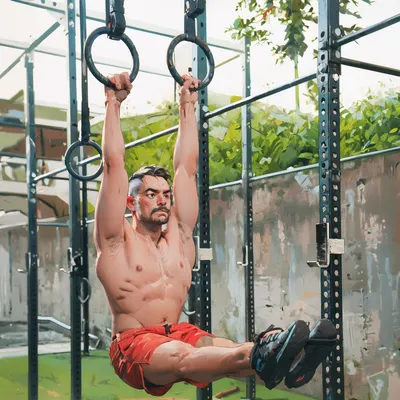
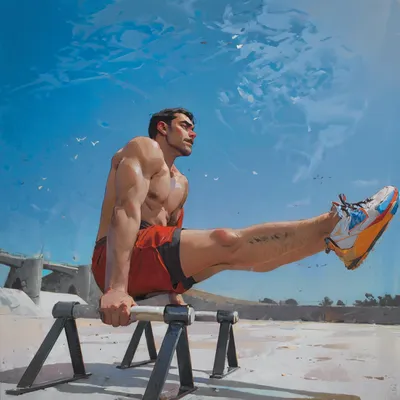
Compression is the key to an efficient press. It is the purest expression of Core Stability. If your feet are lagging behind, your shoulders must lean further forward to counterbalance, torching your anterior deltoids and straining your wrists. By pulling the feet in tight, you can keep the shoulders stacked, protecting your joints and conserving precious energy. This requires immense core and hip flexor strength. All the Compression work you do for the press—like L-Sits, V-Ups, and leg lifts—will forge an unbreakable midsection. This translates not only to a physique that commands respect but also to improved performance in every other discipline you practice.
2.2. Unlock the Elusive Tuck Handstand
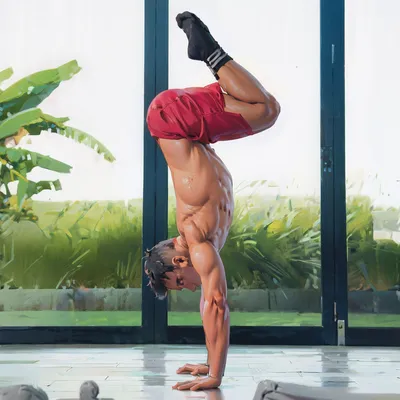
This might seem like a stretch at first, but the connection is direct and powerful. The movement of lowering from a Handstand through a Straddle Press or Pike Press to Handstand is biomechanically linked to the Tuck Handstand. In both, you are decreasing the angle at your hips while engaging the lower back to stabilize the pelvis, often with a slight Anterior Pelvic Tilt. Training the press forces you to develop the Coordination and strength for this precise motor pattern. For athletes with limited Mobility, the Tuck Handstand can be a frustrating puzzle. But with dedicated press work, you will systematically build the strength and control to finally lock it in.
3. Build Elite Strength and Mobility in Tandem
3.1. Unlock Your Hamstrings, Unlock Your Mounts
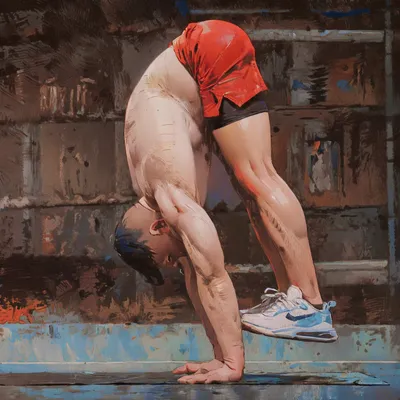
I will say it until I am blue in the face: the Press to Handstand is a Flexibility drill before it is a strength drill. Nowhere is this more evident than with your [c]Hamstrings[/e]. Your level of hamstring flexibility dictates whether your press is a grueling, heavy grind or a clean, efficient float. Committing to press training means committing to a serious hamstring stretching routine. The convenient side effect? Daily life becomes easier. Tying your shoes, lifting groceries—it all feels effortless. More importantly for your practice, skills like the Kick Up to Handstand become exponentially more consistent. Greater flexibility narrows the blind spot where you have to jump past your active range, making your mount cleaner and more reliable every single time.
3.2. The Secret Path to Planche Progressions
Every athlete I coach for the Planche, Stalder Press, or 90 Degree Push Up begins on the same path. The foundational work for these elite skills is identical. The goal is always to invert and get the hips over the hands. To do that, you must use your anterior deltoid to increase the angle between your rib cage and upper arm, a concept known as Shoulder Flexion Strength. Anyone training the Press to Handstand is simultaneously building the foundation for the Planche. The crossover is direct. Think about it: anyone working towards the press will also improve their Handstand Push Up strength. While it's crucial to focus on a minimal number of goals, programming the press and the Handstand Push Up together is one of the most intelligent training decisions you can make.
4. Develop Supreme Body Intelligence
4.1. Master Coordination and Proprioception
So much happens during a press, and it must all happen in perfect synchrony. If a single component is imprecise, the entire structure fails. Achieving this level of Coordination takes dedicated practice. When you first start, you won't have it. It is only through focused training that you will learn to engage your shoulders for stability while simultaneously using your back muscles to pull your hips up. I guarantee that on this journey, you will discover muscles you never knew you had. This process of developing deep Body Awareness and Proprioception is invaluable. It teaches you how to learn. Take a skill like the Mana. A beginner has no idea what to engage. But having gone through the process with the press, you will have the perspective and understanding to tackle any new skill with confidence.
4.2. Harness the Power of Visualization
This is a big one. Visualization is an incredibly potent tool for learning any new acrobatic skill, but it too must be practiced. Think of it like meditation. The better you get, the more realistic the Visualization becomes. You'll be able to mentally place yourself in the drill, feeling the muscle engagement, the weight shift, the balance. The ability to truly live and perform a skill in your mind without moving a muscle does not come easily. Learning to press to handstand in your imagination, with all its technical detail, is enormous work that can take years to perfect. However, every small step you take towards this mastery of the mind will directly help you visualize other challenges, both in your training and in life.
5. The Journey Is The Destination
5.1. Redefine Your Definition of Progress
You see now, don't you? The Press to Handstand is so much more than a single movement. It is a master key that unlocks progress across your entire practice. Even if you feel light-years away from achieving the full skill, every single rep of every drill is an investment. It's an investment in your scapular health, your core's compressive power, your functional flexibility, and your mental fortitude.
5.2. Your Call to Action
Stop seeing the Press to Handstand as a distant, frustrating goal on the horizon. See it for what it truly is: a powerful system for forging a stronger, more capable, and more intelligent body. If you don't do it for the final destination, do it for the journey. Do it for the bulletproof shoulders, the iron core, the newfound flexibility, and the supreme body control you will build along the way. Now, there's only one thing left to do.
Get to work.