One Arm Handstand: The 4 Pillars of Elite Balance
Stop failing your One Arm Handstand. We break down the 4 critical building blocks they never tell you.
TABLE OF CONTENTS
1. Building The Unbreakable Foundation
1.1. Your Hand: The Connection to the Earth
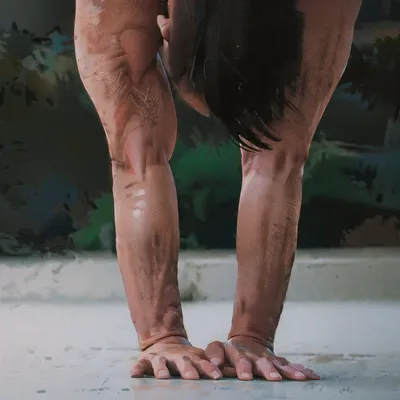
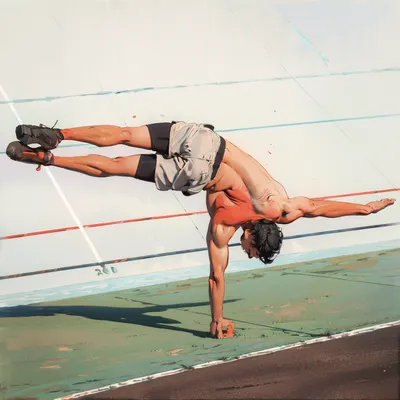
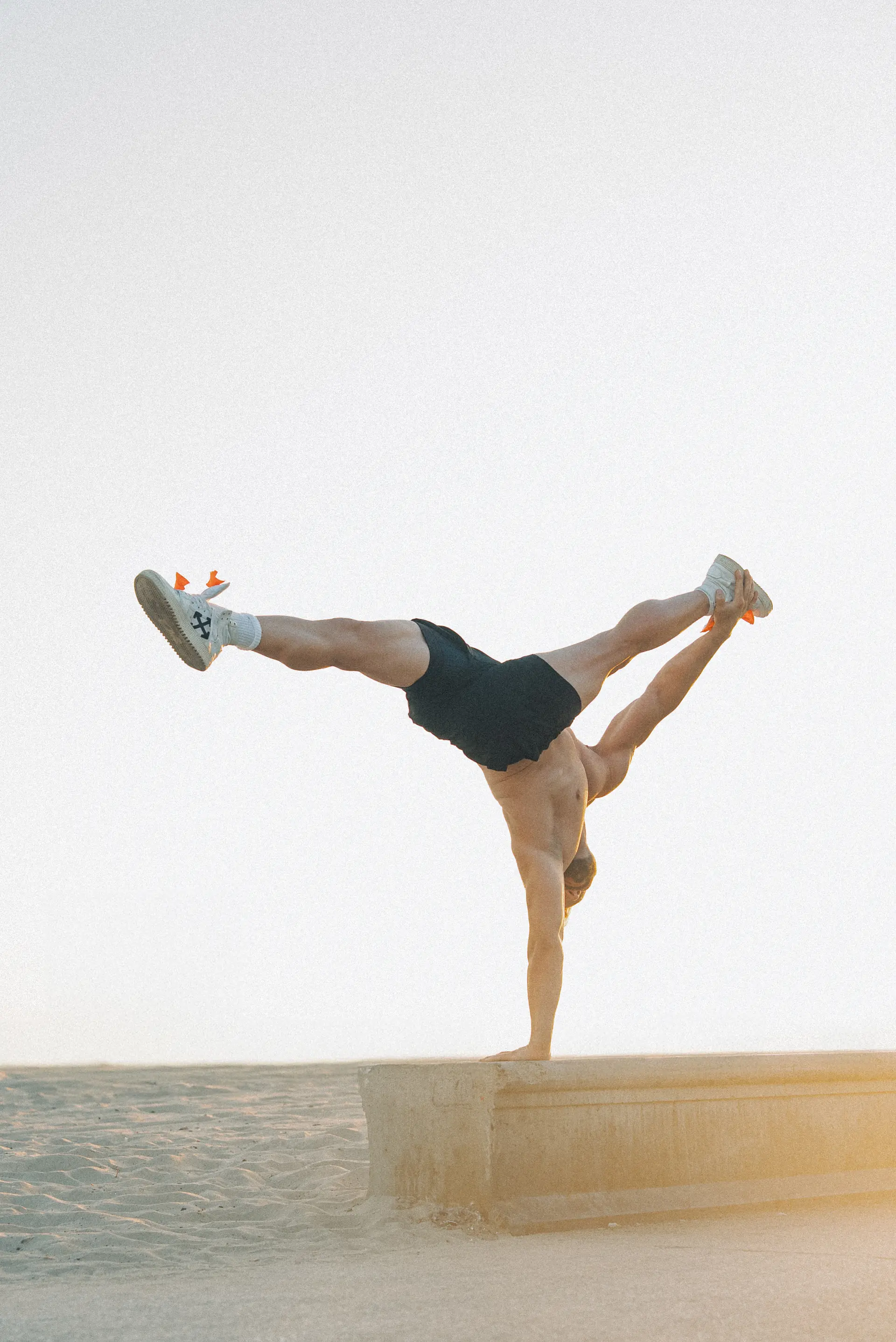
The One Arm Handstand seems so simple in theory. One body, one arm, perfect balance. Yet, anyone who has attempted a Handstand knows the brutal reality: the OAHS is anything but simple. It's a multi-year pursuit, often complicated by misinformation and poor technical choices. The journey begins not with grand attempts, but at the very bottom: your hand. Your hand is the single point of contact with the floor, your foundation. If you can, spread it wide. Imagine a table with only one leg. A toothpick leg creates an unstable table. A tree trunk leg creates a table that will stand for ages. Your hand must become the tree trunk. The most critical factor is the quality of your connection to the floor. Avoid soft or slippery surfaces. Every ounce of force you generate, every micro-adjustment you make, must transfer directly into the ground with zero delay. This requires a wide, solid Base of Support and active Fingertip Control.
1.2. The Elbow: Your Pillar of Stability
Moving up the Kinetic Chain, we arrive at the elbow. The rule is absolute: lock it and keep it locked. Watch any elite hand-balancer—the moment the elbow bends, the entire structure shakes. A slight bend is an Energy Leak, a point of instability. When your weight shifts backward, the elbow instinctively bends to catch the balance. This reflex costs a tremendous amount of energy, shatters your line, and can lead to Overuse injuries. Your focus must be relentless. Keep your weight forward over the fingers and maintain a locked elbow at all times. Think of your arm not as a limb, but as a solid, unyielding pillar. Any degree of Elbow Flexion is a failure of this principle and will compromise your stability.
2. Forging the Powerhouse Shoulder
2.1. The Supporting Shoulder: The Engine of Control
Your shoulder is where everything happens. It is the powerhouse of the Handstand. The single most important cue is: Elevate it! Push out tall, even taller than you do on two hands. This isn't just about stability; it's about shoulder health. Your shoulder is tasked with supporting, balancing, and maneuvering your entire bodyweight. Treat it with respect. Maximal Scapular Elevation creates the strongest, most stable platform possible. It maximizes the space within the joint and engages the surrounding musculature for optimal Scapular Stability. As a critical alignment cue, connect the side of your face to your supporting shoulder and keep it connected. This simple physical contact ensures your head and shoulder are moving as one unit, a hallmark of a well-aligned OAHS. This is the essence of Joint Stacking.
2.2. The Free Shoulder: The Art of Doing Nothing
The opposite shoulder—the free one—is deceptively tricky. Its job is to do almost nothing, and that is profoundly difficult. You must consciously leave it down, relaxed, and pointed towards the floor. While the supporting scapula is driving upwards, the free scapula must remain neutral as you gently bring the shoulder towards your chin. If this free shoulder pulls up and away from the floor, your latissimus dorsi muscle engages. This action pulls your hips back to a parallel position, instantly destroying your alignment and causing you to rotate and fall. This is the single most common reason why people fail when simply attempting a One Arm Handstand instead of systematically training for it. Mastering this stillness requires immense Body Awareness and Scapular Control.
3. The Geometry of Balance
3.1. The Side Bend: The Unspoken Secret
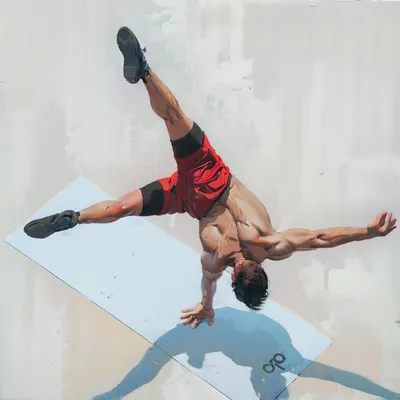
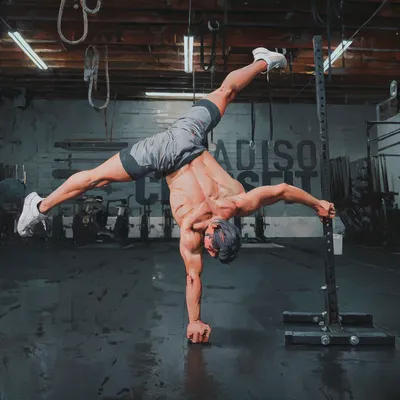
To balance on one arm, we must shift our body's Center of Mass out to the side, directly over the supporting hand. This is achieved through a combination of a slight gaze and shoulder shift, but most importantly, a Side Bend. This Side Bend is perhaps the most difficult and misunderstood component of the OAHS. But here's the good news: like riding a bike, once you find it, it’s usually there to stay. The bend must be isolated in the space between your last rib and your hip bone. You can only isolate this area properly if your supporting shoulder is maximally elevated and resisting the movement. It's a push-pull action. Ensure you do not rotate your hips during this maneuver. A great visualization is to imagine you are standing in a narrow toaster; you must bend sideways without touching the hot coils on either side. This requires dedicated Anti-Rotation strength.
3.2. The Hips and Legs: The Final Links in the Chain
Your legs are not passive passengers; they are active participants in your One Arm Handstand. They must be engaged, taut, and working in unison with the rest of your body. When I first started serious Hand Balance training, my legs were often the most sore part of my body at night. This speaks to the level of tension required. Do not let them hang limp, and do not let them disconnect from your core. A disconnected leg is dead weight that will pull you off balance. Whether in a straddle or legs together, they must maintain their shape with unwavering tension. This complete-body engagement is what transforms a wobbly attempt into a controlled, solid line, similar to the tension required for a perfect Hollow Body Hold or a Planche.
4. From Blueprint to Balance
4.1. The Path to Mastery
At first, this checklist of technical points—hand pressure, elbow lock, shoulder elevation, side bend, leg tension—can feel overwhelming. It is a lot to process. But with consistent, focused training, every component except for your scapular elevation will eventually fade into the background, becoming part of your body's automated Proprioception. Your Technique will become second nature. At that point, you can dedicate your entire mental focus to that supporting shoulder, the true engine of the skill. This is when you will develop a completely new understanding and feeling for the One Arm Handstand. The road is long, make no mistake. But the feeling of standing effortlessly on one hand, a moment of magical stillness you have forged from years of dedication, is worth every second of the struggle. Get to work.