Puppy Press to Handstand: The Ultimate Guide for Flexible Athletes
Is the Puppy Press a work of art or a waste of time? Discover this unique handstand entry and decide.
TABLE OF CONTENTS
1. Deconstructing the Puppy Press
1.1. An Artist's Skill or an Athlete's Distraction?
The Puppy Press has always been a polarizing skill. The athlete inside me often questions its utility, seeing it as a niche movement with limited transfer to powerhouse skills like the Planche or a standard Press to Handstand. It demands a unique combination of attributes that don't neatly fit into a linear strength progression. But then, the artist inside of me sees its raw beauty. It’s a graceful, flowing entry into a Handstand that can elevate a simple choreography into something truly special. It bridges the gap between pure strength and expressive movement. If you're intrigued by this blend of art and athletics, and want to understand how to conquer it, you're in the right place.
1.2. What Exactly Is It?
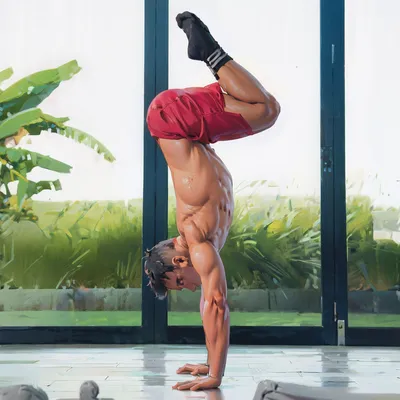
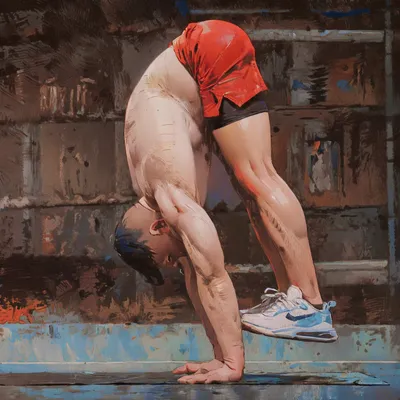
In its simplest form, the Puppy Press is a Handstand entry where you press up over the side from one leg, rather than from two legs as in a traditional straddle or pike press. The movement resembles a slow-motion, controlled cartwheel entry, demanding immense Control and a unique kind of strength. A rock-solid, two-arm Handstand is a non-negotiable prerequisite; you must be able to Balance the moment your foot leaves the floor. This contrasts sharply with the Straddle Press to Handstand, where you can—and should—begin training the specific strength and coordination elements long before your freestanding hold is consistent.
2. Building the Foundation
2.1. The Flexibility Mandate
There is no negotiating with the Flexibility requirements of the Puppy Press. Your body must become a supple machine. You need exceptional Mobility in your Hamstrings to lift the leg high, open hips to swing it across your body, and pliable lats to allow for the deep Side Bend. If your leg cannot get directly over your center of mass, shifting weight into the fingertips of both hands, the lift-off is biomechanically impossible. You will be fighting a losing battle against gravity. This is a skill where flexibility isn't just helpful; it's the price of admission.
2.2. The Biomechanics of the Lift
To execute a clean Puppy Press, begin by standing beside your hands. If you're on the right side, your right foot should be close to your right hand, pointing forward. The first movement is a slow, deliberate lift of the left leg up and over, as if initiating a cartwheel in slow motion. Crucially, you must drive your right hand into the floor and rise onto the tiptoes of your standing foot. This elevation is key. As your left leg crosses the midline, you must actively pull it down towards the left side—or even slightly behind you—to transfer your Center of Mass from your standing foot into your left hand. The common mistake is letting the leg drop in front of the body, which pulls you off Balance instantly.
2.3. Progressions for the Press
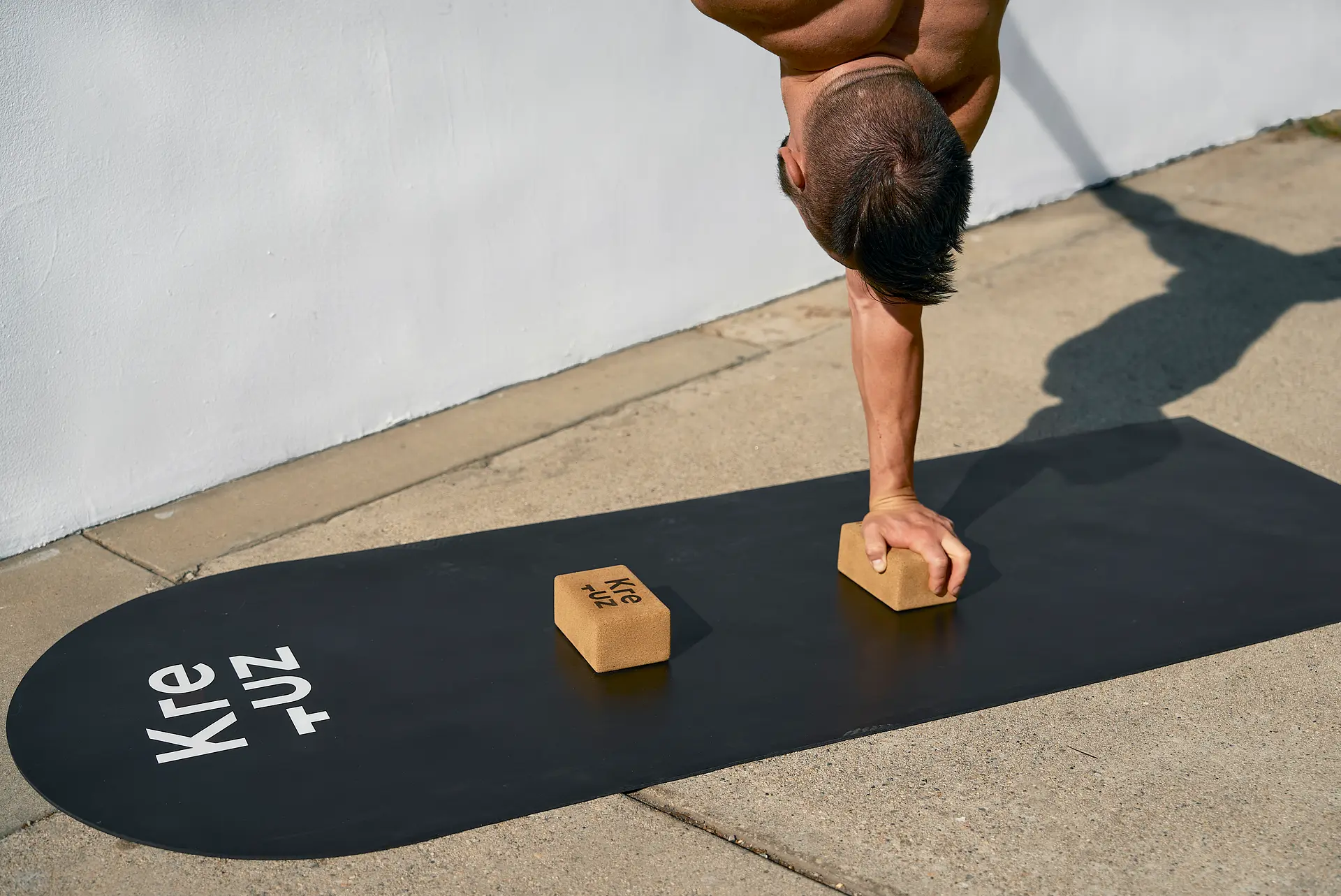
To make the entry more accessible, use yoga blocks under your standing foot. Start with a small tower of one or two blocks. This elevation of your hips reduces the degree of Side Bend required to get your weight over the second hand, effectively shortening the lever and giving you a significant Mechanical Advantage. As your strength and Flexibility improve, you can systematically remove blocks until you are pressing directly from the floor. This method of Progressive Overload is fundamental to building the skill safely and effectively.
3. The Training Blueprint
3.1. Essential Drills and Conditioning
To master the Puppy Press, your training must be multi-faceted. First and foremost, you need to refine your general Handstand Balance. Don't just work on a straight-line hold; your Middle Split Handstand and even your Tuck Handstand must be stable and controlled. This develops the Proprioception and Fingertip Control necessary to manage the dynamic shifts of the press. Building stronger shoulders and a resilient core through exercises like Pike Push Ups and Hollow Body Holds is also critical, preventing you from collapsing under the load as your legs lift.
3.2. Forging Active Flexibility and Side Strength
You must relentlessly work on your Active Flexibility, particularly for the Hamstrings and middle split. It's not enough to be passively flexible; you must be able to lift your leg high and control it there. Drills like one-legged downward dogs, where you walk your hands very close to your standing leg, or ballet-inspired adagio movements are perfect for building this usable range. Finally, do not neglect your Side Bend Flexibility and strength. The deeper you can bend laterally from your obliques, the closer your standing foot can be to your hands at the start. This pre-positions your hips further over your base, making the entire movement feel lighter and more controlled.
4. The Final Verdict: Is the Puppy Press for You?
4.1. Who Should Train It?
So, who is the Puppy Press really for? If you are a flexible athlete, this skill can be a game-changer. It offers a stable, controlled, and visually stunning entrance into a Straddle Handstand without any jumping or Momentum. For those who are highly mobile, a straight Press to Handstand can sometimes feel difficult because a supple body can lack the rigid tension required. The Puppy Press provides an alternative path. For advanced hand balancers, it can also serve as an early progression towards the formidable One Arm Press to Handstand. However, it’s important to be honest about its limitations: it won't significantly improve your two-arm press or your general straight-line Handstand control.
4.2. Your Path Forward
Ultimately, the decision is yours. If you are blessed with Flexibility and seek a stable, artistic entry into your Handstand, or if you love exploring creative Movement Patterns and choreography, the Puppy Press is an excellent goal. It will challenge you in new ways and add a unique tool to your arsenal. On the other hand, if you struggle with Mobility or your goals are purely strength-focused—mastering skills like the Planche or a 90-degree Handstand Push Up—your time and energy may be better invested elsewhere. Evaluate your personal goals, assess your strengths, and make the call.
No matter which path you choose, the principles of dedicated practice and intelligent training remain the same. Define your goal, create a plan, and execute with Discipline.
Get to work.