Master Your Handstand Entry: A Guide to Consistent Mounts
Stop guessing your handstand mounts. Learn the secrets to consistent, powerful entries. #handstand

TABLE OF CONTENTS
1. The Entry Problem: Your True Handstand Roadblock
1.1. Why the Mount is the Real Challenge
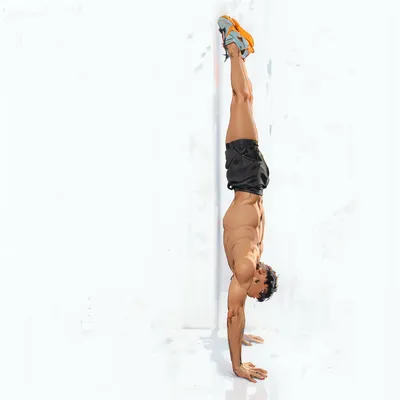
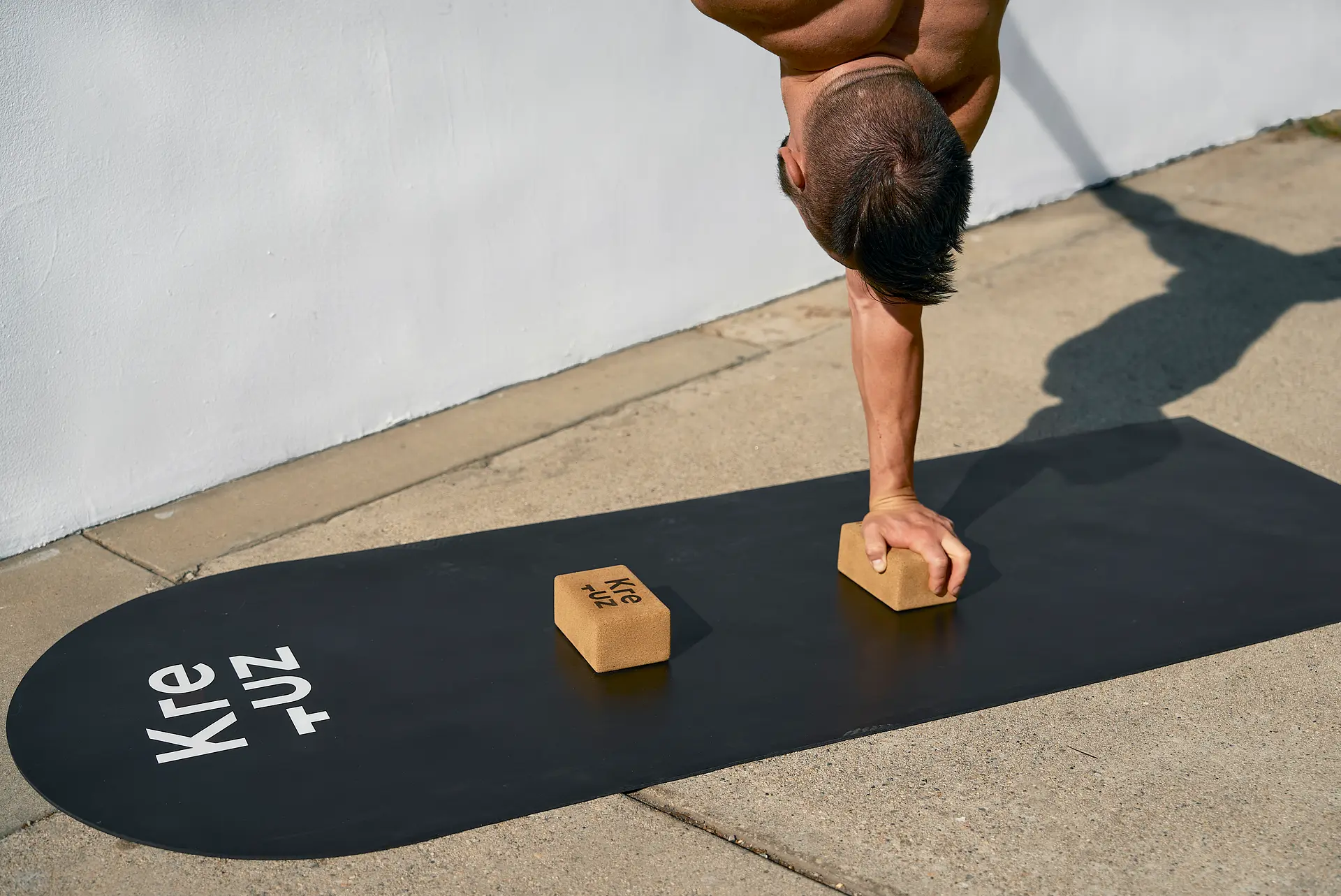
Holding a handstand is relatively straightforward. With the right preparation, even a One Arm Handstand is an achievable goal. The true battle, the moment of greatest uncertainty, lies in the transition—the split second between your feet leaving the floor and you establishing full control in your handstand. This is where consistency is forged or shattered. Many athletes possess the strength to hold a perfect line if placed there, but they stumble on the journey up. Getting inverted requires you to simultaneously lift your entire lower body and fight for the perfect point of balance. It's a dual challenge of strength and Proprioception, making the entry the most deceptively difficult part of the Hand Balance journey.
1.2. The Two Philosophies of Inversion
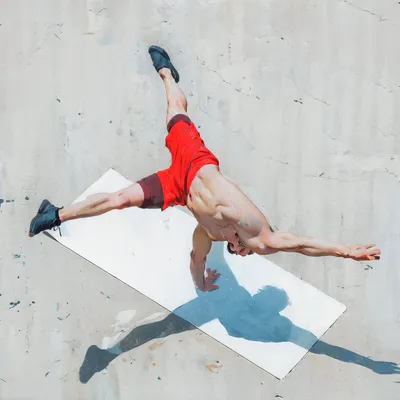
Fundamentally, there are two distinct approaches to getting upside down: dynamic mounts and press mounts. The critical difference lies in one variable: control. Do you explode upwards, using momentum and momentarily surrendering to gravity? Or do you press, maintaining absolute command over every millimeter of the movement? Dynamic, or momentum-based mounts, are your entry point. They are less demanding in terms of raw strength and Flexibility but require sharp coordination and a degree of courage to launch onto your hands. The trade-off is the 'blind spot'—a brief, uncontrolled phase where you're essentially hoping for the best. This inherent guesswork means dynamic mounts will never be 100% consistent. In stark contrast, full-control presses are the domain of the dedicated practitioner. They demand significantly more Straight Arm Strength, technical precision, and often, a high degree of mobility. But their reward is unparalleled: absolute control. Nothing is left to chance. A well-trained press can, and should, be 100% consistent. It transforms the handstand entry from a question mark into a statement.
2. A Taxonomy of Handstand Mounts
2.1. Dynamic Mounts: Riding Momentum
Any entry where you use momentum to get into the handstand is a dynamic mount. Their primary advantage is accessibility—they are your first step into the world of freestanding handstands. The significant disadvantage is the blind spot, that moment of faith where you commit and hope for a perfect landing. While there are countless variations, let's dissect the most common ones.
- Tuck Up to Handstand: This is the quintessential beginner's mount. The Tuck Up to Handstand uses the tucked position as a compact, efficient stepping stone to align your hips over your shoulders. The key is to start with as much weight as possible in your hands, making the jump minimal and controlled. It’s less of a jump and more of a lift.
- Straddle Jump To Handstand: Very similar in technique to the tuck up, the Straddle Jump To Handstand introduces a new variable: Flexibility. The wider you can open your legs, leveraging your Pancake and Middle Split mobility, the lower your center of gravity and the easier the jump becomes. It's a beautiful blend of dynamic power and static range.
- Kick Up to Handstand: Perhaps the most popular yet most misunderstood entry. Many believe the Kick Up to Handstand is simple, but achieving consistency is a master's game. It is highly technical, requires significant hamstring flexibility to allow for a vertical kick, and presents a wide margin for error in the form of over-kicking or under-kicking. It’s easy to learn, but incredibly difficult to master.
2.2. Press Mounts: The Art of Control
While undeniably more difficult, presses are the gold standard for consistency and efficiency. They require a sophisticated blend of strength, coordination, and mobility, but they grant you total authority over your ascent. For the serious athlete, mastering a press is a non-negotiable milestone.
- Straddle Press to Handstand: The go-to for most advanced handbalancers. A correctly executed Straddle Press to Handstand feels almost effortless, a perfect expression of Compression strength and Scapular Elevation. It represents a major turning point in any handstand journey, where control fully eclipses momentum.
- Pike Press to Handstand: A significantly heavier variation than its straddled counterpart. By keeping the legs together, the center of gravity shifts further away from your hands, demanding a greater degree of raw pressing strength. It’s a pure test of shoulder power and Compression, often feeling more like a Tuck Planche lift than a float.
- Stalder Press to Handstand & L-Sit Press to Handstand: These are the next evolution, taking the concepts of the Straddle Press to Handstand and Pike Press to Handstand off the floor. They require elite levels of technique, strength, and active Flexibility. The ability to press without your feet touching the ground makes them the ultimate expression of transferable Hand Balance skill.
- Bent Arm Press to Handstand: This mount flips the script. It relies far less on technique and flexibility and far more on raw pushing strength, closely related to the Handstand Push Up. While easier than a full freestanding Handstand Push Up, you should be comfortable with back-to-wall variations. This is the ideal choice for powerful athletes who lack elite hamstring mobility but still demand 100% consistency.
3. Your Path to Entry Mastery
3.1. The Beginner: Focus on Being, Not Getting
For the beginner, the obsession with the mount is a trap. Your primary focus should be one thing: accumulating quality time upside down. Cut the mount out entirely for now. Your training arena is the wall. Master chest-to-wall holds, wall takeoffs, and slide-aways. Mounts are unrealistically difficult when you're still learning to simply exist on your hands. The better your handstand becomes, the less perfect your entry needs to be. Any time spent trying to perfect a mount to support a mediocre handstand is time wasted. First, build a rock-solid handstand at the wall. Then, and only then, begin to incorporate the Tuck Up to Handstand.
3.2. The Intermediate: The Quest for Consistency
For the intermediate athlete, the game changes. Holding a handstand is no longer the primary challenge. The new focus is efficiency and consistency. You cannot build advanced skills like the Hollow Back Handstand or begin your One Arm Handstand journey if you're wasting energy on failed entries. If only two out of every five mounts are successful, you are bleeding energy and stalling your own progress. The Tuck Up to Handstand, Straddle Jump To Handstand, and, if your flexibility allows, the Kick Up to Handstand should become daily practice until nine out of ten attempts are stable and controlled. This is also the time to begin your serious, dedicated work towards the Press to Handstand. It is no longer a distant dream; it is the next logical objective.
3.3. The Advanced: The Entry as an Afterthought
A standard two-arm handstand holds little excitement for the advanced practitioner. Your sessions are filled with One Arm Handstand drills, complex shapes, and dynamic transitions. At this level, getting into the handstand should be a subconscious action, an afterthought. The Press to Handstand—either from straddle or a jumping variation to conserve energy—is the default. Depending on the surface or if you're managing hamstring tightness, a simple Tuck Jump to Handstand or a powerful Bent Arm Press to Handstand are perfectly acceptable tools. The mount is no longer the challenge; it is simply the beginning of the real work.
4. Ascend with Intention
Handstand mounts are more than just a way to get upside down. They are distinct skills that can add variety, challenge, and artistry to your practice. But they are also complex Movement Patterns that demand specific, isolated training. Achieving efficiency and consistency in your entries is not a luxury; it is a necessity for advancing to higher-level skills. You cannot expect to progress if you're battling your mount on every single attempt. Stop leaving your handstand to chance. Master your entry, own your balance, and unlock the next chapter of your potential.
Get to work.