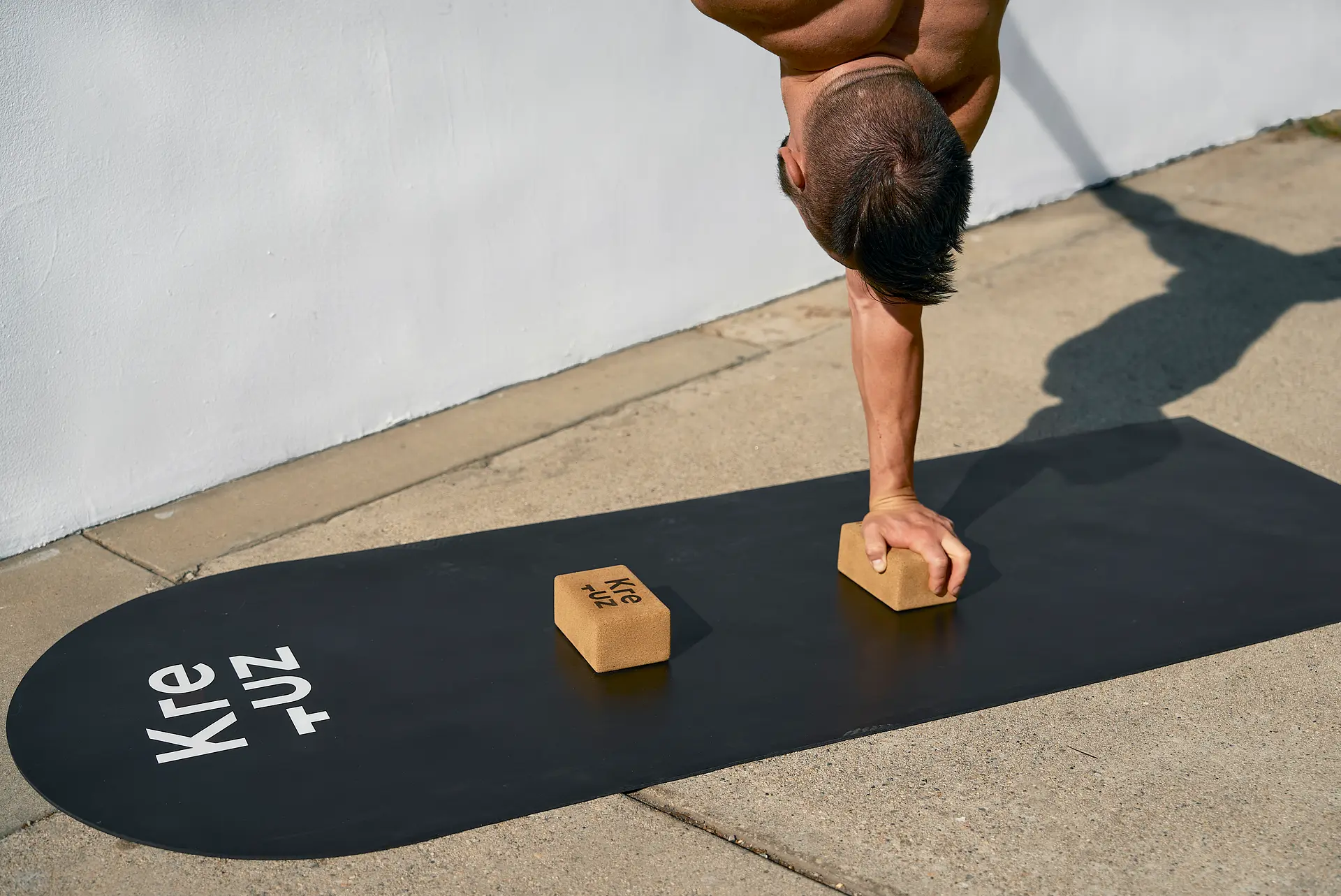
Pike Push Up Guide: Unlock Your Overhead Pushing Strength
Your Handstand Push Up journey starts here. Master the Pike Push Up and forge elite overhead strength.

TABLE OF CONTENTS
1. Deconstructing the Pike Push Up: The Foundation of Pressing Strength
1.1. What It Is and Why It Matters
The Pike Push Up is your gateway. It's not just an exercise; it's the first significant milestone you will conquer on the path to serious calisthenics strength. This is where you forge the raw Overhead Pushing Strength that serves as the bedrock for almost every advanced skill in your arsenal. The power, body awareness, and control you develop here are not isolated gains—they transfer directly into your Handstand training, your Planche journey, and every Press to Handstand variation you can dream of. Mastering the Pike Push Up is non-negotiable. It's the bodyweight equivalent to the gym's military press, but with an infinitely higher ceiling for skill development. It is the most critical and beginner-friendly progression towards the coveted Handstand Push Up. If you are serious about calisthenics, your journey to overhead dominance starts now.
1.2. The Anatomy of the Push
Understanding the mechanics is key to unlocking your potential. The Pike Push Up, as a vertical pushing movement, is a masterclass in upper body synergy. It primarily targets your shoulders (deltoids), upper chest (pectoralis major), and triceps. However, the unsung hero of this movement is the Serratus Anterior, the muscle responsible for powerful Scapular Protraction and keeping your shoulder blades glued to your ribcage. This movement demands a high degree of Shoulder Flexion—the ability to bring your arms fully overhead. This is where Flexibility comes into play; if your lats are tight, you're not just fighting gravity, you're fighting your own body's internal resistance. Furthermore, while the setup can be modified by bending the knees, some baseline Hamstrings mobility is required. Lastly, your wrists will be in a state of extension. For novices, this can be uncomfortable. To mitigate this, increase Time Under Tension gradually and make use of parallettes to maintain a neutral wrist position whenever possible.
2. The Blueprint: Perfecting Your Pike Push Up Form
2.1. Technique and Execution
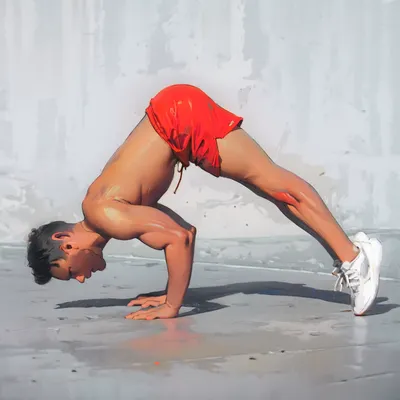
Technical mastery is not optional. It is the difference between stagnation and progress. By following a few precise cues, you will build clean, efficient reps and lay a flawless foundation. Start with your hands shoulder-width apart on the floor. In your starting position, your shoulders must be stacked directly over the center of your hands, with elbows fully locked out. Your gaze should be fixed on the spot between your hands. Before you even think about bending your arms, create tension: activate Scapular Elevation by shrugging your shoulders towards your ears and press your fingertips into the floor. This is Fingertip Control, and it is your primary tool for stability.
2.2. The Movement Path
As you initiate the descent, the most critical action is to lean your shoulders forward. Your head should travel forward and down, aiming for a spot well in front of your hands, not between them. This forward lean is what loads the shoulders and makes this an effective pressing exercise. Your elbows must remain stacked directly over your wrists throughout the movement. If your elbows point backward, you are not leaning enough. While your scapula begins in Scapular Elevation, allow it to move freely into Scapular Protraction as you descend. Do not let your back arch or your shoulder blades wing out. Avoid flaring your elbows; aim for a 45-degree angle or less. This protects the shoulder joint and builds the correct Movement Pattern for advanced skills like the 90 Degree Push Up. The ascent must mirror the descent. Push your shoulders up slightly, then drive up and back simultaneously, finishing with your shoulders stacked perfectly over your hands.
2.3. Common Mistakes and How to Crush Them
Mistakes are data. They show you where you need to get stronger. The more you train, the more you will discover and overcome.
- Arched Back: This is the most common sin, usually born from a lack of shoulder strength or poor Core Stability. The fix? Focus relentlessly on a rounded upper back and strong Scapular Protraction. If the arch persists, regress the exercise to an easier variation and build more foundational strength. Do not build your house on a weak foundation.
- Insufficient Lean: I see this constantly. Athletes lower their head straight down between their hands, turning a powerful shoulder builder into an inefficient tricep exercise. The cause is always a lack of strength. Place a yoga block in front of your hands—your head must clear it on every rep. This forces the correct forward lean and ensures you're training the right muscles.
- Lazy Lockout: It has become a trend to finish the rep by pushing the shoulders down towards the feet, likely to sneak in a micro-break. This is a bad habit. It breaks tension and teaches poor motor control. Finish every single rep with active Scapular Elevation, shoulders stacked directly over the hands. Build discipline now, reap the rewards later.
3. Forging Strength: Progressions and Training Strategy
3.1. Scaling for Progressive Overload
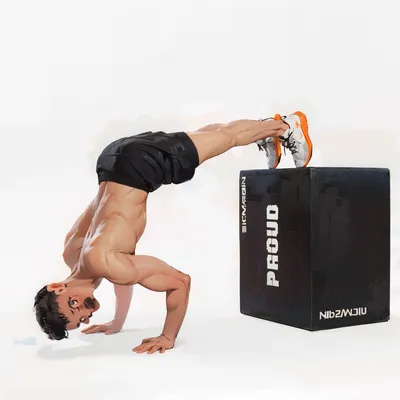
To get stronger, you must consistently challenge your body. Progressive Overload is the engine of all gains. The simplest way to scale the Pike Push Up is by manipulating leverage. To decrease intensity, elevate your hands on blocks or a bench; this shifts your Center of Mass towards your feet. To increase intensity, elevate your feet; this drives more weight into your hands, demanding more from your shoulders. You can also manipulate the range of motion. Partial reps, with your head touching a stack of yoga blocks, can help you build strength through a sticking point. Conversely, increasing the range of motion by elevating both your hands and feet on platforms creates a deficit and a brutal new challenge. Another powerful tool is the dead stop. By pausing with your head on the floor for a moment, you eliminate the stretch reflex, forcing your muscles to generate raw, explosive power for the ascent. This is a true test of strength.
3.2. Accessory Lifts and Drills
To accelerate your progress, attack your weaknesses from all angles. Targeted accessory work is crucial.
- Weighted Exercises: The single most effective tool for building foundational strength is the weighted Overhead Press. It's simple to execute with good form and allows for micro-progression. However, do not live in the world of weights. Transition to bodyweight work as soon as possible to maintain training Specificity and stimulate the necessary Neural Adaptation for calisthenics.
- Accessory Exercises: Your training should be holistic. Incorporate handstand-specific drills like Wall Walks to build endurance and stability under load. Strengthen your Scapular Protraction with exercises like Plank Push Ups and Serratus Push Ups—this will directly improve your alignment at the bottom of the pike. Finally, isolate your triceps with Bench Dips or Triceps Extensions. A chain is only as strong as its weakest link; make sure you have no weak links.
3.3. Programming and Volume
Consistency is king. Train your Pike Push Up progressions 2-3 times per week, ensuring at least 48 hours of Recovery between sessions. After a thorough warm-up focused on Injury Prevention, attack your hardest pike progression first, when your nervous system is fresh. Aim for a total of 10-20 hard-working sets per week. This isn't about mindlessly accumulating volume; it's about quality. Every rep should be a conscious effort to improve. Listen to your body, but do not be afraid to push.
4. Master the Movement: Your Path to Overhead Dominance
The path to elite calisthenics skill is built one progression at a time, and the Pike Push Up is one of the most fundamental blocks in that foundation. It is more than just a stepping stone to the Handstand Push Up; it is a masterclass in Overhead Pushing Strength, body control, and the relentless pursuit of perfect form. By deconstructing the movement, perfecting the technique, and applying intelligent Progressive Overload, you are not just building bigger shoulders—you are forging a body capable of incredible feats of strength. The power you build here will echo through every Planche, every Press to Handstand, and every moment you spend inverted. Do not underestimate its importance. Embrace the process, master the movement, and unlock the next level of your potential.
Get to work.