Tuck Handstand: The Ultimate Guide to Unlock Your Handstand
The Tuck Handstand isn't just a shape—it's the key to unlocking true handstand control. Here's how.

All About That Tuck - Workout Collection
TABLE OF CONTENTS
1. What is the Tuck Handstand and Why It Demands Your Respect
1.1. Deconstructing the Tuck Handstand
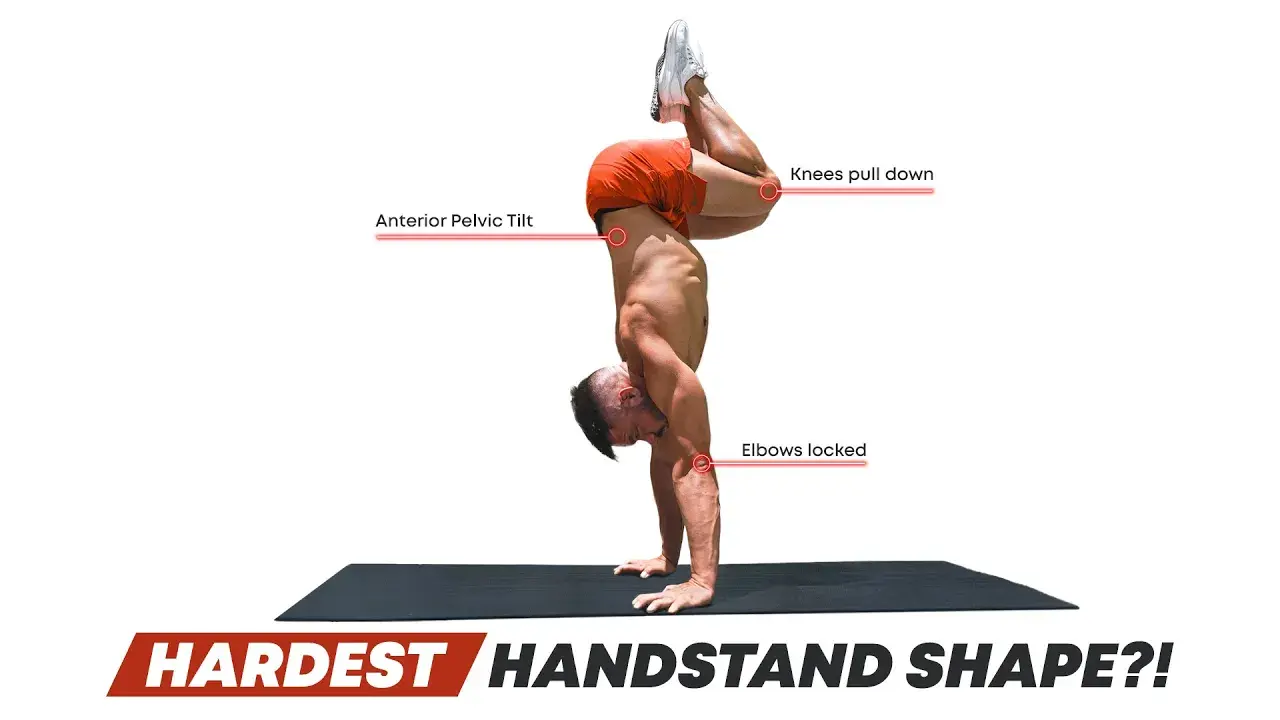
The Tuck Handstand is more than just a cool-looking shape. It's a crucible. A non-negotiable test of upside-down dominance that separates the pretenders from the masters. It is the single hardest shape that nobody thinks they need, but everyone absolutely must learn. Mastering the tuck demonstrates a level of control, Coordination, and active Mobility that serves as the bedrock for elite skills like the Press to Handstand and the One Arm Handstand. While you might not need the tuck to attempt those skills, I have yet to see an athlete achieve them without first conquering this fundamental position. It's the gatekeeper to the next level of your Hand Balance journey. It forces honesty in your alignment, exposes every weakness in your kinetic chain, and is the ultimate tool for eradicating the infamous Banana Handstand.
1.2. The Anatomy of Control
The Tuck Handstand is a masterclass in tension and equilibrium. It's a dynamic battle of opposing forces, perfectly balanced. Your foundation begins with locked elbows and full Scapular Elevation, shoulders stacked directly over the center of your hands. Your fingers must grip the floor, providing active Fingertip Control. As you bend your legs, your hip flexors engage with maximum intensity, pulling your knees towards your chest. But here’s the secret: your lower back must fire just as hard, pulling your hips into a slight Anterior Pelvic Tilt. This isn't just about creating a counterbalance. This is about creating a structural lock. The lower back is the bridge connecting your shoulders to your hips. If it disengages, the hip flexors will pull your pelvis into a Posterior Pelvic Tilt, your back will round, your shoulders will shoot forward, and you will collapse into a sloppy Tuck Planche. It is a two-edged sword. If the hip flexors relax but the lower back keeps firing, your knees drift up and your back over-arches. Only when both forces are at maximum engagement, canceling each other out, can the Tuck Handstand exist.
2. The Two Paths: The Flexible vs. The Stiff
2.1. The Naturally Gifted
In the world of handbalancing, there are two distinct types of athletes: those who find the tuck with relative ease, and those who fight for every inch. This division is largely dictated by inherent shoulder, lower back, and hip Mobility. If you fall into the first category—often those with more natural Flexibility—the tuck becomes your greatest asset. It's a more stable, compact position than a straight handstand, with a lower Center of Mass. For you, the tuck isn't a challenge to be overcome, but a home base from which to build extraordinary Handstand Endurance and control.
2.2. The Fight for Form
For everyone else, the road to the Tuck Handstand will be one of the most demanding and rewarding battles of your training career. Every second spent working on it will feel like an eternity, and every small progression a monumental victory. Your primary limiting factors will be a lack of Shoulder Flexion or a general deficiency in Coordination and Proprioception. A handstand with closed shoulders forces the back to arch to compensate, creating the dreaded Banana Handstand. When you then try to tuck, pulling the knees down automatically straightens the back. With closed shoulders, this new straight line forces you into an Advanced Tuck Planche position, demanding immense Straight Arm Strength just to survive. If you feel like you lack strength, it's almost certain you lack Mobility. The path is hard, but not impossible. And the rewards are immense. Every moment you dedicate to conquering the tuck will directly translate to a straighter line, better Body Awareness, and a more powerful handstand.
3. Forging the Tuck: Drills and Progressions
3.1. Building the Blueprint on the Ground
Before you can own the tuck upside down, you must first understand its mechanics. Lie on your back in a perfect Hollow Body Hold: hands overhead, shoulders elevated, core tight. From here, pull your knees towards your chest, using your hip flexors to create a tight tuck. Crucially, engage your lower back to maintain that slight Anterior Pelvic Tilt. Your shins must stay parallel to the floor. This is not a crunch; it's a battle of compression and stabilization. For stretching, an essential exercise is to lie on your back on a bench, legs hanging off. Pull one knee tightly to your chest, then let go, using only your hip flexor and core strength to hold it there. This builds the active, Usable Range of Motion you need.
3.2. Dominating the Wall: The Non-Negotiable Steps
Now, we take the fight to the wall. The wall is not a crutch; it is a diagnostic tool. In a Chest to Wall Handstand, find your line. Shoulders and hips should be stacked over your hands, creating a 45-degree angle at the hips.
- Single Leg Wall Tucks: Begin by pulling one knee to the wall at a time. The rest of your body must remain absolutely immobile. This isolates the movement and builds initial Coordination.
- Double Leg Wall Tucks: The next level. Pulling both knees simultaneously places significantly more load on your shoulders. Fight to keep them open and stacked over your hands. Do not cheat by looking at the wall. Your gaze must stay on your hands. Looking at the wall places your chin on your chest, making the exercise easier and robbing it of its effectiveness.
- Box Tucks: A fantastic, albeit setup-intensive, drill. Find a box or table high enough to maintain your Anterior Pelvic Tilt. This progression is powerful because the force travels vertically through your body, closely mimicking a freestanding hold. It's the perfect bridge for those overcoming the fear of chest-to-wall exercises.
3.3. Leaving the Wall: The Final Frontier
Once you have built sufficient strength and awareness, it is time to leave the wall. There are three primary entries into the freestanding tuck: lowering down, lifting up, or jumping in. You must train all three.
- Lower into the Tuck: From a controlled, straight Handstand, slowly lower your knees down. This is an excellent way to control the depth of your tuck and build eccentric strength. As soon as your form breaks—shoulders close, elbows bend—push back up.
- Tuck Take Off: From your Single Leg Tuck Slide or a double leg tuck position at the wall, engage your lower back slightly more, pull your glutes over your fingertips, and peel your feet off the wall. There is no jump, no kick, no momentum. It is a pure transfer of weight born from perfect alignment.
- Box Take Off: From a Single Leg Box Tuck, engage your glutes to lift the second leg off the box. If you have to swing, your alignment is wrong. Your hands are likely too far from the box. Get your shoulders directly over your hands and try again. It's a test of precision, not power.
4. Master the Tuck, Master Your Handstand
4.1. The Tuck as a Gateway Skill
Let's be clear. The Tuck Handstand is not just a party trick. It is a master key that unlocks the most coveted skills in calisthenics. It's the most stable and controlled entry, making your Tuck Mount to handstand ruthlessly consistent. From a solid tuck, advanced shapes like the L-Handstand or Straddle Handstand are just a leg extension away. But the biggest prize is the Press to Handstand. The tuck forces you to master the crucial lower back and hip flexor engagement—the very engine that drives the press. The active Compression you build in the tuck is the same force that prevents your straddle press from turning into a desperate Planche Press. You are not just learning a shape; you are building the very components of elite movement.
4.2. Your Path to Dominance
The journey to mastering the tuck is a microcosm of the entire calisthenics path. It demands analysis, dedication, and the willingness to confront your weaknesses head-on. The key is the timing between your hips and knees. When lowering or pressing, imagine your feet are attached to a rope pulling them on a perfectly vertical line. Do not deviate. This path is a winding road, but with focused, consistent training, you can and will straighten it out.
Ultimately, mastering the tuck isn't about achieving a single position. It’s about forging an unshakeable foundation of strength, control, and Body Awareness. It’s about becoming a more capable, resilient, and dominant athlete. The work is hard. The rewards are permanent.
Get to work.