Tuck Up vs. Swing Up: The Handstand Entry You're Doing Wrong
Stop gambling with your handstand entry. One of these mounts is consistent, the other is not. Here's why.

TABLE OF CONTENTS
1. The Deceptive Allure of the Swing Up
1.1. The Common Misconception
You see it everywhere. The first thing that pops into anyone's mind when they imagine getting into a Handstand is the classic Swing Up, also known as the kick up. It looks intuitive, almost graceful. You might be thinking it’s the natural starting point, that it’s all about personal preference. This is a mistake. There is a precise, straightforward answer to which mount is superior for building consistency, and it isn't a matter of opinion. One of these mounts is mechanically sound; the other is a lottery ticket that rarely pays out.
1.2. The Flexibility Tax
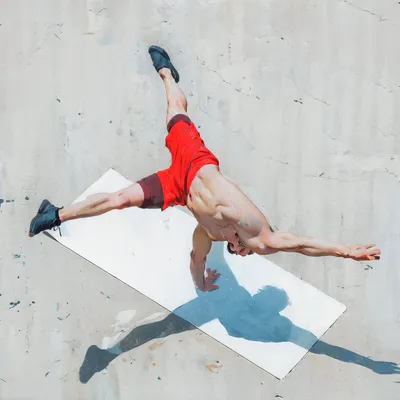
To execute a clean Swing Up, you're paying a steep tax in Flexibility. Your body needs to create at least a 90-degree angle between your legs—ideally closer to 135 degrees—without bending your knees or externally rotating at the hips. For most athletes, this doesn't come naturally. It demands dedicated time spent stretching your hips and hamstrings. Without this prerequisite Mobility, you're setting yourself up for failure before you even start the movement. You're fighting your own body's restrictions.
1.3. The Hit-or-Miss Problem
Even after years of practice, the Swing Up remains a game of chance for many. The movement is so dynamic and has so many moving parts that it’s incredibly difficult to replicate with precision. One leg goes up, the other follows, the hips need to stack over the shoulders, and the legs need to lock—all in a split second. A slight miscalculation in power means you either undershoot and fall back, or overshoot and fly past the balance point. This inherent inconsistency makes building Proprioception and control a long, frustrating battle.
1.4. Rotational Chaos: The Kinetic Chain Collapse
Here’s where it gets messy. That lack of Flexibility we talked about? It has consequences that ripple through your entire body. When your leg can't swing up freely, it pulls on whatever is connected to it. In this case, your hips are the first victim. They rotate open, which in turn twists your torso and shoulders. Once your shoulders are out of alignment, holding a stable Handstand becomes impossible. Your body's Kinetic Chain has been compromised, and the entire structure collapses. It's a chain reaction of failure initiated by a single weak link.
1.5. The Fallacy of Circular Motion
This is the biggest mechanical flaw of the Swing Up. The momentum is not vertical; it's circular. You are essentially throwing your body in an arc behind you, and then hoping to stop it at the perfect vertical point. This is a massive problem. You have to simultaneously generate enough power to get up, but not so much that the circular force carries you over. You’re constantly fighting against your own momentum instead of working with it. This is why it feels like a gamble—because mechanically, it is.
2. The Unsung Hero: The Tuck Up Mount
2.1. The Power of Verticality
This is where the Tuck Up wins, hands down. The motion is no longer a precarious half-circle. It goes up, and only up. Because you are jumping with both feet, the force is directed vertically. It is almost impossible to jump too high in a way that makes you lose control. This simple change in direction is the key to consistency. You no longer have to guess how hard to kick; you simply travel upwards into your line, making it infinitely easier to find and hold the correct position.
2.2. You Don't Need to Master the Tuck
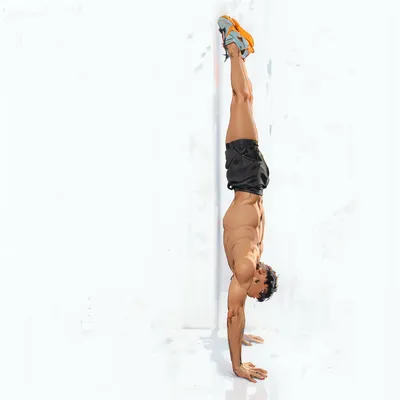
Now, I know what you're thinking. "But I can't hold a Tuck Handstand yet." Here’s the secret: you don't need to. We are not training the Tuck Handstand; we are using the tuck shape for its tight, compact nature. The tuck is merely a stepping stone, a transitional phase to align your hips over your already-stacked hands and shoulders. As soon as you feel that alignment, you extend your legs upwards into a straight Handstand. Do not waste a single second trying to hold or correct the tuck position. All adjustments happen once you are in the straight Handstand.
2.3. Simplicity is Strength
Jump to the tuck, extend the legs. That’s it. Now, this doesn’t mean it’s effortless. It requires practice and proper progressions. But compare it to the complex, multi-part coordination of the Swing Up. With the Tuck Up, there are fewer moving parts, which means there is significantly less room for error. This streamlined Movement Pattern is easier for your brain to learn and execute consistently, accelerating your path to a reliable mount.
2.4. A Safer Bail and Better Corrections
In a Tuck Up, your body is stacked and your weight is evenly distributed on both hands much earlier in the movement. This makes corrections far more intuitive. Your center of gravity is lower and more manageable. If you overshoot slightly, you can press your fingers into the floor to brake. If you undershoot, a small bend in the elbows can save it. This control builds confidence. In contrast, when a Swing Up goes wrong, you're often already past the point of no return, leading to a crash rather than a correction. Your Fingertip Control has a much better chance to engage with a vertical entry.
2.5. Building for the Future
Training the Tuck Up has powerful carryover to more advanced skills. Imagine you jump for the tuck but don't quite make it. You bend your elbows, catch yourself close to the floor, and then use your strength to push up into the Handstand. You’ve just performed a rudimentary Bent Arm Press to Handstand. This builds an incredible foundation of strength and control that can be developed into proper Handstand Push Ups and eventually the Pike Press to Handstand. The Tuck Up isn't just an entry; it's a fundamental building block for elite skills.
3. Your Mount is a Crutch, Not the Skill
3.1. The Mount Precision Paradox
Here is a brutal truth: the less control you have in your Handstand, the more precise your mount needs to be. Beginners waste countless hours trying to perfect a millimeter-perfect entry, hoping it will magically grant them a stable hold. This is backward. The better your handstand becomes—the stronger your shoulders, the sharper your Proprioception—the less the mount matters. An advanced athlete can enter a Handstand sloppily and still save it because their foundation is solid. Chasing a perfect mount when your hold is weak is a waste of valuable training time.
3.2. Where to Invest Your Training Time
If you want serious improvements, stop obsessing over freestanding mounts until you are truly proficient against the wall. To trigger adaptation, you need Time Under Tension. You need to spend quality time in the position you are trying to improve. If your chest-to-wall Handstand is shaky, your freestanding one will be worse. You will fail most attempts and get zero effective training stimulus. Your time is better spent building a rock-solid hold at the wall, strengthening your shoulders with full Scapular Elevation, and drilling your Core Stability.
3.3. The Dangers of Jumping into the Unknown
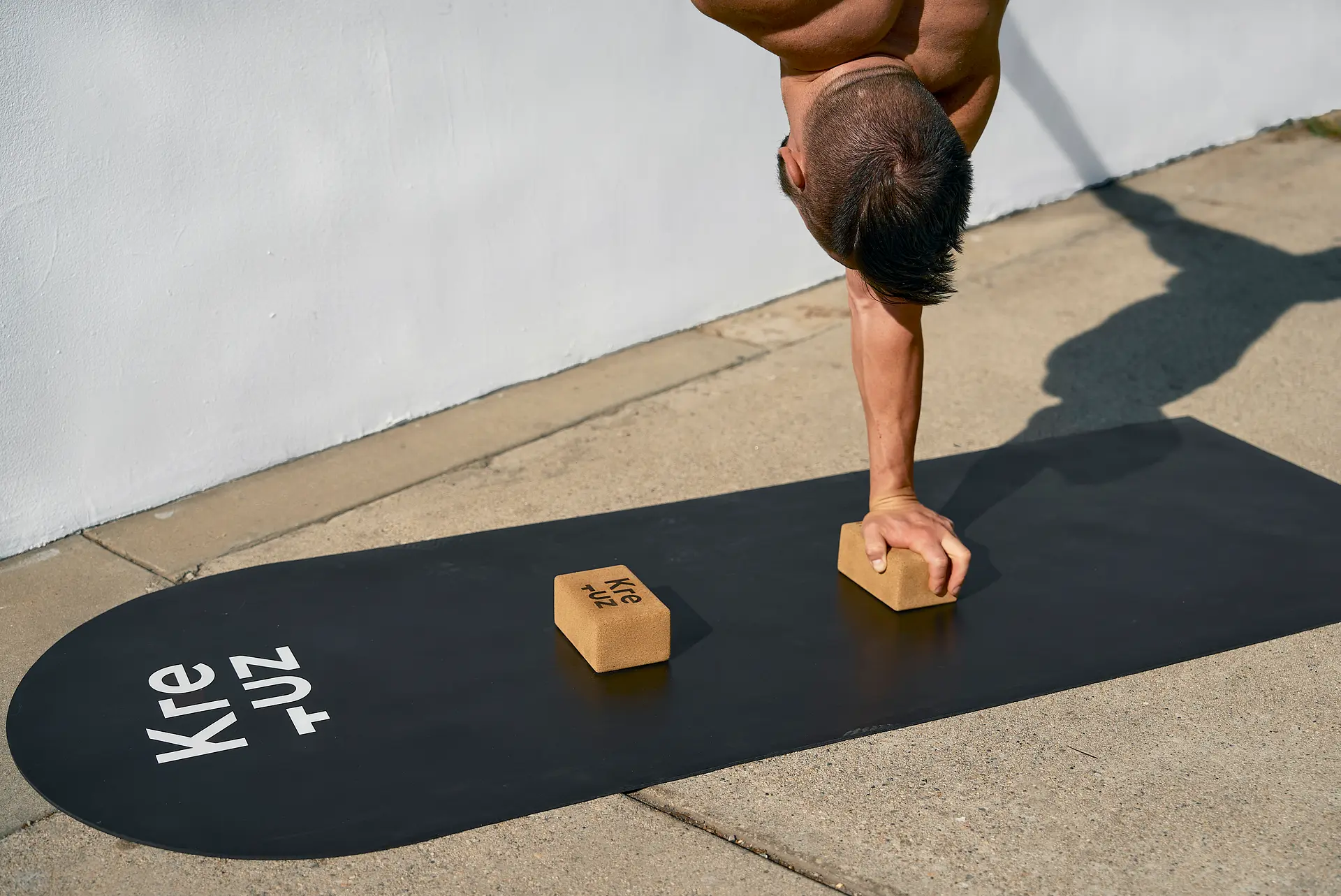
No matter which mount you choose, one rule is non-negotiable: do not jump onto your hands. Always start with your shoulders stacked directly over the center of your hands, with significant weight already loaded into them. Jumping onto your hands from a distance not only guarantees you won't make it up, but it also sends a jarring impact through your wrists, creating a high risk of injury. Treat your wrists with respect; they are the foundation of your entire practice.
4. Your Path to a Dominant Entry
4.1. The Verdict is In
The Swing Up may seem easier at first glance, but it is a trap. It leaves far too much room for error, demands a high level of Flexibility, and relies on a mechanically flawed circular motion. The Tuck Up, when done correctly, is more consistent, more precise, and a better investment in your long-term progress. I have seen it with countless students: every single one argues that the kick up is easier until they learn the tuck up. Then they never go back.
4.2. Your Action Plan
It's not a discussion; it's a mechanical reality. The Tuck Up mount is significantly superior if you are willing to push through the initial mental barrier. The path is clear. Prioritize building a dominant handstand at the wall first. Develop the raw strength and endurance that makes the entry method secondary. When you are ready, invest your time in the clean, vertical, and consistent Movement Pattern of the Tuck Up. In the long run, when you are truly advanced, you will likely just Press to Handstand anyway, and this entire debate will become irrelevant. But for now, choose the path of efficiency. Choose the path of control.
Get to work.