Why The Wall is Your Secret Weapon for Handstand Mastery
You think you're too good for the wall? Think again. Your ego is killing your handstand progress.

TABLE OF CONTENTS
1. The Brutal Truth About Your Handstand
1.1. Why Your Freestanding Practice Is A Waste of Time
Let’s cut the nonsense. You know what’s easy? Kicking up, flailing, and holding a sloppy Handstand for three seconds. You know what’s brutally hard? Building the raw Strength, unwavering Control, and perfect Alignment to actually own the position. The world is full of athletes who can “hold” a handstand. The world is starved of athletes who can command one. The problem isn't the hold; it’s the chaotic, inconsistent mount that precedes it. At the beginning of your journey, your specific strength is low and your Proprioception is underdeveloped. You can’t save a bad entry. Every failed attempt where you kick up and immediately bail isn't practice. It's you rehearsing failure. You're getting better at jumping and falling, not at handstanding.
1.2. The Wall as Your Forge
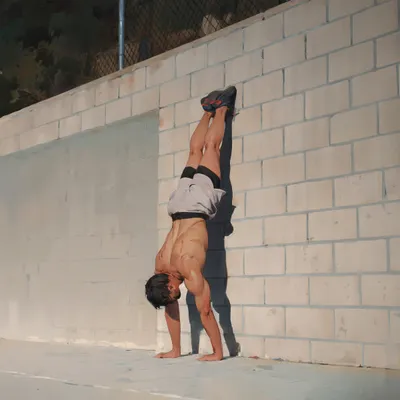
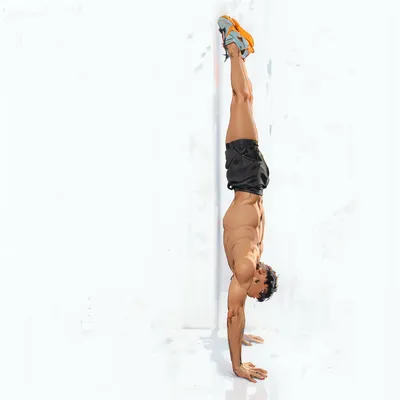
So, you’re sent back to the wall. Many see it as a punishment, a regression. This is ego talking. In reality, it’s a challenge—a commitment to doing the hard, correct thing. If you are serious about improving your Technique, form, and ultimately, your Control, you must embrace the wall. We let go of the chaos of balancing in open space and instead focus on building a foundation of steel. Here, close to the wall, you can accumulate meaningful Time Under Tension. You can apply the principle of Progressive Overload systematically, tracking your holds and ensuring you get a positive training effect every single session. Your journey off the wall might take longer, but the Freestanding Handstand you forge will be a fortress of stability, far superior to those built on a foundation of hurried, sloppy attempts.
2. The Unforgiving Coach
2.1. The Wall Doesn't Lie
Your training partner might spare your feelings. Your Instagram comments might tell you your form is “looking good”. The wall will not. The wall is a cruel, honest mistress. It won’t lie to make you feel good. It won’t forgive your tiniest mistake. Freestanding, you can get away with murder—a slightly bent elbow, a piked hip, a Banana Handstand arch. The wall will expose every single flaw with brutal honesty. This exposure is not a weakness; it is the entire point. It’s the feedback mechanism that forces you into perfection, a tool especially vital for athletes already balancing freestanding or even working towards the [e]One Arm Handstand[/c]. Let's dissect how.
2.2. Exposing Flaws in the L-Handstand
The L Handstand Leg Isolation is a classic drill, but most perform it incorrectly. The easy way is to arch the back, flinging the first leg over until the second one peels off the wall. This is a mess of bad mechanics. The correct way—the only way—is to establish a perfect line, stacking hips over shoulders over hands, achieving full Scapular Elevation, and then lifting the second leg up to join the first. It's harder. It requires better Alignment. The wall forces you to learn this superior option by making the sloppy, arched version impossible. It teaches you exactly where your shoulders must be.
2.3. Forcing Honesty in the Straddle
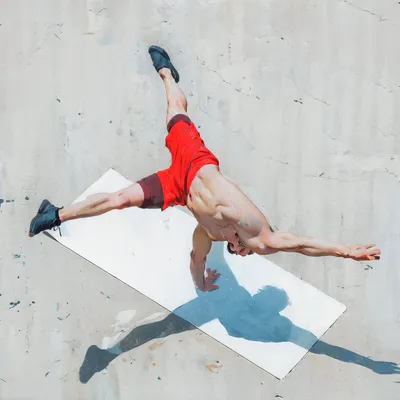
Consider the Tuck Take Off to Straight to Straddle. Close to the wall, you perform a Handstand with legs together. You are physically blocked from piking your hips, a common cheat that creates an inefficient shape. As you open to straddle, another truth is revealed. Many athletes collapse into a pancake-like pike. Freestanding, you can survive this by bending elbows or arching your back. Close to the wall, your feet will instantly hit the surface, giving you immediate, undeniable feedback on your poor form. It forces you to open your legs only as wide as your true middle split allows, forging an honest and powerful straddle position.
2.4. Refining the One Arm Handstand Side Bend
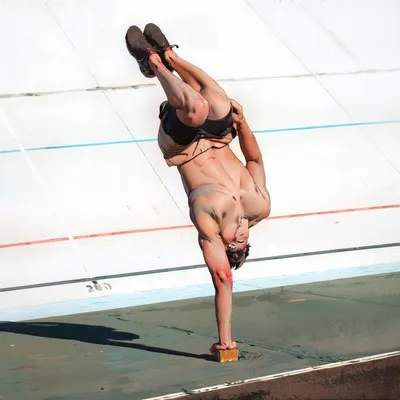
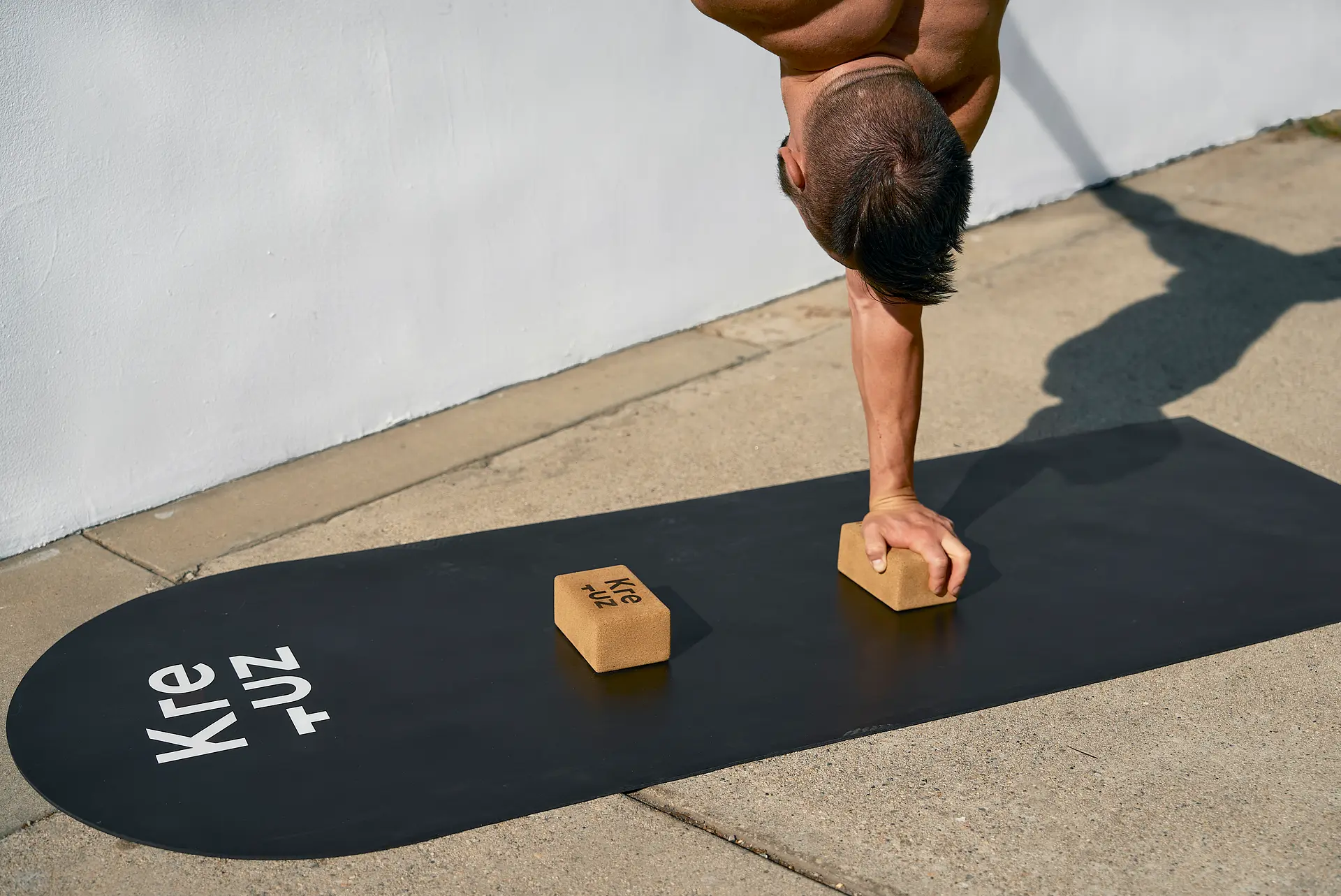
Even for the advanced athlete, the wall is indispensable. The Side Bend is a major hurdle on the path to the One Arm Handstand[/c]. Advanced athletes are strong, which is a curse as much as a blessing. You can muscle through poor Technique in prep drills without realizing it, because you're strong enough not to fall. The instant feedback loop is gone. By practicing [e]Deep Side Bends close to the wall, you reintroduce it. The moment you make a mistake—rotating the hips, collapsing the shoulder—you will tap the wall. It’s an immediate, non-negotiable signal: start over, focus more, do it right.
3. Isolate and Dominate
3.1. Removing the Variable of Balance
The true beauty of the wall is its power of isolation. A Freestanding Handstand demands a constant, simultaneous negotiation between Strength, Technique, and Balance. It’s a chaotic dance. How can you hope to build specific strength if you can’t hold the position long enough? How can you refine your Alignment if you’re constantly fighting to stay upright? The wall provides the solution: it mercilessly removes Balance from the equation. Now, you have the mental and physical space to focus exclusively on what matters: forging brutal Strength and perfecting your form. This is where you learn to maintain a perfect line even as fatigue sets in.
3.2. Forging Mental Fortitude
When you get tired, form crumbles. It's human nature. Your shoulders sink, your back arches, and suddenly the Handstand feels ten times heavier. Freestanding, you would simply fall. At the wall, you have a choice. You can give in, or you can develop the strength of character to force your body to maintain its efficient, powerful position. This is more than physical training; it's the forging of Discipline and Resilience. You are teaching your body and mind to hold the line under duress, building the Confidence that comes from knowing your structure is unshakeable, with or without the wall. This is what separates the dabblers from the masters.
4. Your Blueprint for Wall Dominance
4.1. Embrace the Forge
The journey to a masterful Handstand is paved with honesty and hard work. The two most critical takeaways are these: First, the wall is not a crutch for beginners; it is a precision tool for the dedicated athlete at any level. It is the ultimate lie detector for your form. Second, by removing the chaos of Balance, the wall allows you to isolate and systematically overload the true pillars of a great handstand: raw Strength and perfect Alignment. Stop seeing the wall as a step back. It is your single greatest ally, your most brutal coach, and the forge where true Control is made. Understand the challenge, embrace the commitment, and take everything you can from it.
Get to work.